Cruz and Kasich Make a Desperate Bid to Derail Trump and They’ve Fallen Right Into His Trap

Source: AlterNet

Author: Sean Illing/Salon

Emphasis Mine

Ted Cruz and John Kasich have spent the last few months pretending like they had a chance to win a plurality of delegates. Kasich has been more open about the necessity of a contested convention, but he’s still behaved as though the delegate math were otherwise. Cruz, on the other hand, has insisted he’s the only candidate who can and will defeat Trump at the voting booth.

Well, that’s over. After the political bloodbath in New York, Cruz and Kasich have finally ceded to reality. The second-tier candidates have had a tenuous relationship throughout most of the campaign, particularly after everyone else dropped out. Both candidates have proffered some version of the I’m-the-only-one-who-can-win argument, and both have suggested at times that the other one should drop out in order to clear the way for a two-candidate race.

Now, however, it’s all about teamwork. Politico reported over the weekend that Cruz and Kasich are joining forces in a last-ditch effort to stop the Trump juggernaut. It’s an alliance of convenience to be sure, but also an overt admission that neither believes they have any chance of winning via democratic means. The singular goal now is to prevent Trump from acquiring enough delegates to secure the nomination on the first ballot.

Both campaigns have concluded it’s best to abandon certain states and instead focus resources in a few strategic areas where the other is no longer competing. “To ensure that we nominate a Republican who can unify the Republican Party and win in November,” Cruz campaign manager Jeff Roe said, “our campaign will focus its time and resources in Indiana and in turn clear a path for Gov. Kasich to compete in Oregon and New Mexico, and we would hope that allies of both campaigns would follow our lead.”

This enables Cruz to dump all of his resources into Indiana, a state he has to win if he wants to prevent Trump from reaching a majority before July. There are 57 delegates at stake in the Hoosier state. The latest polls show Trump leading by an average of 6.3 points, but Cruz is closing the gap and will likely continue to do so now that he’s pulling out of places like Oregon and New Mexico.

In turn, Kasich, who had no chance in Indiana, can spend his time more effectively out West, where he is at least minimally competitive. “We will focus our time and resources in New Mexico and Oregon, both areas that are structurally similar to the Northeast politically, where Gov. Kasich is performing well,” said John Weaver, Kasich’s chief strategist. “We would expect independent third-party groups to do the same and honor the commitments made by the Cruz and Kasich campaigns.”

There’s now no doubt as to the strategy moving forward: block Trump from winning the nomination outright. Predictably, Trump fired back on Twitter, writing “Wow, just announced that Lyin’ Ted and Kasich are going to collude in order to keep me from getting the Republican nomination. DESPERATION.”

The Trump campaign released a statement this morning, clarifying their narrative: “When two candidates who have no path to victory get together to stop a candidate who is expanding the party by millions of voters, (all of whom will drop out if I am not in the race) it is yet another example of everything that is wrong in Washington and our political system. This horrible act of desperation, from two campaigns who have totally failed, makes me even more determined, for the good of the Republican Party and our country, to prevail!”

Trump has a point: This does smack of desperation, and it is an underhanded attempt to subvert the process. It won’t work, though. A move like this will cement the Trump vs. the establishment narrative in a way Trump could only dream of. His entire campaign is built on the presumption that Washington is rigged. This sort of collusion confirms that and will further antagonize his coalition. Cruz and Kasich might stop Trump from reaching 1,237 delegates, but this will heighten the drama and chaos at the convention. If an attempt is made to usurp Trump on a second or third ballot, his supporters will rightly see it as contrived and a cause for revolt.

Sean Illing is a USAF veteran and a former political science professor. He is currently a staff writer for Salon. Follow him on Facebook and Twitter. Read his blog here.

See:http://www.alternet.org/election-2016/cruz-and-kasich-make-desperate-bid-derail-trump-and-theyve-fallen-right-his-trap?akid=14194.123424.J36ELk&rd=1&src=newsletter1055259&t=10

Trumpism Can’t Last Forever, Right?

Source: AlterNet

Author: Simon Radford

Emphasis Mine

So what’s The Donald’s plan? He’s donning his camouflage, dusted off his traps and nets, and setting off in search of that rarest of beasts: the white man.

But he can’t win, right? As Donald Trump rolls towards a Republican convention where he will be the overwhelming favourite to take the party’s nod as their general election candidate, the same question repeats in tasteful living rooms, oak-paneled boardrooms, and faculty common rooms. Donald Trump might have been defeating the political gravity of common sense, but it can’t last forever, right? The quiescence underpinned by the conviction that Trump would implode in a hailstorm of bluster and bad hair has turned to an urgency that something this mad can’t actually come to pass. But as the Economist Intelligence Unit now lists the threat of a Trump presidency as a quantifiable possibility to be hedged against, we should dust off a tome from 2002 for reassuranceThe Emerging Democratic Majority argues that a combination of professionals, women, and minority voters give the Democrats a powerful in-built advantage towards winning presidential elections. With the Donald’s approval ratings rivalling Charles Manson’s amongst women and Hispanics, and urban professionals showing no signs of deserting their Democratic home, it’s a coalition that “white men can’t trump”.

In 2002 this emerging Democratic majority was less easy to see. John Judis, a veteran of the world of Washington political magazines, teamed up with Ray Teixeira, a demographer and political scientist, to make the case that America was in the midst of an historic shift in American Political Development (APD). APD is a sub-field of political science that aims to show how shifting constellations of political forces create durable governing coalitions. Judis and Teixeira argued that the era of New Right Reaganism was coming to an end. The 1980s may have seen the Democrats control Congress while Republicans won national elections, but the 1990s saw Newt Gingrich take back the House for the Republicans for the first time in 40 years. Conservatism might never have seemed so strong, but this too would pass and a nascent Democratic permanent revival was in the works. 

For a liberal in the 90s this seemed hard to believe. Three traditional Democratic candidates, each with impressive credentials, were crushed at the polls. To win back the White House, Bill Clinton never had to win 50% of the popular vote, but still felt the necessity to assert his distance from traditional Democratic constituencies by visibly enforcing the death penalty and being “tough on crime”, using an invite from Jesse Jackson to critique hip-hop and violence against the police, and proclaiming that “the era of Big Government is over” while reforming welfare. Clinton’s victories convinced many that it was a Republican world and liberals just lived in it. To win, they needed the votes of the white men who deserted the party for Reagan. A Democratic consultant called “Mudcat” advised candidates on Nascar, grits, and whistling Dixie. A Democrat who compromised with a radical Republican party was still better than having a radical Republican elected.

Even the strong currents of a booming economy, a balanced budget, and a bumbling Republican candidate, hobbled by a last-minute drink driving scandal that may have cost him millions of votes, couldn’t get Al Gore to the White House and the Democrats a third term. Bush’s chief strategist boasted of having createda permanent Republican majority”. So it was with that, Judis and Teixeira’s book resembled a friend’s reassurance after a particularly nasty break-up: things might be rough now but your time will come. Things would get better. Past isn’t destiny, it’s merely prologue.

And lo! It came to pass! And president Obama delivered us from permanent conservatism. But if you had told Al From and William Galston, who pioneered Clinton’s pivot between 80s liberalism and Reaganite orthodoxy, that the Democrats would nominate an African-American candidate, known for opposing a war in the Middle East, with a liberal policy agenda and a funny name – and win! – they would have pegged the odds somewhere around Jerry Springer becoming next Fed Chairman. But Obama was nominated. And he did win. And he won with a coalition that neatly resembled that detailed by Judis and Teixeira. Perhaps 2008 resembled what some political scientists called a “crucial election” and the Democrats could move from being the political brake pedal to the accelerator again.

So why wouldn’t the same coalition power Hillary to victory once more? Three answers get bandied around: firstly, that Hillary is a poor candidate; secondly, that holding the White House for a third time is not the same proposition as winning it for the first or second time; and, relatedly, that turnout for Hillary’s campaign is likely to be down from 2012. Finally, Republicans who refuse to believe that they must adjust their political project due to new demographic realities speak of ‘the missing white voters’. The case that Trump can win hinges on these claims, although Ted Cruz has made a similar claim about missing evangelical voters, and they rely more on hope than cold analysis.

Firstly, Hillary is indeed a poor candidate. Her voice is scratchy and the noise in the room often leads to her seeming to shout to those watching on TV; her pitch tends to be more about her than about those she claims she wants to fight for; and she lacks an overarching diagnosis of what ails America and how best to fix it. The fact that she has been in or close to power for so long and often hob-nobs with the rich and powerful, makes it seem that she has more invested in piecing back together the status quo than trying to fix the underlying problems that see so many fearful for their economic future. Especially to millennials who crave authenticity, tend to be suffering economically and reel under a barrage of student loans and poor job prospects, Hillary can often seem like the ‘let them eat cake’ candidate. Her attempt to use ‘the gender card’ against Bernie caused resentment among the young, female voters who she needed to win over, while her lack of an overarching message turns off those who tend to be left out of identity politics coalition stitching. Hillary’s main weakness – working class male voters – are exactly those who are most pissed off and most open to entertaining a pitch from Donald Trump.

However, while Hillary might be more Al Gore than Bill Clinton when it comes to inspiring or “the vision thing” (as George H.W. Bush called it), she does have a savvy campaign team and the potential to expropriate much of Bernie Sander’s message once he exits the race. Hillary will inherit a sophisticated voter-targeting machine from the Obama campaign – updated with fresh real-world election data thanks to the primaries – while the Koch Brothers and their extensive fundraising network and data provider to Republican candidates might just sit this one out with Trump as the nominee. Hillary also has the opportunity to supplement her campaign by choosing an effective vice-presidential running mate. Her weakness with white, working-class men (especially in key, swing states) might see her plump for someone like senator (and former SNL funnyman) Al FrankenSherrod Brown, or Tom Kaine; if she felt the need to motivate Hispanic voters, labour secretary Tom Perez might prove a savvy outsider choice. As a candidate Hillary Clinton is not RFK, but there is plenty to argue that she will run a competent, if somewhat uninspiring, general election campaign.

Secondly, it is hard for any party to hold the White House for a third term. Grievances accumulate over time and it is only natural that people should blame the party in charge of the most visible part of the government. Indeed, in election prediction models, the length of time a party has held the White House is a powerful variable in predicting the election outcome. The most well known of these models, Alan Abramovitz’s “Time for a Change” model, has an elegant simplicity in how it comes to make its predictions: “The basic Time for Change Model uses three factors– the incumbent president’s net approval rating at the end of June, the change in real GDP in the second quarter of the election year, and a first term incumbency advantage, to predict the winner of the national popular vote.” Hillary will lack any incumbency advantage that Obama could lay claim to in 2012, but the latter’s job approval ratings have hovered around 50%, having climbed over the last year. Economics news has been bumpy but much of voters’ economic assessment is baked into the president’s job approval ratings. A strong Republican candidate would like these numbers when sizing up their chances of taking out Hillary but as headwinds go, the numbers seem like more of a gust than a hurricane.

Thirdly, turnout is indeed a worry. While many fret about turnout during primary season compared to the records of 8 years ago, there is a good argument that this is a data point not worth getting hung up over. However, there is still the question mark over how much the Obama coalition was due to Obama. The infamous Bannock Street project, larded with $60m of donor largesse, promised to activate these voters to keep the Senate in Democratic hands in 2014, with arguable results. Millennials have largely shunned Hillary’s candidacy and will have to be persuaded with difficulty to warm to her; African-Americans don’t have one of their own in the Oval Office to fight for; and Hispanic voters feel let down that Obama did not pursue comprehensive immigration reform with enough vigour. Unions failed to secure card-check legislation under Obama, have further declined in power, and have injected themselves into a Democratic civil war over TPP. Meanwhile Republicans have been pouring money into catching up the Democrats’ technical advantage and overtaking it. Hillary might well struggle to inspire the Obama coalition to the ballot box in the same numbers. A Republican candidate that would reach Hispanic voters or young people, as argued by the GOP’s own 2012 “Autopsy” report, could steal from a fragile Democratic base and win the White House. But so far the party has not tried to find a message that can win over these voters. Still, even with this lack of active competition for their affections, Hillary will have to reach her turnout figures regardless.

So we see a somewhat lukewarm prognosis for Hillary’s general election chances, but Hillary has one secret weapon: Donald Trump. Hispanic voters unsurprisingly loathe the Donald. Professionals who remained in the Republican camp are still trying to steal the Republican nomination from his clammy, short-fingered, grasp. And Trump’s ratings among women are about as healthy as his comments about dating his own daughter. Indeed, just as fellow-conservative Newt Gingrich previewed how the Democrats would define Mitt Romney before he had a chance to create his own image for the voters, Republican SuperPACs have already shown exactly what is coming Trump’s way over the airwaves from now until election day. The Democrats already had a ‘women gap’ in their favour, this is likely to make it grow to record levels. He’s just lucky that kids don’t vote.

With 2016’s electors set to be the most diverse in history, Trump is driving the Obama coalition into Hillary’s hands. While mass defections to Hillary from Republican stalwarts is overblown because of partisan polarisation and reverse-partisanship, Democrats who might have had trouble getting voters enthused enough to vote for Hillary will now have plenty of fuel to stoke their enthusiasm. So what’s Trump’s plan? He’s donning his camouflage, dusted off his traps and nets, and is topping up his liquid sustenance, and setting off in search of that rarest of beasts: the white man. 

The counterweight to the demography-as-destiny argument of the “emerging democratic majority” is themissing white voter” thesis. This argument makes the claim that almost 6 million fewer white voters went to the polls in 2012 than we should have expected based on projections. If this number reverted to the mean or a candidate enthused these voters, then the GOP could get back to the White House without changing its coalition of voters. This missing bloc is crucial because if one looks at the 2012 electorate, then Trump’s path looks extremely narrow, as Bill James points out:

“The math suggests Trump would need a whopping 70% of white male voters to cast their ballots for him. That’s a larger percentage than Republicans have ever won before — more than the GOP won in the landslide victories of Ronald Reagan and George H.W. Bush, and far more than they won during the racially polarized elections of Barack Obama.“

Of course, all white voters are not the same. There is a striking class difference in the Trump base. Blue-collar voters tend to be much warmer than those who belong to the professional classes. This difference is crucial, as Teixeira himself explained in a recent sit-down with the New Yorker:

“In Ohio in 2012, Mitt Romney won the white working-class vote by a 16% margin: 57% to 41%. According to Teixeira’s projections, Trump, to carry Ohio in November, would need to increase this margin to 22 or 23 points. “That’s a big ask,” Teixeira said. And Trump would also need to retain, or even increase, Romney’s ten-point margin among college-educated white Republicans, even though at least some members of this group may be sufficiently put off by Trump’s extremism to stay at home, or even to switch to the Democrats.”

Teixeira’s baseline there, of course, uses 2012 and treats these missing white voters as permanently gone, even though these missing voters seem to resemble the blue-collar, anti-free trade voters that would most respond to Donald Trump’s economic populist appeal. However, even those analysts most closely associated with the ‘missing white voters’ hypothesis, contend that those missing white voters would not have been enough to have coronated a president Romney in 2012: 

“But while this was the most salient demographic change, it was probably not, standing alone, enough to swing the election to Obama. After all, he won the election by almost exactly 5 million votes. If we assume there were 6.5 million “missing” white voters, than means that Romney would have had to win almost 90% of their votes to win the election. Given that whites overall broke roughly 60-40 for Romney, this seems unlikely. In fact, if these voters had shown up and voted like whites overall voted, the president’s margin would have shrunk, but he still would have won by a healthy 2.7% margin.”

There is an argument that a Republican strategy of targeting ‘missing white voters’ would have a chance at high-tide if the Democratic coalition turned out as if it were at low-tide. However, Trump’s ability to turn out these working class white voters founders on the irony that by doing so he activates the very Democratic coalition he seeks to overpower. Mitt Romney only won 27% of Latinos in 2012, but Donald Trump might struggle to win two-thirds of Romney’s total in a national voting population more Latino than ever and energised to turn out to vote against him. African-American turnout might struggle to reach the levels reached under president Obama, but the president will surely be relied upon again to turn out the vote in key states like North Carolina and Virginia. Trump’s use of a megaphone rather than a dog-whistle might activate these missing white voters, but at the very real risk of seeing defections from normally Republican women in the suburban battlegrounds of previous elections. While reverse-partisanship – the idea that many people vote against a candidate rather than for their own – might see Republicans rediscover their loathing for secretary Clinton and vote for Trump reluctantly, some professional-class Republicans will surely “do a France” and hold their nose to vote against Mr Trump or simply sit this race out.

The Republicans could have stopped a president Hillary Clinton if they had nominated a Republican candidate who would speak to voters in the veterans’ halls and union homes without turning off the country club and Rotary Club regulars. Adding the ‘missing white voters’ to the Romney coalition by discovering a more populist economic message on trade, taking on corporate welfare, and joining in the Democrat populists’ assault on dodgy practices on Wall Street, could have seen a Republican win even without gaining much ground in the short-term with Latinos and other minority groups. While John Kasich hangs around, hoping that Cruz and Trump’s antipathy sees delegates alight upon his inoffensiveness in the latter rounds of convention voting, he might hope to be able to perform this balancing act. But navigating what political scientists call a “two-level gamebetween the Republicans’ primary electorate and the narrow path to beating a large Democratic demographic bias in a changing American electorate might have been a quixotic hope from the get-go.

There was every prospect that Hillary’s weaknesses as a candidate could have allowed the Republicans to squeeze one more victory out of a dying voter profile that had previously served them so well.  Perhaps Trumpism will test Republican optimism to destruction just as Democrats trotted out liberal candidates in the 80s and were confounded by the electorate before realising that they had to accommodate with electoral reality. But both parties have made clear where each party needs to make gains if they are to win the White House in the future: Hillary will need Bernie’s authenticity and appeal to working-class white voters on trade and economics; Republicans will need to learn Spanish.Hasta la Vista, Trumpy.


Simon Radford is a Provost’s Fellow at the University of Southern California, a political consultant, and contributes regularly on politics to a variety of magazines and newspapers, both in the US and UK.

See:http://www.alternet.org/election-2016/trumpism-cant-last-forever-right?akid=14191.123424.T6930e&rd=1&src=newsletter1055175&t=8
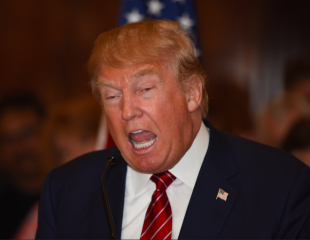
Lie Big, Lie Often, Never Back Down: Donald Trump, Fox News and the Real Reason Why Right-Wing Lies Stick

Source: AlterNet

Author: Arbin Rabin-Hyat/Salon

Emphasis Mine

Nearly seven years ago, in July 2009, conservative researcher Betsy McCaughey appeared on Fred Thompson’s radio show and suggested that President Obama’s health-care bill would encourage seniors “to do what’s in society’s best interest or your family’s best interest, and cut your life short.”

A few weeks later in early August, former Alaska Gov. Sarah Palin wrote on Facebook, “The America I know and love is not one in which my parents or my baby with Down Syndrome will have to stand in front of Obama’s ‘death panel’ so his bureaucrats can decide, based on a subjective judgment of their ‘level of productivity in society,’ whether they are worthy of health care.”

Thus, the “death panels” lie was born, and seven years later it still remains potent. According to a new poll from Public Policy Polling, 60% of Americans—including 74% of Republicans and even 51% of Democrats—still either believe in or are unsure about the existence of death panels.

Why are so many Americans still clinging to 2009’s “Lie of the Year?” Tens of millions of people are receiving health care thanks to the Affordable Care Act, with no evidence of seniors or disabled citizens being forced to end their lives early due to a panel of government bureaucrats.

I commissioned this poll to clarify a key point in my new book, Lies, Incorporated: The World of Post-Truth Politics. Discussions about corruption of our political processes often center around money and lobbying. Yet a third element, lies, specifically those lies that are strategically designed to distort the policy-making process, are ignored. There is in fact a group of individuals who have intentionally used falsehoods to hack our democracy for both financial and ideological gain, thus the title. In Lies, Incorporated, I chronicle a series of these lies, profile the people who created them and assess the damage they have caused.

I could never have imagined a figure like Donald Trump would emerge a leader in the primary, even though I was familiar with his type. Like Trump in 2016, Betsy McCaughey in 2009 combined brazen falsehoods with a shamelessness that meant she never has to apologize for them.

Betsy McCaughey also shared Trump’s thirst for the spotlight. A former staffer from her time as lieutenant governor of New York said, “A lot of politicians are out for the limelight, but Betsy’s constant need twenty-four hours a day was something I’d never seen.”

Although a mini fact-checking industry immediately sprang up to correct the record on death panels, the story—like many of Trump’s claims today—proved stubborn. Even before Sarah Palin coined the term “death panels,” Politifact already declared the theory a “ridiculous falsehood” rating it “pants on fire.” And McCaughey’s death-panel lie was debunked within days by groups as diverse as the AARP and Media Matters for America, as well as by more than 40 major media outlets including the New York Times, USA Today, Associated Press, the Washington Post, CBS and MSNBC.

In the Washington Post, Ezra Klein explained why Betsy McCaughey’s lie caught fire in the media, a reason extremely familiar to those of us watching Trump in 2016: “She’s among the best in the business at the Big Lie: not the dull claim that health-care reform will slightly increase the deficit or trim Medicare Advantage benefits, but the claim that it will result in Death Panels that decide the fate of the elderly, or a new model of medical ethics in which the lives of the old are sacrificed for the good of the young, or a government agency that will review the actions of every doctor,” Klein wrote. “McCaughey isn’t just a liar. She’s an exciting liar.”

Being an exciting liar led to media attention and numerous bookings not only with the conservative media, but also with ostensibly liberal venues like “The Daily Show.” It forced progressive organizations and news outlets like MSNBC to devote countless segments to debunking her falsehoods. Yet this seemed to instead perpetuate the lie, keeping it active.

A further similarity between Trump and McCaughey is that she was already known as someone who played fast and loose with the truth about a Democratic president’s health-care policies.

In 1994 as a fellow at the conservative Manhattan Institute, McCaughey excoriated the Clinton White House health-care proposal in an article in the New Republic titled “No Exit.”

Newt Gingrich said McCaughey’s New Republic piece was “the first decisive break point” that led to the defeat of what conservatives derided as “Hillarycare.”

“If these facts surprise you, it’s because you haven’t been given a straight story about the Clinton health bill,” she wrote. But it was McCaughey who wasn’t telling it straight.

James Fallows of the Atlantic later declared that New Republic piece the “most destructive effect on public discourse by a single person” in the 1990s.

Despite this performance, the following decade saw Betsy McCaughey welcomed back into the media fold to continue spreading her lies, now about Obamacare. Her quotable and stirring attacks made her a welcome guest. Republicans loved her talking points, which confirmed their worst fears about President Obama’s true intent, and Democrats loved to hate her because she was one of many conservative boogeymen who could easily be attacked for their outrageous lies.

As we’re seeing now with the Trump campaign, 2009’s part media frenzy, part goat rodeo was compelling content for liberals and conservatives alike. But it was not beneficial to our public discourse.

As I note in Lies, Incorporated, instead of discussing how to help the millions of uninsured or debating the merits or feasibility of proposed solutions, endless months were devoted to an irrelevant debate over whether President Barack Obama secretly wanted to kill grandmothers. Members of Congress were begging the White House for a response—their constituents were calling in droves, fearful of death panels. Whether they were enticed by the ratings potential of this manufactured drama or they were simply unwilling to truthfully confront the issue, mainstream reporters who lacked any understanding of health-care policy flooded the White House and pro-health-care-policy groups with questions.

Today, instead of discussing the actual problems with U.S. immigration policy, Donald Trump shifts debate to whether or not Mexicans who wish to enter the U.S. are rapists, how tall his wall is going to be and whether the federal government should ban all Muslim immigrants.

By loudly and unapologetically lying to a friendly audience of partisans in the media, at think tanks, on Capitol Hill, and to the public at large, Donald Trump has created bedlam within the Republican party—the same way that Betsy McCaughey successfully threw health-care reform into chaos.

The death panel lie helped to rile up the conservative base in such a way that it became impossible for Democrats and Republicans to reach any sort of compromise on health-care reform. It confirmed for conservatives their worst fears about Barack Obama and what his presidency would mean for their lives, leaving no space for a public discussion on how to fix America’s health-care system.

The post-truth landscape that Trump, McCaughey and others take advantage of is fueled by a bifurcated media structure, which allows misinformation to rapidly spread in ideological echo chambers. Because it is simply impossible for individuals to track down the primary source for every piece of information they consume, we by necessity rely on aggregators to report the news to us. No longer limited to anchors on the big three networks to tell us what we need to know, we flock to the outlets that best conform to our own worldview.

Thus the lies of Donald Trump and the lies of Betsy McCaughey become truth in different communities. This means that even after the existence of “death panels” had been thoroughly debunked it may never fully leave the public consciousness. Zombie lies continue to rise from the dead again and again, influencing political debate and swaying people’s opinions on a variety of issues—particularly emotionally resonant lies like the “death panels.”

The lesson of Donald Trump’s campaign is, if you are going to lie, lie big, lie often and never acknowledge your lies. Repeat them enough and certain segments of the population will accept them in such a way that they will stick.

The lesson for the rest of us (and the media) is we cannot give these liars their undeserved public platforms. It is too late to undo the damage of Donald Trump’s lies, just as there will always be a segment of the people who believe in death panels.

After her lies about health-care reform in the 1990s, Betsy McCaughey should not have been granted any platform to participate in the debate during the Obama years. Likewise once Donald Trump began his quest to discover Barack Obama’s true birthplace, he should have been laughed out of public discourse, relegated to his reality show boardroom. Yes, both McCaughey and Trump were ratings boons for television news seeking an audience, but that came at a cost to our public discourse.

See:http://www.alternet.org/media/lie-big-lie-often-never-back-down-donald-trump-fox-news-and-real-reason-why-right-wing-lies?akid=14177.123424.P67el5&rd=1&src=newsletter1054788&t=6

Ted Cruz’s Dark, Twisted World: Why His Far-Right Social Views Are Even Scarier Than You Think

It will come as no shock that the Texas senator is an extremist. But it might surprise to learn just how extreme he is.

Source: AlterNet

Author: Heather Digby parton

Emphasis Mine

Probably one of the most unlikely scandalettes of the 2016 primary has to be the National Enquirer “exposé ” of Senator Ted Cruz’s alleged serial infidelity. Nobody knows to this day where the story originated, although some reporters suggested after it was run that the Rubio campaign had shopped it to them earlier in the cycle. But Donald Trump is known to be quite close to the publisher of the Enquirer (a man aptly named David Pecker) so it’s always possible the story was run for his benefit. Cruz denied it and it faded in the excitement of the campaign, at least for now.

But whatever its provenance, the story was interesting not so much because it’s unbelievable that any politician might have a zipper problem (it’s almost a requirement for office) but because it was the very pious Cruz being accused. This is the man, after all, whose first victory speech began with “God bless the great state of Iowa, let me first of all say, to God be the glory.”

Cruz announced his candidacy at Jerry Falwell’s Liberty University where he laid out his vision for the country. And he told a story that he tells on the trail all the time:

When my dad came to America in 1957, he could not have imagined what lay in store for him. Imagine a young married couple, living together in the 1970s, neither one of them has a personal relationship with Jesus. They have a little boy and they are both drinking far too much. They are living a fast life.

When I was three, my father decided to leave my mother and me. We were living in Calgary at the time, he got on a plane and he flew back to Texas, and he decided he didn’t want to be married anymore and he didn’t want to be a father to his 3-year-old son. And yet when he was in Houston, a friend, a colleague from the oil and gas business invited him to a Bible study, invited him to Clay Road (ph) Baptist Church, and there my father gave his life to Jesus Christ.

And God transformed his heart. And he drove to the airport, he bought a plane ticket, and he flew back to be with my mother and me.

There are people who wonder if faith is real. I can tell you, in my family there’s not a second of doubt, because were it not for the transformative love of Jesus Christ, I would not have been saved and I would have been raised by a single mom without my father in the household.

It may seem odd that his “testimony” is his father’s story but it makes sense. Cruz himself was a very smart kid who grew up in Texas and went to Princeton and then Harvard Law which doesn’t provide quite the same pathos as his daddy’s tale of sin and redemption. And his dad is definitely important to his career—he’s a genuine evangelical preacher and wingnut firebrand, well known on the conservative speaking circuit. He brings with him all the authentic street cred his son could possibly need in this crowd.

Cruz’s campaign strategy was built on the foundation of support from the ultra-conservative evangelical base of the Republican partythis recent Pew Poll shows that nearly half of his total voters are white observant evangelical Christians, most of whom attend Church at least weekly. By contrast Trump gets a share of evangelicals but more mainline protestants and Catholics who attend church less than once a week. (This article by Jeff Sharlet in the New York Times Magazine about Trump and prosperity gospel types is fascinating. I’m not even sure they’re really social conservatives.)

I wrote about Cruz’s original strategy (based upon Carter’s peanut brigade) a while back, in which he had planned to sweep the southern states and build up a big lead, just as Hillary Clinton has done on the Democratic side. It didn’t work out for him because it turns out that a lot of the southern conservatives he was counting on were mesmerized by a decadent, thrice married New Yorker. Who would have ever guessed? But he has shown tremendous tenacity, hanging on long after all the Big Boys of the Deep Bench fell by the wayside and it’s now a two man race to the finish.

The adultery accusations don’t seem to have hurt Cruz with his base voters, although it’s possible we haven’t yet seen the effects in more socially conservative states. But Cruz has built up a lot of credibility in that crowd over the years. He’s won the straw poll at the Values Voter Summit three years in a row. Two years ago he made a huge splash in anticipation of announcing his run for president by giving a rousing speech in which he declared, “We stand for life. We stand for marriage. We stand for Israel!” which sums up the foundation of the evangelical right’s philosophy.

Cruz is an anti-abortion warrior of the most strident kind. He wants to ban abortion with no exception for rape or incest. He unctuously explains it this way:

“When it comes to rape, rape is a horrific crime against the humanity of a person, and needs to be punished and punished severely. But at the same time, as horrible as that crime is, I don’t believe it’s the child’s fault. And we weep at the crime, we want to do everything we can to prevent the crime on the front end, and to punish the criminal, but I don’t believe it makes sense to blame the child.”

He holds the same view of a 12-year-old girl being forced to give birth to her own sister: tough luck.

He has led the charge against Planned Parenthood in the Senate, urging a government shutdown if the president didn’t agree to defund it. And he’s gone farther than that:

“If I’m elected president, let me tell you about my first day in office. The first thing I intend to do is to rescind every illegal and unconstitutional executive action taken by Barack Obama. The next thing I intend to do is instruct the Department of Justice to open an investigation into these videos and to prosecute Planned Parenthood for any criminal violations.”

Ted Cruz is a lawyer and ex-attorney general of Texas who has argued cases before the Supreme Court. Unlike Donald Trump when, he makes a statement like this, he cannot claim to be ignorant of the fact that the president instructing the Justice Department to open a criminal investigation on anyone would be the very definition of abuse of power and quite likely an impeachable offense.

His dismissive comments on contraception, meanwhile, are insulting to every woman:

“Last I checked, we don’t have a rubber shortage in America. Look, when I was in college, we had a machine in the bathroom, you put 50 cents in and voila. So, yes, anyone who wants contraceptives can access them.”

He’s equally adamant about gay marriage, and insists that he will work to overturn last year’s landmark Obergefell ruling, which legalized same-sex marriage across the country, just as he will work to overturn Roe vs Wade. He says:

“It’s not the law of the land. It’s not the Constitution. It’s not legitimate, and we will stand and fight.”

Again, this is a man who argued cases before the Supreme Court and presumably knows very well that marriage equality is the law of the land.

He has defended a ban on late term-abortions and a display of the Ten Commandments on the grounds of the state capitol. He argued that the pledge of allegiance should include the words “Under God.”  According to this astonishing article by David Corn in Mother Jones, he even defended a state ban on dildos, arguing the state had an interest in “discouraging…autonomous sex,” comparing masturbation to hiring a prostitute or committing bigamy and declaring that no right exists for people to “stimulate their genitals.” (His college roommate tweeted a hilarious reaction to that story yesterday.)

He’s all in on the “religious liberty” legal theory as defined by the Manhattan Declaration and enjoys keeping company with some of the most radical dominionists in the nation, including David Bartonthe junk historian who also runs Cruz’s number one super PAC, Keep the Promise. That super PAC is funded by a couple of Cruz’s megabucks donors, Texas energy barons Farris and Dan Wilks, both of whom are ultra conservative Christians. He’s even tight with the bigots who spearheaded the recent sweeping anti-LGBT legislation in North Carolina, congressional candidate and evangelical pastor Mark Harris and the former HGTV twins the Benham brothers, whose show was cancelled over their anti-gay activities. And then there is his father Rafael Cruz, who is counted among the most militant extremist preachers in the country and who believes his son was sent by God to turn America into a theocracy.

Ted Cruz’s confrontational political philosophy is revolutionary. His policy agenda is at the farthest edge of conservative movement thinking, even including gold buggery and the abolition of the IRS and half a dozen other agencies and functions of the federal government. His foreign policy advisers include anti-Muslim cranks like Frank Gaffney. His ideology is doctrinaire right wing conservative. And he is a fanatical conservative evangelical Christian whose beliefs place him at the fringe of an already non-mainstream worldview.

It’s not surprising that people would have a hard time believing that such a man would be a serial adulterer. But when you think about it, he would hardly be the first conservative Christian leader to be undone in such a way. (In fact, it’s so common you have to wonder if it isn’t an occupational hazard.) So far, he’s weathered the storm. But he is a fully realized right wing radical deeply embedded in the conservative Christian right.  If any of it turns out to be true, Cruz will have a very long way to fall.

Heather Digby Parton, also known as “Digby,” is a contributing writer to Salon. She was the winner of the 2014 Hillman Prize for Opinion and Analysis Journalism.

See: http://www.alternet.org/election-2016/ted-cruzs-dark-twisted-world-why-his-far-right-social-views-are-even-scarier-you-think?akid=14170.123424.9lSTbc&rd=1&src=newsletter1054631&t=18

Trump’s Tragic Flaw May Finally Send Him Down In Flames

Donald Trump is being brought down to earth by his most powerful enemy.

Source: HuffPost

Author: Howard Fineman

Emphasis Mine

Donald Trump has defied the laws of political physics from the moment he rode down that gold-toned elevator in his own Manhattan tower to announce his candidacy last spring.

Time and again he’s proved every pundit and all of his fellow Republican candidates wrong, and he remains the only GOP contender with a plausible chance to collect a majority of delegates before the Cleveland convention in July.

But after a year of hovering above the skyline like a giant dirigible, Trump is being brought down to earth by his most powerful enemy: his own need to demonstrate his masculine “strength” by disparaging others, particularly women.

It has taken a year for relevant, campaign-related examples to accumulate, but they reached critical mass just in time for a pivotal primary in Wisconsin next week that could see the start of a slow, steady decline in his chances.

He is simply so unpopular with female voters — who make up at least 54 percent of the turnout in presidential general elections — that a victory by him this fall seems all but impossible. In a new NBC News poll, Trump is viewed favorably by only 1 in 5 female voters.

To be sure, his ratings among men aren’t dramatically better, and his main GOP rival, Sen. Ted Cruz of Texas, is almost as poorly regarded by women. Still, 1 in 5 doesn’t work.

“He can’t win, and women are a main reason why,” said Charlie Black, a Republican consultant advising Ohio Gov. John Kasich.

Trump critics also note that, despite his vow to ferociously attack Hillary Clinton in a general election, his salvos could be countered by Democrats as just another example of his corrosive attitude toward women.

There are plenty of examples already: his long-running firefight with Fox anchor Megyn Kelly, which included a veiled reference to menstruation; his high-school-level disparagement of Carly Fiorina’s looks; his vow to “spill the beans” on Cruz’s wife, Heidi; and Trump’s full-throated defense of his campaign manager, Corey Lewandowski, who was arrested this week in Florida and charged with using unwanted physical force to yank a female reporter away from his boss.

Trump’s own family and close advisers have been worried about Lewandowski’s short fuse and aggressive behavior for months, but Trump is sticking by him in the din.

Then, on Tuesday, Trump struck a match to the whole pile, telling MSNBC host Chris Matthews that women who get “illegal” abortions (and Trump wants to make them all illegal) should face “some form of punishment” — details unspecified.

In the hourlong face-to-face interview — no phone-ins this time — Matthews pressed Trump on whether he thought abortion should be illegal. The answer was “yes.” So if it is, should women be punished in some way? After hesitating several times, Trump answered “yes.”

After meandering around on the issue for years, Trump in the campaign has run as somewhat of a hard-liner: in favor of repealing Roe v. Wade and of banning so-called partial-birth abortions, but not endorsing a human life amendment or a ban on abortions even in cases of rape or incest.

But the comments to Matthews took him much further to the right, and away from the mainstream of female voters, 55 percent of whom think abortion should be legal in all or most cases.

Minutes after the taping of the show, and the airing of that key excerpt, the Trump campaign tried to walk the comments back, but it was too late. Democrats, liberals and leaders of women’s rights groups attacked with gusto.

So did Cruz, though his complaint came from the opposite political direction: that Trump was masquerading as a totalitarian foe of abortion, a role that rightly belongs to the Texan.

We’ll know soon enough whether Trump is on trouble, let alone going up in flames, when Wisconsin primary voters go to the polls on Tuesday.

The most recent poll, out on Wednesday and taken during the days that the Lewandowski story dominated the political news, showed Trump falling behind Cruz by 10 points.

Look out below.

Editor’s note: Donald Trump regularly incites political violence and is a serial liarrampant xenophoberacistmisogynist and birther who has repeatedly pledged to ban all Muslims — 1.6 billion members of an entire religion — from entering the U.S.


See:http://www.huffingtonpost.com/entry/donald-trump-women-flames_us_56fc47efe4b0a06d5804b0b4?

Donald Trump Is Dangerous to Women

His vision of America is one in which women have no rights—and it’s not far from becoming a reality.

donnie
donnie

Source:AlterNet

Author: Kali Halloway

Emphasis Mine

There is perhaps no one in recent American political history who has outdone expectations as drastically as Donald Trump.

I do not mean this as a compliment. What I mean is that even as we have come to expect Donald Trump to say and be the absolute worst—to burrow beneath what previously seemed to be the garbage-strewn bottom—he continues to unashamedly dive to once unthinkable depths, outdistancing even the scavengers and bottom-feeders who preceded him.

An example of this occurred on Wednesday, when Trump stated that as president he would seek not only to ban abortions, but also to ensure that women who illegally obtained them would have to face “some kind of punishment.” Perhaps because the notion of criminalizing abortion and then exacting some kind of twisted revenge on women goes beyond even the rhetoric of the far-right anti-choice crowd, interviewer Chris Matthews gave Trump a chance to clarify his remarks.

“For the woman?” Matthews asked, being nothing if not specific.

“Yeah. There has to be some form [of punishment],” Trump replied.

This is a man who has built his political—and if we go back even further, his public—brand on sexualizing, degrading, insulting and vocally and enthusiastically hating women. He makes jokes about newswomen being on their periods, about a fellow candidate’s wife being ugly. He has said countless terrible things about many, many prominent women. And in kind, his supporters dedicate time at rallies to violently shoving teenage girls; to allegedly groping and macing them in the face. Even his campaign manager allegedly physically attacked a woman reporter for doing her job.

And yet, Trump still finds a way to be worse, to keep digging beyond this.

A few days ago, one of Trump’s key advisers—a woman named Stephanie Cegielski—resigned. On her way out, she penned an open letter that essentially accused Trump of being a know-nothing, power-hungry blowhard (I’m paraphrasing), whose entire persona may be contrived. Maybe that means that Trump is not the misogynist (racist, xenophobic, Islamophobic, nativist, transphobe) he plays on TV—or on the campaign trail. Maybe it’s all just talk to win hardened, bitter hearts and minds, which he only wants because his lust for power can never be quenched.

Yeah, maybe. I honestly don’t know if Trump hates women, and frankly, at this point, I don’t care. None of us, at this point, should give a shit about Trump’s personal psychology. That’s a problem for his shrink, who can never be paid enough.

What’s more important is the fact that Trump either believes or plays to the most misogynist elements of this country, the consequences of which are very real. When asked about issues of importance—from women’s reproductive rights to whether he’s down with the KKK—he says yes and later sort of says no, a way of cynically and calculatedly playing both sides of the fence to be sure he doesn’t alienate those who see themselves in the mirror of his terribleness. (Case in point: His backpedalling on Wednesday’s remarks.) He stokes anger and hatred toward women and then stands back and watches as his crowd—who were pretty hateful to being with—has their worst ideas of women confirmed and even applauded. He revels in their bile and ignorance, offering a safe space to be a woman-hating asshole whose every problem would be solved if only feminism and Black Lives Matter would go away.

With these latest remarks, Trump is advocating for an America where women have no agency around their bodies, dangerous back alley abortions are the norm, and the health of women—especially those who have had the gall to have sex—is inconsequential. A United States where women are mostly seen—maybe, if they are pretty—but only heard when they’re saying what men want to hear. Poor women, women of color, LGBT women—these women in particular would be even more disenfranchised and invisible. Trump is helping guide us toward being a country where violence against women is okay, in both word and deed. It’s disgusting and frightening. And it’s not that far from being a reality.

Donald Trump stopped being funny a long time ago, but the Woman Hater’s Club he’s built will, I’m certain, find all new ways to be horrible. Be outraged, be angry, make fun of Trump’s supporters, but know that won’t stop him. We’re long past that point. Don’t just stand on the sidelines and ridicule him. Trump’s medieval America is too dangerous and backwards to just watch happen.


Kali Holloway is a senior writer and the associate editor of media and culture at AlterNet.


See:http://www.alternet.org/gender/donald-trump-dangerous-women?akid=14123.123424.HUBpbD&rd=1&src=newsletter1053591&t=2

The Truth About Donald Trump’s Angry White Men

Members of the establishment press wonder how they got Trump so wrong. Here’s one big way.

Source: AlterNet

Author: Heather Digby Parton/Salon

Emphasis Mine

(N.B.: it might be noted that Trump has not yet achieved a majority in any of his parties primaries…)

The press is doing a whole lot of navel gazing at the moment, wondering how they went so wrong about Donald Trump’s appeal. Apparently, they all thought it was joke until this weekend or something. And the big takeaway is best exemplified by this observation by Nicholos Kristof in the New York Times:

Media elites rightly talk about our insufficient racial, ethnic and gender diversity, but we also lack economic diversity. We inhabit a middle-class world and don’t adequately cover the part of America that is struggling and seething. We spend too much time talking to Senators, not enough to the jobless.

It mystifying why Kristof thinks media elites inhabit a “middle class” world, but that’s beside the point. It’s the rest that’s truly laughable.

Evidently, Kristof believes that if you’re talking about racial, ethnic and gender diversity you aren’t talking about the jobless or the part of America that is struggling. Basically, he’s saying the media’s ignoring white men. Again.

This conversation has been going on since the 1960s. Here’s the Kristof of his day, Joseph Kraft, wringing his hands over the media elite failing to properly take into consideration the needs and concerns of “average Americans” back in 1968 after the violence at the Democratic convention:

“Are we merely neutral observers, seekers after truth in the public interest? Or do we, as the supporters of Mayor Daley and his Chicago police have charged, have a prejudice of our own?

The answer, I think, is that Mayor Daley and his supporters have a point. Most of us in what is called the communications field are not rooted in the great mass of ordinary Americans–in Middle America. And the results show up not merely in occasional episodes such as the Chicago violence but more importantly in the systematic bias toward young people, minority groups, and the of presidential candidates who appeal to them.

To get a feel of this bias it is first necessary to understand the antagonism that divides the middle class of this country. On the one hand there are highly educated upper-income whites sure of and brimming with ideas for doing things differently. On the other hand, there is Middle America, the large majority of low-income whites, traditional in their values and on the defensive against innovation.

The most important organs of and television are, beyond much doubt, dominated by the outlook of the upper-income whites.

In these circumstances, it seems to me that those of us in the media need to make a special effort to understand Middle America. Equally it seems wise to exercise a certain caution, a prudent restraint, in pressing a claim for a plenary indulgence to be in all places at all times the agent of the sovereign public.”

This began the decades-long self-flagellation by the media (and the cynical exploitation of it by the Republicans) wherein it was assumed that the most misunderstood and underserved people in the whole country were salt-of-the-earth white folks nobody ever thinks about. Except that it’s anything but the truth. Every single election cycle since 1968 the press has been obsessed with this mythical Real American who is always angry, always frustrated, always railing against the so-called elites because they allegedly only care about the racial minorities or the women or somebody other than them. Then we end up with a mass soul search in which we all come to understand that the key to the election is to address these people’s grievances.

(N.B.: a primary factor in this demographic during this period was the relative prosperity and job security in manufacturing, which caused working class whites to move their political focus from economics to social issues…)

In those early days it was referred to as “The Silent Majority” of Richard Nixon, which Donald Trump has unoriginally revived. Since then, pollsters have come up with slogans to target certain demographics (NASCAR Dads and Waitress Moms are two examples), which the press then uses as symbols of this Real America, representing the breathing heart and soul of the country. 1976 featured media obsessing over the everyman outsider Jimmy Carter, a born-again Christian from the South who spoke to Real Americans who just wanted a president who wouldn’t lie to them. It wasn’t long before they discovered that he didn’t really fit the bill. The Real Americans, it turned out, were more conservative than Carter and really wanted the Gipper to Make America Great Again. And thus the most Real Americans in the whole country were discovered: the Reagan Democrat: The work of Democratic pollster Stan Greenberg is a classic study of Reagan Democrats. Greenberg analyzed white ethnic voters (largely unionized auto workers) in Macomb County, Michigan, just north of Detroit. The county voted 63 percent for John F. Kennedy in 1960, but 66 percent for Reagan in 1980. He concluded that “Reagan Democrats” no longer saw the Democratic party as champions of their working class aspirations, but instead saw them as working primarily for the benefit of others: the very poor, feminists, the unemployed, African Americans, Latinos, and other groups. In addition, Reagan Democrats enjoyed gains during the period of economic prosperity that coincided with the Reagan administration following the “malaise” of the Carter administration. They also supported Reagan’s strong stance on national security and opposed the 1980s Democratic Party on such issues as pornography,crime, and high taxes.

These are people we now refer to as “Republicans” but the myth of these alleged swing voters has persisted even to this day, as reporters commonly wonder if Trump is going to be able to nab those Reagan Democrats, who no longer exist. (Even pollster Stan Greenberg, who followed Macomb County in Michigan for decades, gave up the ghost on that project after 2008, when Barack Obama won there. It turns out that all the Real Americans there had either moved or stopped being Real.)

During the ’80s, the ecstatic canonization of these voters was overwhelming with political reporters rushing to their enclaves in various parts of the heartland like anthropologists in search of lost tribes of the Amazon. They would sit down in diners and cafes and listen raptly to white men in cat hats talk about how the country is going to hell in a handbasket because we can’t afford to keep giving handouts to foreigners and people who won’t work. Sound familiar?

About the same time, the Democratic Party began their quest to once more bag their great white whale—the Southern white male; they recruited their presidential candidates among the ranks of the white Southerners of the New South and crafted their message to appeal to him. And once again, the press “discovered” that this demographic was deeply in need of more coverage so the country could understand their plight.

In 1994, the term “Angry White men” was found to have been used more than 1,500 times in the run-up to Newt Gingrich’s mid-term sweep of the House. On the day after the election, USA Today ran a famous story by Patricia Edmonds and Richard Benedetto called “Angry White Men; Their Votes Turn the Tide for GOP; ‘Men Want to Torch’ Washington.” Sound familiar?

By 2004 the press once again donned the proverbial hair shirt and castigated itself for failing to properly cover the Real Americans. The New York Times even began a “conservative beat,” presumably so they could understand the message underlying songs like “The Angry American” which had been the perfect expression of angry white men who wanted revenge after 9/11.

Now we are witnessing yet another iteration of the phenomenon with the Trump voter of 2016, a very, very angry white guy everyone supposedly ignored for years. But the truth is that whether they are Reagan Democrats or Reagan Republicans or Heartland voters or Southern white males, these citizens’ needs and desires are always at the forefront of media attention in virtually every election. And their concerns are always the same: They believe they are personally getting screwed because immigrants and welfare queens and gays and feminists and foreigners are all taking what they aren’t entitled to and America is weaker and less significant because of it.

This has been going on for almost 50 years. It’s been the backbone of conservative resentment and the Republican Party has exploited it every step of the way. The press has been covering it for that long as well, over and over again putting these same people at the center of our elections as if they are the most important voters in the country, who have suffered a tremendous indignity by having to put up with the likes of immigrants and African Americans and women getting any attention at all. That’s certainly how these so-called Real Americans feel about it. But there’s no reason for the press to keep buying into it.

Heather Digby Parton, also known as “Digby,” is a contributing writer to Salon. She was the winner of the 2014 Hillman Prize for Opinion and Analysis Journalism.

See:http://www.alternet.org/election-2016/truth-about-donald-trumps-angry-white-men-inside-media-narrative-media-doesnt?akid=14116.123424.GEb575&rd=1&src=newsletter1053473&t=8

Most Trump Voters Say Whites Are ‘Losing out’–and, in a Way, They Are

Trump’s candidacy is reviving latent racism among white men who see equality as a threat.

Source: AlterNet

Author: Robyn Pennacchia/The Frisky

Emphasis Mine

A poll conducted by the Washington Post has found that 54% of Trump voters believe that white people are “losing out” to minorities.

When asked “Which of these do you think is a bigger problem in this country — blacks and Hispanics losing out because of preferences for whites, or whites losing out because of preferences for blacks and Hispanics?,” Trump voters were 12% more likely to say whites were losing out than Republican voters at large–though the fact that 42% of Republicans feel this way is also pretty telling.

The thing is? They’re not entirely wrong. I mean, they’re objectively wrong, given that we live in a society that privileges white skin–but they are losing at the game they’re trying to play.

For the past several decades the Left has wondered what causes “poor whites” to vote Republican against their own economic best interests. A large part of that has been the dog whistle promises from GOP politicians that the end result of their economic policies, which largely benefit the rich, would hurt minorities more than it hurt them. Republican strategist Lee Atwater said as much in a 1981 interview.

The point of these promises had almost nothing to do with economic power – in fact, it was more about social power. Most of those people weren’t necessarily sitting around going “Gee! I sure hope black people stay poor!,” they just didn’t want to be at the bottom of the barrel themselves. A capitalist society is arranged like a pyramid– someone always has to be at the bottom. The trade-off for economic policies that hurt them was the promise that they were still going to get to be better than someone. They’d feel like they were winning even if they weren’t.

While those economic policies did hurt minorities more, the GOP wasn’t able to keep the real promise of allowing them to maintain the amount of social power they wanted. In their minds, they see women, black people, immigrants and LGBT people progressing faster than they are (even while they’re still ahead), having the chutzpah to call them out on bigotry without fear of negative social reprisal, openly discussing things like privilege and in many ways gaining a control over the larger culture that they simply don’t have anymore.

The thing is–this trade-off didn’t work for them. Republican economic policies have had disastrous effects in states like Kansas and Louisiana. The wealth gap has only grown, and at this point it’s near-impossible for anyone without a college degree to get a job where they can support their families. As taxes on the rich have gone down and production has gone up, wages–particularly blue collar wages–have actually gone down. If the estate tax is eliminated, as the GOP hopes, our country will eventually be in the position where almost all our money is held by rich heirs who don’t ever have to work a day in their lives. If funding for education is stripped, as it was in Kansas and Louisiana, these people aren’t going to have the opportunity to provide a way for their kids to succeed.

In the meantime, we have a Black president, same-sex couples can get married, and, for all intents and purposes, they’ve lost the culture war. They have neither the economic security the Left would have provided, nor the social power the Right promised them. It’s no wonder they now feel like they’re losing even when they’re not.

The kind of white people who feel as though white people are “losing out” are those that see things as a zero sum game, and the progress of other groups as a net loss for themselves. If someone else is winning, that means they must be losing, and the only way for them to win is for someone else to lose. Thus, instead of trying to climb up the ladder themselves and pry power from those at the top, instead of demanding better wages and better schools and things that would actually improve their lives, they spend all their time on the second-to-last rung desperately kicking at anyone coming up behind them, just for the small, sad privilege of getting to say “Well, I may not have a pot to piss in, but at least I’m not ____.”

If a Mexican immigrant gets a job somewhere, they see it as a loss for themselves regardless of whether they wanted that particular job or not. They see same-sex marriage as a loss for themselves, because it means that their marriages aren’t “special” anymore. They’re mad at Black Lives Matter for saying that black lives matter in regards to the tendency of police killing unarmed black people, because all they can hear is “and that means YOUR life doesn’t.” They’re mad at store clerks saying “Happy Holidays” because they want to feel like their religion is the most important religion. They’re mad at women and minorities arguing for equal pay, because that insinuates that they didn’t earn their higher paycheck on their own merit. Now, as they see the culture at large encouraging women and minorities, and talking about unearned privileges, they’re lashing out at everything in sight.

Then in comes Donald Trump, promising again – this time far more directly – to give them back the world that they see slipping through their fingers. He feeds their egos. He tells them how important they are, how special they are, how much he loves them, and how he’s gonna give them back their country and the world they believe they were were promised.

Is he going to be able to do that? No. Polls show he has almost no chance of winning the general election. But, even if he did, it’s unlikely that he would be able to restore the social hierarchy to their liking, since most of the things they’re most upset about have nothing to do with anything the President actually has any power over. Even if he wanted to, the President could not issue an executive order making it socially acceptable for white people to use racial slurs, or illegal for anyone to not like what they have to say.

By continuing to see the progress of other groups as a net loss for them, these “angry white voters” are always going to feel like they’re losing–but that’s not anyone’s fault but their own.

Robyn Pennachia is a writer for The Frisky. Follow her on Twitter @robynelyse. 

See: http://www.alternet.org/election-2016/most-trump-voters-say-whites-are-losing-out-and-way-they-are?akid=14113.123424.5Q82yN&rd=1&src=newsletter1053402&t=8

Nominating Trump Would Be An Electoral ‘Bloodbath’: ‘Weekly Standard’

2000px-ElectoralCollege1928.svg-1-e1458884980368-668x501

Source: National Memo

Author: Matt Shuham

Emphasis Mine

We’ve written a lot recently about Donald Trump’s poor prospects in the general election, should he become the Republican nominee: he motivates Muslims and Latinos to register to vote (against him), he’s repulsive to Mormons and others who value religious liberty, and the international community would consider his success a complete disaster — something we’ll surely hear more about as this cycle rolls on.

On top of all that, Trump’s electoral strategy — essentially, it’s just “bring out angry, disengaged conservatives to the polls” — forgets the fact that the vast majority of voters are some combination of young people, minorities, and women, most of whom find him entirely unelectable.

It’s not just us lefties ranting about how bad Donald is for our politics, though. After all, the #NeverTrump movement started with conservatives on Twitter who swore they would never support Trump as their party’s standard-bearer, and has since become a slogan for anti-Trump activists of all stripes.

Take conservative outlet The Weekly Standard, whose Trump coverage is particularly bleak. In an episode of their wonderful near-daily podcast on Monday, staff writer and number cruncher Jay Cost laid out his forecast for Trump’s general election chances, and they’re not pretty. I’ll let Cost explain, in one of the best electoral math rants I’ve heard in a while:

Let me state flatly and unequivocally that if Donald Trump is the nominee, Hillary Clinton’s floor in the electoral college is 400 votes. That’s the floor, number one. Number two, kiss the Senate goodbye. I mean, it’s not even going to be a close call. It will be a bloodbath. Number three, and this is a little more controversial at this point, but I would give the Republicans no better than 40 percent odds hold the House of Representatives.

This guy is an abject disaster for the Republican Party in November, there is no other way to put it. And the notion that he’s going to bring in some tranche of voters is just a complete fiction, for two reasons: number one, there aren’t enough of them, okay?

I live in Western Pennsylvania. I live right near places that, up until very recently, were voting Democratic. And yeah, can Trump bring some new voters in from Beaver County? Yeah, maybe he can. But I’m telling you what, I live in Butler County, which has been voting Republican since 1856, and he’s going to get killed in Butler County. He is going to get killed in the Cranberry Township suburbs in Butler County. Because people are going to look at him and they are going to think, “No Way.”  You watch, suburban women in Cranberry Township are going to bolt [from] him in droves. And the same thing’s going to happen… replicate that times 100 in the Philadelphia suburbs. It’s going to be an absolute slaughter.

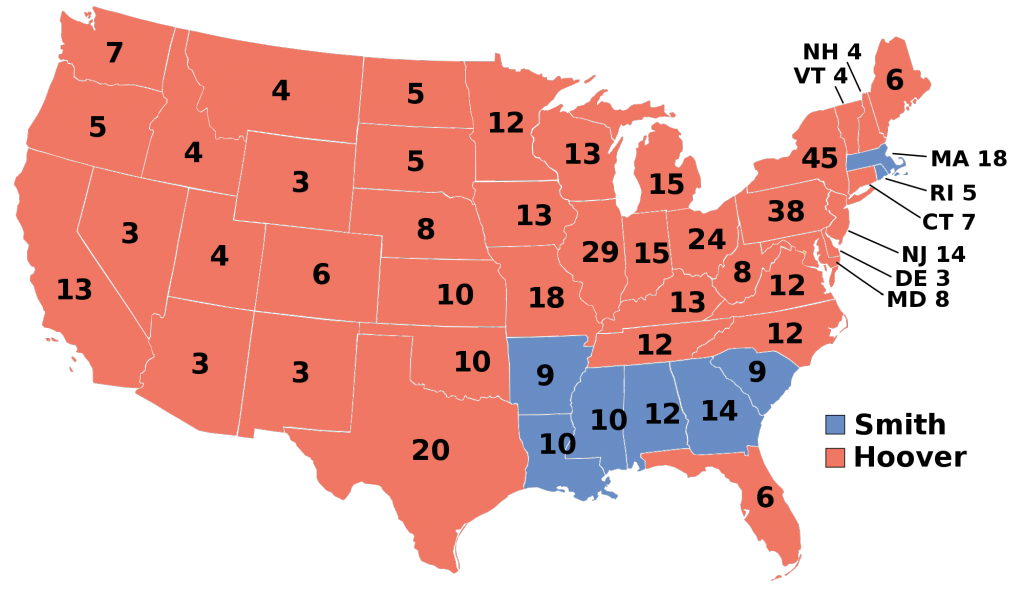
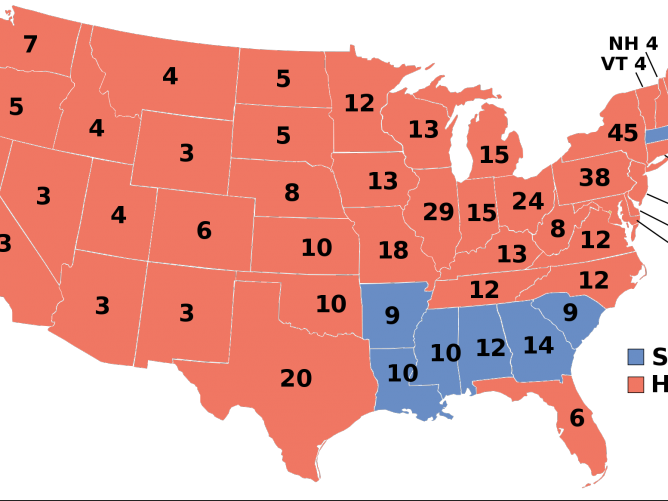
And I think that he can hold the line, maybe, in the South. I see him winning Mississippi and Alabama, and maybe Louisiana. I think he loses Georgia, I think he loses North Carolina. But I think… that’s only one area where the Republican Party is strong. You go to the Great Plains, right… So the Great Plains starts with Texas and then goes up to the Canadian border, and then it goes west up though Montana, Idaho, Wyoming, Utah. He is going to punk out all through that region. These people want nothing to do with this guy. Maybe they’ll vote for him over Hillary Clinton, because they find Hillary Clinton so objectionable, but he is not going to win those states by anything approaching a solid margin. If you want a view of what Trump looks like on election day, I think the best map you can look at is probably the 1928 map between Al Smith and Herbert Hoover. And Herbert Hoover massacred Al Smith. It is going to be an absolute, total bloodbath for Republicans. It will give the Democrats not only control of the White House and the Senate, but very possibly the House of Representatives That 1928 electoral map is about as one-sided as Trump’s electoral predictions get. I can’t say I’d look forward to such a lopsided win, mainly because I don’t want to think about the type of politician who will be able to capitalize on disappointed Trump voters (just as Trump spoke to disaffected Tea Partiers). Still if it means dealing a serious blow to the darkest corners of Trump’s twisted rhetoric, I’m all for it:

1928
1928

See: http://www.nationalmemo.com/nominating-trump-would-be-an-electoral-bloodbath-weekly-standard/

Brussels: Just the Latest Failure of the ‘War on Terror’

The two major aspects of the West’s ‘War on Terror,’ an enormous amount of violence and the demonization of Muslims, are only recipes for increased terrorism.

Source: RSN

Author: Paul Gottinger – Reader Supported News

Emphasis Mine

Once again the West has been stirred to outrage. Two bombs were set off in a bustling airport and one in crowded subway car in Brussels. Now we #PrayForBelgium.

The West has long turned a blind eye to the violence it wages around the world, but this is different. Once again, ‘they’ are attacking ‘us’ here at home.

The attack is tragic, but it shouldn’t be a surprise. To say the West’s ‘War on Terror’ has been an extraordinary failure is inaccurate. In actuality, it is accelerating terrorism.

In fact, during the 14 years of the ‘War on Terror,’ the West has failed to eliminate even one terror organization, yet groups like ISIS have risen from the ashes of the West’s counterterror policy.

My analysis of US State Department data shows that terror attacks have increased by a staggering 65 percent since 9/11. This massive escalation in terror really skyrocketed during the US War in Iraq. British Intelligence has dubbed this the ‘Iraq Effect.’

According the US State Department, in 2003 there were 208 terror attacks around the world, but that number had jumped to 11,000 attacks just two years later. In the years since, the number of attacks has generally been above 10,000.

It’s tragically fitting that the attack in Brussels occurred just 2 days after the 13th anniversary of the War in Iraq. That war, the centerpiece of the US ‘War on Terror,’ gave rise to ISIS, the very terror organization that claimed responsibility for the attack in Brussels.

Many of the US’s counterterror failures have their roots in the colossal disaster that was the Iraq War. ISIS exploited the destruction and instability of war to attract foreign jihadists, gain local support, and create a deeply rooted organizational structure.

Anger over the Iraq War is a common motivation cited for why individuals join ISIS, according to interviews with captured militants.

Most of the leadership of ISIS is Iraqi, and the group’s rise reflects the political failures in Iraq and Syria. The discrimination and violent repression of the Sunni community by the Iraqi government and the Assad regime in Syria created a situation where many Sunnis see ISIS as a preferable option to the state structures ISIS has replaced.

In response to the rise of ISIS, the West has taken its preferred form of action, violence. The US-led coalition has launched almost 11,000 strikes, which have killed 10,000 ISIS fighters in an ISIS military force that the CIA officially estimates to be 30,000, though this is likely a large underestimate.

This enormous use of force has predictably been largely unsuccessful. In fact, it actually fuels resentment by the local populations by leaving communities caught between ISIS’s harsh rule and the West’s indiscriminate violence. Military destruction without a political solution has only deepened the crisis and aided ISIS recruitment.

The US-Russia/Iran rivalry is another serious problem. It only sows division in the effort to fight terrorism in Iraq and Syria. The effect is that the US is turning its back on some of the most effective partners in the fight against ISIS.

Anyone hoping for a change of course in the West’s reaction to terror was quickly disappointed this week.

The US Secretary of Defense quickly announced that the Pentagon will increase funding for the US air strikes on ISIS, and Obama is even concerned a major terror attack in the US may force the US into a “large and costly war in the Middle East.”

But more violence abroad wasn’t the only response to Brussels the US offered. We also saw Donald Trump renewing his pledge to ban Muslims from entering the US, and Ted Cruz calling for police patrols in ‘Muslims neighborhoods.’

Not to be outdone by politicians, ordinary citizens exhibited some of that famous ‘Western civilization’ with the hateful hashtag #StopIslam, which was trending worldwide on Twitter.

Hillary Clinton also got in on the action. She called for censoring the Internet and for Muslims to rat on their friends and family if someone they know catches the ‘extremism’ bug.

Based on these responses, it seems the West will be unable to stem the tide of terror in the West, and worse yet, there doesn’t seem to even be an understanding of what drives individuals towards ‘jihadism.’

The two major aspects of the West’s ‘War on Terror,’ an enormous amount of violence and the demonization of Muslims, are only recipes for increased terrorism.

ISIS may lose territory, but if the underlying sectarian polarization and political crisis is unresolved, the conditions that allow ISIS to exist will remain in place in Iraq and Syria.

Ultimately, if the vast majority of the West’s resources continue to go to escalating the risks of terror and the West continues to ignore the Persian Gulf’s funding for extremism, then all the police and intelligence integration imaginable will fail to stop terrorism. The fundamental goal of counterterror should be to prevent the conditions that draw people to become terrorists, rather than just attempting to prevent attacks from being carried out.

A seismic shift is needed in the West’s counterterrorism policy, or the attacks in Belgium are sure to be but a small taste of what is to come for Europe and the US.


Paul Gottinger is a staff reporter at RSN whose work focuses on the Middle East and the arms industry. He can be reached on Twitter @paulgottinger or via email.

See: http://readersupportednews.org/opinion2/277-75/35950-focus-brussels-just-the-latest-failure-of-the-war-on-terror