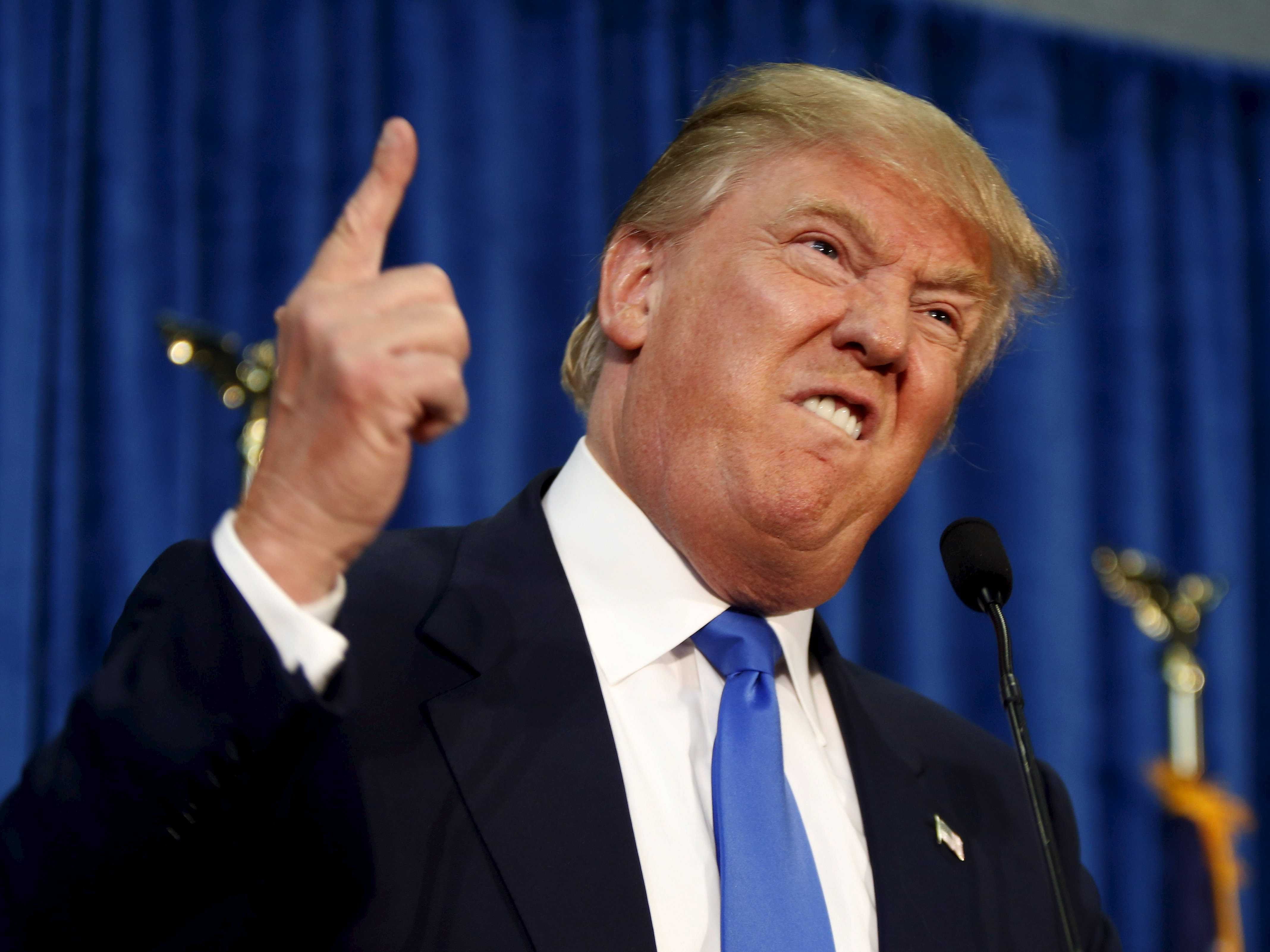
What Hillary Clinton Should Say about Islam and the “War on Terror”

The following is part of a speech that I think Hillary Clinton should deliver between now and November. Its purpose is to prevent a swing toward Trump by voters who find Clinton’s political correctness on the topic of Islam and jihadism a cause for concern, especially in the aftermath of any future terrorist attacks in the U.S. or Europe.

Source and Author: Sam Harris

Emphasis Mine

The following is part of a speech that I think Hillary Clinton should deliver between now and November. Its purpose is to prevent a swing toward Trump by voters who find Clinton’s political correctness on the topic of Islam and jihadism a cause for concern, especially in the aftermath of any future terrorist attacks in the U.S. or Europe.—SH

Today, I want to talk about one of the most important and divisive issues of our time—the link between the religion of Islam and terrorism. I want you to know how I view it and how I will think about it as President. I also want you to understand the difference between how I approach this topic and how my opponent in this presidential race does.

The underlying issue—and really the most important issue of this or any time—is human cooperation. What prevents it, and what makes it possible? In November, you will be electing a president, not an emperor of the world. The job of the president of the United States, even with all the power at her or his disposal, is to get people, both at home and abroad, to cooperate to solve a wide range of complex problems. Your job is to pick the person who seems most capable of doing that.

In the past, I’ve said that groups like ISIS and al-Qaeda have nothing to do with Islam. And President Obama has said the same. This way of speaking has been guided by the belief that if we said anything that could be spun as confirming the narrative of groups like ISIS—suggesting that the West is hostile to the religion of Islam, if only to its most radical strands—we would drive more Muslims into the arms of the jihadists and the theocrats, preventing the very cooperation we need to win a war of ideas against radical Islam. I now see this situation differently. I now believe that we have been selling most Muslims short. And I think we are all paying an unacceptable price for not speaking clearly about the link between specific religious ideas and the sectarian hatred that is dividing the Muslim world.

All of us, Muslim and non-Muslim alike, must oppose the specific ideas within the Islamic tradition that inspire groups like ISIS and the so-called “lone-wolf” attacks we’ve now seen in dozens of countries, as well as the social attitudes that are at odds with our fundamental values—values like human rights, and women’s rights, and gay rights, and freedom of speech. These values are non-negotiable.

But I want to be very clear about something: Bigotry against Muslims, or any other group of people, is unacceptable. It is contrary to the values that have made our society a beacon of freedom and tolerance for the rest of the world. It is also totally counterproductive from a security point of view. However, talking about the consequences of ideas is not bigotry. Muslims are people—and most of the world’s 1.6 billion Muslims simply want to live in peace like the rest of us. Islam, however, is a set of ideas. And all ideas are fit to be discussed and criticized in the 21st century.

Every religious community must interpret its scripture and adjust its traditions to conform to the modern world. Western Christians used to murder people they believed were witches. They did this for centuries. It’s hard to exaggerate the depths of moral and intellectual confusion this history represents. But it is also true that we have largely outgrown such confusion in the West. The texts themselves haven’t changed. The Bible still suggests that witchcraft is real. It isn’t. And we now know that a belief in witches was the product of ancient ignorance and fear. Criticizing a belief in witchcraft, and noticing its connection to specific atrocities—atrocities that are still committed by certain groups of Christians in Africa—isn’t a form of bigotry against Christians. It’s the only basis for moral and political progress.

One thing is undeniable: Islam today is in desperate need of reform. We live in a world where little girls are shot in the head or have acid thrown in their faces for the crime of learning to read. We live in a world where a mere rumor that a book has been defaced can start riots in a dozen countries. We live in a world in which people reliably get murdered over cartoons, and blog posts, and beauty pageants—even the mere naming of a teddy bear. I’m now convinced that we have to talk about this with less hesitancy and more candor than we’ve shown in the past. Muslims everywhere who love freedom must honestly grapple with the challenges that a politicized strand of their religion poses to free societies. And we must support them in doing so. Otherwise, our silence will only further empower bigots and xenophobes. That is dangerous. We are already seeing the rise of the far right in Europe. And we are witnessing the coalescence of everything that’s still wrong with America in the candidacy of Donald Trump.

Now, it is true that this politicized strain of Islam is a source of much of the world’s chaos and intolerance at this moment. But it is also true that no one suffers more from this chaos and intolerance than Muslims themselves. Most victims of terrorism are Muslim; the women who are forced to wear burkhas or are murdered in so-called “honor killings” are Muslim; the men who are thrown from rooftops for being born gay are Muslim. Most of the people the world over who can’t even dream of speaking or writing freely are Muslim. And modern, reform-minded Muslims, most of all, want to uproot the causes of this needless misery and conflict.

In response to terrorist atrocities of the sort that we witnessed in Paris, Nice, and Orlando, we need to honestly acknowledge that we are fighting not generic terrorism but a global jihadist insurgency. The first line of defense against this evil is and always will be members of the Muslim community who refuse to put up with it. We need to empower them in every way we can. Only cooperation between Muslims and non-Muslims can solve these problems. If you are concerned about terrorism, if you are concerned about homeland security, if you are concerned about not fighting unnecessary wars and winning necessary ones, if you are concerned about human rights globally, in November you must elect a president who can get people in a hundred countries to cooperate to solve an extraordinarily difficult and polarizing problem—the spread of Islamic extremism. This is not a job that a president can do on Twitter.

I want to say a few words on the topics of immigration and the resettlement of refugees: The idea of keeping all Muslims out of the United States, which my opponent has been proposing for months, is both impractical and unwise. It’s one of those simple ideas—like building a wall and deporting 11 million undocumented workers—that doesn’t survive even a moment’s scrutiny. More important, if you think about this purely from the point of view of American security, you realize that we want Muslims in our society who are committed to our values. Muslims like Captain Humayun Khan, who died protecting his fellow American soldiers from a suicide bomber in Iraq. Or his father, Khizr Khan, who spoke so eloquently in defense of American values at the Democratic National Convention. Muslims who share our values are, and always will be, the best defense against Islamists and jihadists who do not.

That’s one reason why the United States is faring so much better than Europe is. We have done a much better job of integrating our Muslim community and honoring its religious life. Muslims in America are disproportionately productive and prosperous members of our society. They love this country—with good reason. Very few of them have any sympathy for the ideology of our enemies. We want secular, enlightened, liberal Muslims in America. They are as much a part of the fabric of this society as anyone else. And given the challenges we now face, they are an indispensable part.

Despite the counsel of fear you hear from my opponent, security isn’t our only concern. We also have an obligation to maintain our way of life and our core values, even in the face of threats. One of our values is to help people in need. And few people on earth are in greater need at this moment than those who are fleeing the cauldron of violence in Iraq and Syria—where, through no fault of their own, they have had to watch their societies be destroyed by sectarian hatred. Women and girls by the tens of thousands have been raped, in a systematic campaign of sexual violence and slavery. Parents have seen their children crucified. The suffering of these people is unimaginable, and we should help them—whether they are Yazidi, or Christian, or Muslim. But here is my pledge to you: No one will be brought into this country without proper screening. No one will be brought in who seems unlikely to embrace the values of freedom and tolerance that we hold dear.  Is any screening process perfect? Of course not. But I can tell you that the only way to actually win the war on terror will be to empower the people who most need our help in the Muslim world.

The irony is that my opponent in this race, who imagines that he is talking tough about terrorism and ISIS and Islam, has done nothing but voice inflammatory and incoherent ideas that, if uttered by a U.S. president, would immediately make the world a more dangerous place. Being “politically incorrect” isn’t the same as being right, or informed, or even sane. It isn’t a substitute for actually caring about other people or about the consequences of one’s actions in the world. It isn’t a policy. And it isn’t a strategy for winning the war against jihadism, or a war of ideas against radical Islam…

see:www.samharris.org

Donald Trump Is a Terrible Politician

Some journalists believe he’s brilliant and cunning. They are very wrong.

Source: newrepublic.com

Author: Brian Beutler

Emphasis Mine

Back when Donald Trump was winning primaries, Mark Halperin, the famously well-compensated political journalist at Bloomberg, went on TV and said Trump is a terrific politician.

“He is one of the two most talented presidential candidates any of us have covered,” Halperin opined. “He just is.”

Trump’s skill, he explained, exceeds Barack Obama’s because, unlike Trump, Obama “had David Axelrod and David Plouffe and a squadron of people around him who knew what they were doing.” Trump flies solo, ergo every supporter he counts, every stadium he packs, is somehow more rightfully his.

Halperin has also defended Trump from accusations of racism on the grounds that “Mexico isn’t a race,” and posed for this notorious picture, so unspoken affinities may be affecting his analysis. But to this day, as Trump is losing to Hillary Clinton in every poll, it is still commonly suggested that Trump has mysterious political powers. No matter what he says, his supporters love it! If he’s losing, it might be because he’s “deliberately trying to avoid winning.”

I would like to propose an alternate hypothesis: Donald Trump is bad at politics. He won the Republican primary because he is a bad politician, he is losing today because he is a bad politician, and part of what makes him a bad politician is only doing the kinds of things his supporters love, which can appear to be good politics to incurious journalists, but is actually not.


Case in point: On Wednesday night, Trump returned in characteristically Freudian fashion to Sean Hannity’s show on Fox News and announced he would forcibly remove not just immigrants, but citizens from the U.S. if they’re found to have extremist views. “Whether it’s racial profiling or politically correct, we better get smart,” he said.

Trump isn’t exactly winging it. Some Americans are scared, authoritarian, and racist. In a big country such as ours, there might even be millions and millions of them. Fear, authoritarianism, and racism are also strong sentiments, so it stands to reason that the people who exhibit them would be loyal Trump supporters, and unusually inclined to attend his rallies, where the themes are frequently fear, authority, and racism.

This appeal was sufficient to win Trump the primary not because he demonstrated raw talent, but because the Republican Party is broken to the point where demagoguery is a more valuable currency than governing experience, donor networks, “ground game” and other attributes. If Trump exhibited any talent at all, it was recognizing just how vulnerable the GOP was to being overtaken by its own Id.

When the primary was all over, Trump had an extremely loyal core of support. By dint of being the nominee of a major party, millions more reflexive or reluctant or low-information voters accreted around that core, leaving Trump with the support of perhaps 40 percent of likely voters, and nowhere to go but down.

Saying things like we should exile U.S. citizens will help Trump fill arenas, but it also underlines how, contra Halperin, Trump is an almost comically untalented politician.

Kicking citizens out of the United States for having extreme ideological views is unconstitutional. Not unconstitutional in the way that conservatives imagine the only policy regimes allowed under the Constitution are ones they like, but unconstitutional in a clearly delineated way.

This was, in essence, the point Khizr Khan was making at the Democratic convention three weeks ago when he asked Trump, “Have you even read the United States Constitution?”

Trump’s decision to respond by attacking the Khan family was, in itself, open-shut evidence of his near total lack of political talent, but Trump and his surrogates justified his decision to defend himself on the grounds that Khan had attacked him unfairly—i.e. that it’s wrong to suggest Trump has never read the Constitution.

Based on a number of things Trump has said—including that the Constitution has (at least) twelve articles (it has seven)—Khan was on solid ground thinking maybe Trump never read the thing. But from the moment Khan’s speech captured the country’s imagination, and Trump responded as if he’d been slandered, that question—have you even read the Constitution?—made the metaphysic transformation from rhetorical to literal. Nearly a month has passed, and Trump has done nothing to address this glaring deficiency. He continues to propose unconstitutional ideas on a weekly basis, and it is a safe bet that when he and Clinton meet for their first debate next month, he will be confronted with some trivial question about the Constitution and have no clue how to answer.

Trump created this liability for himself over the course of a year, so sitting down and reading the Constitution—all 4,453 words of it, or less than a half hour of reading time—would only be the first step toward assuring skeptics and critics that he’s intent on safeguarding the country’s laws and traditions. But whether it’s because he’s irremediably lazy, or that he believes this kind of ignorance allows him to pander to scared, authoritarian racists without a filter, he is unwilling to do it. He would rather keep his crowds big and his polls bad. Even if it means allowing Hillary Clinton to shove him into a buzzsaw in front of a huge TV audience a few weeks from now.

This isn’t ultimately a question of instinct or strategy, because in a sense it’s both. But in a more important sense it doesn’t matter. Talented candidates will bridle their instincts long enough to ensure they’re making good strategic decisions that help them win elections. Donald Trump isn’t doing that, because he’s a bad politician. Most well-compensated journalists get that.

See:https://newrepublic.com/article/136153/donald-trump-terrible-politician?utm_source=New+Republic&utm_campaign=1f4018b171-Daily_Newsletter_8_19_168_19_2016&utm_medium=email&utm_term=0_c4ad0aba7e-1f4018b171-59481477

And just which chord was struck, Maestro?

Donald, Donald, he’s our man! If he can’t do it, the Ku Klux Klan!

Donald, Donald, he’s our man!  If he can’t do it, the Ku Klux Klan!

Multiple time Republican Presidential hopeful Rick Santorum – appearing on Realtime with Bill Maher on August 5th – rather superciliously noted that Donald Trump has ‘struck a cord with voters’.  True that, but the questions to be asked are: which ‘chord’, and what voters?

Santorum – as have many Trump apologists – echoed the GOP wishful thinking that the voters to whom Trump appeals are lower income working class (traditionally Democrat voters),  that the chord which was struck was economic populism, and that Trump recognizes their plight and will address their concerns if elected.

In fact Trump supporters have a higher median income than the national average –  see http://fivethirtyeight.com/features/the-mythology-of-trumps-working-class-support/  – which means his supporters are not lower income.  Which ‘chord’?

The ‘chord’ which has been struck is in fact not economic populism but rather racism, and its bedfellows misogyny and xenophobia: the deportment of his supporters at rallies confirm that these are their primary concerns.

“At the end of the day”, elections are won with voter turnout, and to defeat him, then,  we must register and turnout people of color, women, and those citizens who were born in ( and whose parents were born in) another country.  Despite his nodding toward working Americans, he has a historically anti-labor record, and labor must get out the vote as well.

N.B.: Trump read an economic speech in Detroit on August 8, and in summary: “I don’t know if Trump has tiny hands or not. But when it comes to the economy, he definitely has tiny plans. We were promised a bold new vision. What we got instead was, with one or two notable exceptions, a warmed-over version of the House Republicans’ standard-issue voodoo economics.”   Richard Eskow – http://www.alternet.org/election-2016/trump-small-economic-vision?akid=14525.123424.w6yQX4&rd=1&src=newsletter1061756&t=18

N.B.:The first Presidential election in which I voted was 1964, and an unpopular person at the top of the GOP ticket  helped facilitate a Democratic landside: let’s do that again!  That candidate was Barry Goldwater: he carried his home state of Arizona, and the five states of the original Confederacy.

Donald, Donald, he’s our man!  If he can’t do it, the Ku Klux Klan!

(In 1964 it was Barry, Barry…)


Trump Offers Huge Favors to Billionaires, and Calls It a Big Economic Speech

GOP presidential pick’s policy paves way for Wall Street looting of economy.

Source: AlterNet

Author: Adele M. Stan

Emphasis Mine

If it came out of the mouth of any other politician, the speech delivered Monday by the Republican presidential candidate at the Detroit Economic Club would have been stunning in its mendacity. But issuing forth from the pie-hole of Donald J. Trump, it was, sadly, to be expected.

The lies were almost too many to count: Point to a sentence, find a lie. There was the lie about his opponent’s policy on taxing the middle class; Hillary Clinton clearly said she wouldn’t, and Trump is using her dropping of a consonant on a single word to say she did. (Just to be sure, PolitiFact had academics run audio of Clinton’s tax statement through a machine that analyzes such things.)

He claimed “the terrible Obama-Clinton judgment” destroyed Detroit’s manufacturing sector, when the Obama administration twisted Republican arms to get the funding to save the American auto industry

There were also lies of omission. The U.S., he said, has the highest corporate tax rates in the developed world, without mentioning the fact that many of the nation’s largest corporations pay no taxes at all. In fact, some, such as Verizon and General Electric, actually pay a negative tax rate, meaning they actually get rebates back from the Treasury.

I could go on and on, but “Trump lies” is pretty much a dog-bites-human story. Yawn.

More telling is who Trump named to his economic team—the very sort of people who stand to gain from his Main Street-looting economic policies. For starters, they are 13 rich white men. But they’re rich white men whose riches were mostly gained by preying on the weak. And most, Politico’s Shane Goldmacher reports, are major donors to the Trump campaign.

Take John Paulson, whose Paulson & Co. hedge fund, according to Forbes, “is famed for betting against subprime mortgages at the peak of the 2007 credit bubble.” Paulson, the magazine reports, is worth $9.8 billion.

Then here’s Harold Hamm, founder of the oil firm Continental Resources, who is known to frequent the big donor confabs convened by the Koch brothers (but who is now at odds with the scions of Koch Industries over the brothers’ refusal to back Trump). Hamm is a backer of the climate-science deniers in Congress, according to the Energy and Policy Institute, and is said to be shaping Trump’s energy policy. If you don’t see climate-science deniers as preying on the weak, think about the people who got hurt in Hurricane Katrina. Think about the people who can’t sell their homes in Norfolk, Virginia because of sea-level rise.

And let’s not forget Steve Feinberg, the CEO of something called Ceberus Capital Management, which Evan Popp and Josh Israel of Think Progress describe as “a private investment firm which specializes in ‘distressed investing.’” Among the “distressed” properties acquired by Ceberus is Remington, the manufacturer of the AR-15-style rifle—the kind that was used in the Sandy Hook massacre and other mass shootings.

My personal favorite among the men at Trump’s economic table is probably the least wealthy but perhaps the most disingenuous: Stephen Moore, former member of the Wall Street Journal editorial board and late of the Heritage Foundation. Known for his insanely inaccurate economic predictions, Moore has been the toady of billionaires for decades, allowing him to fall ever-upward.

In 2011, while reporting for AlterNet and the Investigative Fund on the Koch brothers’ fomenting of the Tea Party movement, I found Moore wrapped up in a for-profit scheme apparently designed to scare the employees of companies hired by him into voting for Republicans. The scheme was called Prosperity 101 and was helmed by Mark Bloch, then the state chairman of the Wisconsin chapter of the Koch brothers’ Americans for Prosperity political astroturf group. Moore was often a paid speaker at the ostensibly voluntary seminars employees at firms in the Koch network were invited to attend. He was also often a paid speaker at Americans for Prosperity events, even as he sat on the editorial board of one of the nation’s major newspapers.

Moore’s contribution to the seminar textbook was illustrative of his willingness to simply make stuff up. From AlterNet’s 2011 report:

In “The Keys to Prosperity,” Moore’s chapter in the Prosperity 101 textbook, he offers up a series of charts, some of them indecipherable, including a pie chart called “Where Your Federal Tax Dollar Goes.” (Apparently derived from an earlier presentation Moore made at an AFP Foundation event, the same charts can be found here; scroll to slide no. 16 for this one.) Citing such official sources as the Internal Revenue Service, the Government Accountability Office and the Bureau of Labor Statistics, it features eight slices labeled “Flushed Down a Toilet, “Pissed Away,” “Down a Rat Hole,” “Sleaze,” “Corruption,” “Given to ‘Supporters,'” “Tossed Down the Drain,” and “Postage Stamps.” (The latter, Moore baselessly contends, accounts for 6 percent of your tax dollars—which is, incidentally, six times the allotment for non-military foreign aid). 

In psychology, there’s a concept known as projection, the term for when a patient ascribes to his nemesis the very motive or behavior that animates the patient. 

In his nearly hour-long speech at the Detroit Economic Club, Donald Trump accused his opponent of being “bought, controlled and paid for by her donors and special interests.” 

Look at the men on Trump’s own economic team, and you’ll get a very clear idea of just who his policies aim to benefit.

 Adele M. Stan is AlterNet’s senior Washington editor. Follow her on Twitter @addiestan.

See:http://www.alternet.org/election-2016/election-2016-0?akid=14516.123424.kDqD-C&rd=1&src=newsletter1061540&t=2

Republicans Are Realizing They’ve Made a Huge Mistake

The strategy of endorsing Donald Trump while keeping him at arm’s length is going as badly as anyone could have expected.

Source: New Republic

Author:Eric Sasson

Emphasis Mine

Yesterday, President Obama took the unprecedented step of calling the opposing party’s nominee to replace him “unfit” for the office and asking for Republican leaders to rescind their endorsements of his candidacy. “There has to come a point at which you say, enough,” the president said. Meanwhile, three Republicans—Representative Richard Hanna, former gubernatorial candidate Meg Whitman, and former Chris Christie adviser Maria Comella—announced they would support Hillary Clinton in November. And in the face of a growing rebellion over his ongoing feud with the Muslim family of a slain U.S. soldier, Donald Trump announced he was not ready to support the re-election bids of three high-profile members of the GOP: John McCain, Paul Ryan, and Kelly Ayotte.

The events of the last week have led many to wonder why Ryan and Senate Majority Leader Mitch McConnell are still attempting to thread what has become an increasingly narrow needle. Both leaders have condemned Trump’s comments several times already, only to remain behind his candidacy. In the face of Trump’s remarks against the Khan family, their loyalty is beginning to seem foolhardy.

Of course, it’s one thing for Obama to call upon Republican leadership to denounce Trump, and quite another for them to follow through. Trump overwhelmingly won the Republican primaries. Indeed, he garnered more votes than any other Republican in history (although he also got the most votes against him too). Make no mistake, Ryan and McConnell, and senators like McCain, are relying heavily on these voters to turn out in the general election and vote for down-ticket Republicans. To pull their endorsements would be to effectively denounce these voters as well, falling into exactly the trap that Trump has often spoken of: that of an elite establishment that thinks it knows better than the voting public. Alienating these voters is, in their minds, simply not an option, with control of the Senate clearly up for grabs. If Trump voters stay home, the argument goes, then Democrats win. Which explains the precarious balancing act Ryan and Co. are attempting: criticize Trump just enough to distance the party from Trump, but never outright condemn him and scare away his voters.

One has to wonder, however, if we’ve reached a turning point with the Khan story. Trump’s refusal to walk back his attacks on the Khans has dominated the headlines for days and presents a nearly existential conundrum for a party that prides itself on being a champion of the military. The cost-benefit analysis that these Republican leaders are engaging in may be shifting. Is holding on to the Senate really worth the irreparable harm that Trump is doing to the Republican brand?

Furthermore, there is little chance that the Khan controversy will be the last of Trump’s PR disasters. With future offenses seemingly inevitable, Republicans will time and again have to offer their mealy-mouthed condemnations, while Democrats, the press, and moderate conservatives will keep demanding that more forceful steps be taken. Standing by idly while Trump runs their party into the ground seems to be the very definition of spinelessness.

And when does Trump flip from being the party’s buoy to an anchor around its neck? The fear of turning away Trump voters rests on the assumption that he will attract more voters than he drives away. And yet, after a short period in which Trump was riding a post-convention high, it took only a few days for Clinton’s lead to magically reappear in the polls. There is the real threat that Trump’s accumulated offenses may inspire a massive turnout against him, not just by those he has offended, but also by people who suddenly feel the Republican Party no longer speaks for them. Already many are talking about how Republicans are losing college-educated white voters in droves. Certainly the fiscal conservatives and the neo-cons aren’t on board with Trump’s agenda, with several of them already saying they will never vote for him. What will happen to the GOP’s down-ticket candidates then?

At this late date, it seems unlikely that the GOP can save itself. Forcing Trump off the ticket, if such a thing were possible, would spark a massive rebellion, dooming any Republican who would dare to try to replace him. Running a split-ticket strategy—vote for Clinton and your Republican congressman—would be a highly complex undertaking that would similarly turn off Trump’s voters.

At every opportunity, Republican leaders have chosen the path of least resistance to Trump. Like deer trapped in headlights, they are paralyzed by their helplessness and indecision. And yet it seems like the riskiest choice of all may be to do nothing.

See:https://newrepublic.com/article/135791/republicans-realizing-theyve-made-huge-mistake?utm_source=New+Republic&utm_campaign=38d09b8d16-Daily_Newsletter_8_3_168_3_2016&utm_medium=email&utm_term=0_c4ad0aba7e-38d09b8d16-59481477

The New Working Class: Trump Can Talk to Disaffected White Men, but They Don’t Make up the ‘Working Class’ Anymore

Source:AlterNet

Author: Tanara Draut/bill moyers.com

Emphasis Mine

Thursday night, Trump spent considerable air time speaking (more like yelling) about how America’s steel and coal workers have been ignored and sold-out for decades by both political parties. He promised to bring back those long-disappearing jobs and to put their needs front and center in his administration. As the daughter of a steel worker, I admit it was nice to finally hear someone talk about how the old industrial working class was robbed of their dignity and livelihood, with little regard for the devastation left behind.

But that working class — the blue-collar, hard-hat, mostly male archetype of the great post-war prosperity — is long gone. In its place is a new working class whose jobs are in the now massive sectors of our serving and caring economy. And so far, neither Trump nor Clinton have talked about this new working class, which is much more female and racially diverse than the one of my dad’s generation. With Trump’s racially charged and nativistic rhetoric, he’s offering red meat to a group of Americans who have every right to be angry — but not at the villains Trump has served up.

The decades-long destruction of American manufacturing profoundly changed the working class — neighborhoods, jobs and families. What had once been nearly universal, guaranteed well-paying jobs for young men fresh from high school graduation were yanked overseas with little regard for the devastation left behind.

To add insult to injury, the loss of manufacturing jobs was often heralded as a sign of progress. As the economic contribution of these former working-class heroes to our nation dwindled and the technology revolution sizzled, in many people’s minds, millions of men became zeroes. They seemed to be a dusty anachronism in a sparkling new economy.

Black men, who had fought for decades for their right to these well-paying jobs, watched them evaporate just as they were finally admitted to competitive apprenticeships and added to seniority lists. When capital fled for Mexico or China, the shuttered factories in America’s biggest cities left a giant vacuum in their wake, decimating a primary source of jobs for black men that would never be replaced.

The economic vacuum would be filled with a burgeoning underground economy in the drug trade, which was met with a militarized war on drugs rather than an economic development plan. That war continues today — the scaffolding upon which our prison industrial complex is built and the firmament upholding the police brutality and oppression in black communities that result in far too many unarmed black men being shot and killed by police.

As for the once privileged, white working-class man, the dignity and sense of self-worth that came with a union contract and the trappings of middle-class life are sorely missed and their absence bitterly resented. In the absence of real commitments from either political party to promote high-quality job creation for workers without college degrees, conservative talk-radio’s echo chamber and the rhetoric of far-right conservative politicians have concocted a story about who is winning (and taking from government) in this post-industrial economy: African-Americans and immigrants.

These are the contours shaping our nation’s political debate.

Trump has hitched his presidential wagon to the pain of the white working class, though far more rhetorically than substantively. With his anti-immigrant pledge to “build a wall” and his unicorn promises to rip up trade agreements and bring manufacturing jobs back to our shores, Trump promises to make the white working class “winners” again.

But the sad reality is that his campaign represents nothing more than yet another cynical political ploy to tap the racial anxiety and economic despair felt by white working-class men. It is a salve to soothe with no real medicine for healing the underlying wound.

Trump, and the Republican Party more broadly, offers no solutions or even promises to address the grave economic insecurity of the broader working class today, whose jobs are more likely to be in fast food, retail, home health care and janitorial services than on an assembly line. Unlike their predecessors, today’s working class toils in a labor market where disrespect — in the form of low wages, erratic schedules, zero or few sick days and arbitrary discipline — is ubiquitous. Gone are the unions and workplace protections that created a blue-collar middle class — the best descriptor for my own family background. Today’s working class punch the clock in a country with the largest percentage of low-paid workers among advanced nations, with the paychecks of African-Americans and immigrants plunging even further, particularly among women.

Thanks to the brave action and demands of movements like Fight for $15, United We Dream and Black Lives Matter, the Democratic Party is finally offering a robust official platform to improve the lives of today’s working class, not the one of my father’s generation. After decades in which working-class plight went largely overlooked by the Democrats in favor of a more centrist, pro-business stance, the party’s progressive economic shift should claim broad support among the new working class. As noted in my book, “Sleeping Giant,” unlike a generation ago, today’s working class is multiracial and much more female — more than one-third of today’s working class are people of color. Nearly half (47 percent) of today’s young working class, those aged 25-34, are not white people. And two-thirds of non-college educated women are in the paid labor force, up from about half in 1980.

The Democratic Party, both through its platform and its candidate, supports higher wages, paid sick days, affordable child care, college without debt and reifying the right to a union. With a platform more progressive than any in recent history, especially on economic and racial justice issues, there should be no doubt that the Democratic Party is the champion of the working class, at least on the merits. But most people don’t read party platforms or study policy positions. Instead, they listen and watch, waiting for cues that a candidate “gets” them and is actually talking to them.

For despite the platform language and Hillary Clinton’s stated positions, the Democratic Party hasn’t been talking to the working class. The words “working class” seem all but erased from the Democratic lexicon — in its speeches, ads and on its social media. The party’s language still clings to vague notions of “working people” or “hard-working Americans” or the false notion of a ubiquitous “middle class.” It may well be that the party has bought the political spin that “working class” is code for “white and male” — but actually, it’s people of color who are much more likely to consider themselves working class. And as the party of racial and social justice, Democrats are missing a big opportunity to sell its economic platform to this new working class.

Tamara Draut is the author of Strapped: Why America’s 20- and 30-Somethings Can’t Get Ahead.

See:http://www.alternet.org/election-2016/new-working-class-trump-can-talk-disaffected-white-men-they-dont-make-working-class?akid=14471.123424.UKgJGa&rd=1&src=newsletter1060784&t=10

Paul Krugman Dismantles the Entire Premise of Trump’s Candidacy

Sorry scare-mongers. Crime is down. Social progress has made us safer.

Source: AlterNet

Author: Janet Allon

Emphasis Mine

The heads of fact-checkers throughout the land exploded last week, as speakers at the RNC in Cleveland piled lie upon lie upon piles of lies. The favorite of all these lies is the one about crime running rampant and Americans in general being so very unsafe.

It’s just not true.

Paul Krugman dismantles this myth in Monday’s column, starting with his (and Trump’s and Giuliani’s) hometown.

Last year there were 352 murders in New York City. This was a bit higher than the number in 2014, but far below the 2245 murders that took place in 1990, the city’s worst year. In fact, as measured by the murder rate, New York is now basically as safe as it has ever been, going all the way back to the 19th century.

National crime statistics, and numbers for all violent crimes, paint an only slightly less cheerful picture. And it’s not just a matter of numbers; our big cities look and feel far safer than they did a generation ago, because they are. People of a certain age always have the sense that America isn’t the country they remember from their youth, and in this case they’re right — it has gotten much better.

So, the question is, what gives with the terrifying premise of the Trump speech—that crime is rampant and that he alone can fix it. (But he can’t tell you how, because then he’d have to kill you.)

It’s only one of Trump’s lies, Krugman notes. Another favorite is the bit about our being the most highly taxed country on earth, when pretty much the opposite is true among comparably economically advanced countries.)

But the fact that crime is not actually running in any way rampant is a fact that can be seen by anyone with eyes. Yet, all too many voters, and possibly a majority of white men, buy it. Again, why? Krugman:

One answer is that, according to Gallup, Americans always seem to believe that crime is increasing, even when it is in fact dropping rapidly. Part of this may be the wording of the question: People may have a vague, headline-fueled sense that crime is up this year even while being aware that it’s much lower than it used to be. There may also be some version of the “bad things are happening somewhere else” syndrome we see in consumer surveys, where people are far more positive about their personal situation than they are about the economy as a whole. Again, however, it’s one thing to have a shaky grasp on crime statistics, but something quite different to accept a nightmare vision of America that conflicts so drastically with everyday experience. So what’s going on?

Krugman’s hypothesis is that the fear is displaced. The old order is kaput. The country is becoming less racist and sexist overall, with rising diversity and muddier gender roles. Making America Great again probably involves getting women back in the home once again. Trump VP pick Mike Pence is all about espousing those traditional values, and even absurdly once wrote an essay descrying the Disney movies Mulan for featuring a strong, warrior-like heroine. Sad. Here’s the simple truth that conservatives cannot abide. All the social changes that the sixties began to usher in have made America safer, maybe even greater! The truth hurts.


See: http://www.alternet.org/election-2016/paul-krugman-dismantles-entire-premise-trumps-candidacy?akid=14467.123424._4WGce&rd=1&src=newsletter1060764&t=6

Donald Trump’s Caesar Moment

Detached from history and fueled by fear, his convention speech was utterly unlike anything we’ve heard in American politics.

I am king
I accept

Source: Portside

Author: Jeff Greenfield, Politico

Emphasis Mine

It was a speech perfectly suited to the nominee. It was a speech utterly unconnected to anything we have ever heard from any previous nominee. It was, then, exactly what we should have expected from this most unexpected of candidates.

Most American presidential nominees—indeed, most convention speakers—pay homage to outsized figures of the nation’s past, even some from the other side of the spectrum. House Speaker Paul Ryan, as did countless others in Cleveland, paid homage to Ronald Reagan. Vice Presidential nominee Mike Pence told the assembled Republicans that “the heroes of my youth were President John F. Kennedy and the Reverend Dr. Martin Luther King Jr.” Ronald Reagan himself, back in 1980, quoted Franklin D. Roosevelt. In past conventions, the Founding Fathers were invoked, or inspirational party leaders of the past, or some link to the heritage of party or country.

And Donald Trump? In his speech, there was no thread of any kind linking him to past American greats, no sense that he is following any tradition. Indeed, in one of the best-received lines of the speech, he told us, of our “rigged” system: “I alone can fix it.” Fix it with his own party’s leadership in Congress, or with an aroused populace? No. “I alone can fix it.”

In so many other ways, Trump presented himself as a man alone, imbued with the power to do what no other person or institution can do. Consider how he described his visits to “the laid-off factory workers, and the communities crushed by our horrible and unfair trade deals. These are the forgotten men and women of our country. People who work hard but no longer have a voice.

“I am your voice.”

In his speech, Trump defined himself as a bedrock figure in American culture: the figure who faces danger alone, who follows his own code of conduct.

In this declaration—repeated at the end of the speech—Trump defined himself as a bedrock figure in American culture: the figure who faces danger alone, who follows his own code of conduct. He is Gary Cooper, standing alone against the Miller Gang in Hadleyville. To be more precise, and more contemporary, he is the man who uses his great wealth to protect the powerless from evil: He’s Bruce Wayne as Batman, Tony Stark as Ironman.

In this persona, there is no room for a note of good humor or the kind of self-deprecation we’ve seen in other nominees. Mike Pence noted, in introducing himself to the crowd, that Trump “is a man known for having a large personality, a colorful style, and lots of charisma. I think he was just looking for some balance on the ticket.” Bill Clinton in 1992 mocked his own disastrous, wandering 1988 nominating speech by saying he’d run for President, “to finish the speech I began four years ago.”

Nor is there any room for a cautionary note about the limits of presidential power. John Kennedy’s 1961 inaugural address, for instance, ends by saying of his: “all this will not be finished in the 100 days. Nor will it be finished in the first 1000 days, nor in the life of this Administration.”

What does Trump say?

“..the crime and violence that today afflicts our nation will soon come to an end.”

(N.B.: crime is at a 40 year low.)

“On the economy, I will outline reforms to add millions of new jobs and trillions in new wealth that can be used to rebuild America.”

“On January 21st of 2017, the day after I take the oath of office, Americans will finally wake up in a country where the laws of the United States are enforced.”

“I am going to bring our jobs back to Ohio and to America – and I am not going to let companies move to other countries, firing their employees along the way, without consequences.”

In this speech, we have finally seen the answer to the perplexing question of just what political philosophy Donald Trump embraces. It is Caesarism: belief in a leader of great strength who, by force of personality, imposes order on a land plagued by danger. If you want to know why Trump laid such emphasis on “law and order”—using Richard Nixon’s 1968 rhetoric in a country where violent crime is at a 40-year low—it is because nations fall under the sway of a Caesar only when they are engulfed by fear. And the subtext of this acceptance speech was: be afraid; be very afraid.

(N.B.: “The only thing we have to fear is fear itself.” – FDR inaugural speech March 1933.)

It is impossible to imagine anyone else giving an acceptance speech so disconnected from anything in the American political tradition. Whether voters see that departure as a cause for celebration or worry may help decide what happens in November.

Jeff Greenfield is a five-time Emmy-winning network television analyst and author.
See:http://portside.org/2016-07-22/donald-trump%E2%80%99s-caesar-moment

The Media’s Gift to Trump: Low Expectations

When a candidate starts in the cellar in terms of behavior and temperament, there’s nowhere to go but up.

Source: AlterNet

Author: Neal Gabler / Moyers and Company

See:http://www.alternet.org/election-2016/trump-benefits-media-low-expectations?akid=14435.123424.VNLCX8&rd=1&src=newsletter1060075&t=6

Trump’s Biggest Scam: Fooling His Voters into Thinking He’s One of Them

Trump’s actual relationship to the establishment is complex in an opportunistic way.

Source: AlterNet

Author: Nomi Prins, Craig Wilson / Tom Dispatch

Emphasis Mine

This piece originally appeared on TomDispatch.

Give the guy credit.  Donald Trump makes perspective — on him at least — almost inconceivable, and that’s no small accomplishment.  Is he heading up or down?  Polling well or poorly?  Going to win or lose?  Who knows?  Take Nate Silver whose FiveThirtyEight website recently launched its poll of polls with The Donald having only a 19% chance of taking the presidency.  Silver was remarkably on target in election years 2008 and 2012, but he’s been off when it comes to Trump (and he’s hardly alone), so who really has a clue what that 19% may really mean on November 8th?

For months and months, Trump has performed a masterful version of media jiu-jitsu, leveraging the interest in him from what seems like every journalist, newspaper, website, and cable news network on Earth into more free publicity and coverage than any individual may ever have gotten.  It’s been impossible to escape the man. There probably wasn’t a day in months without a Donald Trump story (or often multiple ones) and he’s regularly dominated the news cycle with his latest outrageous statement or provocation, no matter what else is going on.  There is no Brexit without Donald Brexit; no ISIS without Donald ISIS, no Hillary without Donald Hillary.  He hires, fires, invites, rejects, embraces, insults, tweets, challenges, denies, refuses, ingratiates, blackballs — and whatever he does, it’s news By definition.  And don’t forget the endless scribblers and talking heads, faced with his all-invasive version of reality, who cough up reams of “analysis” about him, which only furthers the way he Trumps the world, no matter what they write or say.

You can almost hear the echoing voice from some ninth rate horror film echoing down the corridors: I tell you, you can run, but you can’t hide, ha, ha, ha, ha…

In Donald Trump’s world, as far as I can tell, there is only one reality that matters and it can be summed up in two words that begin with D and T.  Were he to become president, he would give Louis XIV’s famed phrase — whether or not the French king actually said it — “L’état, c’est moi” (“I am the state”), new meaning.

During these past many months of Trumpery, Nomi Prins has been sorting out the nature of the money game in American politics (onshore and off) for TomDispatch.  Now, she turns to the billionaire who has taken possession of us all.  Her focus: his frenetic version of “You’re fired!” this election season and how that’s played out with the Republican establishment, without whom (and without whose money) she doubts he can make it to the Oval Office.-Tom Engelhardt

Donald Trump’s Anti-Establishment Scam
The Insider Posing as an Outsider Trying to Get Back on the Inside

By Nomi Prins with Craig Wilson

Establishment: A group in a society exercising power and influence over matters of policy, opinion, or taste, and seen as resisting change.” — Oxford Dictionary

Early on in his presidential bid, Donald Trump began touting his anti-establishment credentials. When it worked, he ran with it.  It was a posture that proved pure gold in the Republican primaries, and was even, in one sense, true. After all, he’d never been part of the political establishment nor held public office, nor had any of his family members or wives.

His actual relationship to the establishment is, however, complex in an opportunistic way. He’s regularly tweeted his disdain for it. (“I wish good luck to all of the Republican candidates that traveled to California to beg for money etc. from the Koch Brothers. Puppets?”) And yet, he clearly considered himself part of it and has, at times, yearned for it. As he said early on in his run for the presidency, “I want the establishment — look, I was part of the establishment.  Let me explain. I was the establishment two months ago. I was like the fair-haired boy. I was a giver, a big giver. Once I decided to run, all of a sudden I’m sort of semi-anti-establishment.”

An outsider looking to shake up the government status quo? An insider looking to leverage that establishment for his own benefit?   What was he?  He may not himself have known.

He once rejected the idea of taking establishment (or Super PAC) money, only — more recently — to seek it; he rebuffed certain prominent establishment players, only to hire others to help him (and fire yet more of them).  He’s railed against the establishment, then tried to rally it to his side (even as he denounced it yet again). Now, with the general election only four months away, it turns out that he’s going to need that establishment if he is to have a hope in hell of raising the money and organizing the troops effectively enough to be elected. There, however, is the rub: power brokers don’t suffer the slings and arrows of “outsider” scorn lightly.

As a result, if he now needs the establishment more than he’d publicly admit, it may not matter.  He may find himself ostracized by the very party he’s set to represent.

Once upon a time not so long ago, making America great again involved a bankroll untainted by the Republican political establishment and its billionaire backers. There would, The Donald swore, be no favors to repay after he was elected, no one to tell him what to do or how to do it just because they had chipped in a few million bucks.  But for a man who prides himself on executing only “the best” of deals (trust him) this election has become too expensive to leave to self-reliance.

One thing is guaranteed: Donald Trump will not pony up a few hundred million dollars from his own stash.  As a result, despite claims that he would never do so, he’s finally taken a Super PAC or two on board and is now pursuing more financial aid even from people who don’t like him. Robert Mercer and his daughter Rebekah, erstwhile influential billionaire backers of Ted Cruz, have, for instance, decided to turn their Make America Number 1 Super PAC into an anti-Hillary source of funds — this evidently at the encouragement of Ivanka Trump.

In the big money context of post-Citizens United presidential politics, however, these are modest developments indeed (particularly compared to Hillary’s campaign).  To grasp what Trump has failed to do when it comes to funding his presidential run, note that the Our Principles Super PAC, supported in part by Chicago Cubs owners Marlene Ricketts and her husband, billionaire T.D. Ameritrade founder J. Joe Ricketts, has already raised more than $18.4 million for anti-Trump TV ads, meetings, and fundraising activities. (On the other hand, their son, Pete, Republican Governor of Nebraska, has given stump speeches supporting Trump.)

To put this in context, that $18.4 million is more than the approximately $17 million that all of Trump’s individual supporters, the “little people,” have contributed to his campaign.  (He is no Bernie Sanders who raised $220 million from individuals in the 2016 campaign season.) Even with all his wealth, Trump is in a funding nightmare, lacking the confidence of the Republican party and its most generous loyalists.

To be sure, other establishment billionaires have expressed support for Trump, like funding kingpin Sheldon Adelson who said he’d fork over $100 million to the Trump cause. It’s just that he hasn’t done that yet. Chris Christie is similarly trying to help raise funds for the campaign.  But the man-who-would-be-veep hasn’t had much luck. So far, at least, Trump’s biggest establishment supporters have been more talk than action.

The Trump Team

In addition to the usual money not flowing in from the usual crowd, there’s the issue of actually preparing to staff a future administration with the usual people, not to speak of the seasoned set of advisers that normally surround presidential candidates. Increasingly, it seems that they may not be available or have already left the proverbial building — and that’s a problem.

Trump has vowed to fill his administration with “the best people.” (In a perfect world, they would, of course, be his clones.) Yet so far, he’s been pursuing what he has characterized as a “lean” strategy, which means that few are yet on board and it’s getting late in the game to fake it.

Usually by this time in the election cycle, nominees have pulled together their inner circle, mostly from well-known or rising establishment players, including policy wonks by the bucketful.  He hasn’t.  According to Vin Weber, a D.C.-based partner at Mercury, which bills itself as a global, high-stakes public strategy firm, who crafted Mitt Romney’s “policy shop” in 2012, the lack of infrastructure is unprecedented. Romney’s policy shop was first formed 18 months before the 2012 election and fine-tuned in January 2012. We’re in July 2016 and from Trump on this score — nothing. Nada. “Nobody in Washington that I know of,” Weber says, “is assembling a staff for an incoming Trump administration.”

Given his public war with his party, Trump may find himself without anyone left to fire.  It’s one thing to cut back on government, another to have no one around to do anything.

Maybe winging it on national policy and disparaging those who might someday make such policy is endearing in The Donald, but not to the Washington establishment.  Whatever the case, it might be useful before the Republican convention, which already promises to be a bizarre spectacle, to consider who Trump’s “best people” are — and aren’t — at the moment. Who are his most loyal advisers and supporters? Who would take a political bullet for him or put that bullet in him?

For the answers to such questions, it’s necessary to consider three categories: blood, money, and power. In the land of Trump (and Clinton), of course, blood — that is, family — comes first; financial interests, second; and the political power-elite (a.k.a. the establishment), last.

For Trump, family is foremost; general election finances are still remarkably lacking; and that final group remains infinitesimal, given how big the Washington establishment actually is.  And do note that this has not been because The Donald hasn’t tried to broaden his establishment support. He just seems congenitally unable to succeed at it.  It’s a deal he can’t broker. His supporters may think of him as one of them, but his outsider status has come about by default, not by strategic choice, and it shows.

Trump’s most loyal support comes from his family who make up his core “board of advisers.”  They are anything but inside-the-Beltway types.  If, however, he were to make it to the Oval Office, they could certainly be the new Clintons, the latest bloodline in Washington.

So from family to finances to establishment, here’s a rundown on key players in Trump World, who’s up and who’s down, who’s in and who’s out.

Trump’s Establishment Gets on Board

Ivanka Trump, Campaign Adviser

Omnipresent in his campaign, daughter Ivanka is the executive vice president of development and acquisitions in the Trump Organization. She “actively participates in all aspects of both Trump® and Trump branded projects.” The presidency is, of course, the ultimate branded project and were the economy to fall off a cliff one Trumpian day, the White House might make the perfect Trump luxury condo building.

For all practical purposes, Ivanka, not wife Melania, is Trump’s “first lady” (in waiting). She appeared on the presumptive board of The Apprentice and Celebrity Apprentice.  It was widely rumored that she was the one who had the clout to get Corey Lewandowski, the campaign manager who lifted Trump to victory in the primaries, fired. Put another way, the “establishment apprentice” got the shaft because he crossed the person with the real power in Trump’s campaign.

Before the turn of the twentieth century, the Stillmans (bankers) married the Rockefellers (industrialists) to breed young Stillman-Rockefellers who controlled a chunk of the banking sector for decades while advising multiple presidents. Depending on the fate of Donald Trump’s presidential bid, perhaps the 2009 Jared-Ivanka merger (wedding) will someday be seen in the same light.  It was, after all, witnessed by an array of movie stars, television personalities, and politicians like former New York City Mayor Rudy Giuliani and present New York Governor Andrew Cuomo.

If Trump is elected, Kushner could wind up appointed, say, Secretary of Real Estate. (Okay, that post doesn’t actually exist — yet.) Kushner set up critical meetings between Trump and key Republican dignitaries and leaders that were meant to elevate his father-in-law’s relationship with the party establishment.

In early May, the New York Times reported that “Donald J. Trump has asked his son-in-law, Jared Kushner, to begin quietly compiling a blueprint for a transition team should he win the White House in November.” If his recent actions are a guide, Kushner will undoubtedly try to snag some significant establishment players as the race progresses.

Paul Manafort, New Campaign Manager

Manafort, a man of controversy, comfortable with wealth and luxury (though refusing any cash compensation for being on the Trump Train), has 40 years of work for the Republican Party establishment under his belt. In addition to being a former principal at the lobbying firm of Black, Manafort, Stone, and Kelly, he played a leading role in George H.W. Bush’s nomination at the 1988 convention, Bob Dole’s in 1996, George W. Bush’s in 2000, and John McCain’s in 2008.

For a campaign selling anti-establishmentism, having a manager from the inner circles of D.C. might seem like sheer Trumpocrisy, but such seeming contradictions are the essence of The Donald.

Manafort, by the way, has kept an apartment in Manhattan’s Trump Tower, which, as we know, is “one of the world’s elite luxury residences, catering to public figures, athletes, celebrities, and other affluent sophisticates.” In other words, he’s establishment with a view.

Michael Glassner, Deputy Campaign Manager

Glassner is another classic insider. An adviser to the George W. Bush campaign of 2000, he became a top adviser to Sarah Palin in the 2008 election (which may have been a recommendation in Trump’s eyes). He had also once been an adviser to Bob Dole and the Southwest regional political director for the American Israeli Public Affairs Committee. Glassner is one of the small team of Trump’s establishment guys reportedly responsible for his chaotic preparations for the Republican National Convention in Cleveland.

Donald F. McGahn II, Chief Legal Counsel

McGahn, one of Washington’s best-connected lawyers, is legal counsel for Trump and a partner at Jones Day, the elite law firm that lists anti-trust and government regulation as its top specialties. By February 2016, the firm had already received more than $500,000 in payments from the Trump campaign.

According to MSNBC’s Zachary Roth, McGahn “was a crucial player in creating the out-of-control campaign finance system that his boss now denounces.”  He has helped connect Trump with Republican congressional leaders at his D.C. offices, further dispelling the myth that Trump is anti-establishment.

Steven Mnuchin, National Finance Chairman

Not to be outdone by Hillary’s Wall Street connections, Trump recently bagged a former Goldman Sachs partner to run his fundraising operation (the one he used to say he didn’t need). In terms of Mnuchin’s own political contributions, like the firm he once worked for, he’s spread the wealth around. He donated to both Romney and Obama. He also contributed to Hillary Clinton’s Senate andpresidential campaigns. In 2012, he donated $20,000 to the Republican National Committee. Overall, Mnuchin has contributed more than $120,000 to political groups over the past two decades, slightly favoring Democrats.

Shades of Trump, according to Variety, he left Relativity Media, where he had been a co-chairman, two months before it filed for Chapter 11 bankruptcy in 2015. He also led a group of billionaire investors that took over beleaguered California bank IndyMac from the FDIC at a bargain price during the financial crisis, profiting, that is, from the pain of California’s foreclosure victims.

Who’s Gone From the Trump Train?

The list of those who have jumped off or were thrown from the Trump train is also heavy on establishment types, though most weren’t exactly from its crème de la crème. Among them were:

Corey Lewandowski, Former Campaign Manager

Lewandowski developed his establishment muscle working for various Koch Brother initiatives and was legislative political director of the Republican National Committee in 2001. He had also worked for three congressional representatives and, most recently, the conservative advocacy group Americans for Prosperity, a Koch brothers-funded organization.

According to the Wall Street Journal’s analysis of Federal Election Commission documents, Lewandowski was “paid $20,000 a month,” — the equivalent of an annual salary of $240,000, “or 45% more than 2012 GOP nominee and multimillionaire Mitt Romney paid his senior staffers.” He was involved in a notorious incident with a female Breitbart reporter.  It seems that, organizationally, he lost out to Paul Manafort, alienated Ivanka, and in June was fired by Trump.  He hit the tracks running — CNN promptly hired him as an on-air analyst for a reported $500,000.

Stuart Jolly, Former National Field Director

Jolly resigned on April 18th. He had previously worked at the Oklahoma chapter of the Koch brothers’ flagship group, Americans for Prosperity, and also at the Education Freedom Alliance, an organization focused on expanding school choice and free-market economics.

Upon leaving he offered this advice to Trump: “My hope is that you will continue to listen to those who have propelled you to victory.” However, he soon returned as a national adviser for political and fundraising activities at the pro-Trump Super PAC, Great America.

Roger Stone, Former Top Adviser

Stone, too, has been an establishment GOP operative for decades. In 1974, he left his position as staff assistant for Senator Bob Dole amid controversy over Nixon White House “dirty tricks.” Five years later, he co-founded the National Conservative Political Action Committee where he developed a knack for creating negative campaign ads.  Before he resigned from the Republican Party on his blog in 2012, he had worked on 12 Republican presidential campaigns.

The story of his fate in the Trump campaign is murky. The Donald insists he fired Stone, while Stone insists that he was the one who said, “You’re fired!”

Rick Wiley, Veteran Republican Adviser

An establishment player and a former political director for the Republican National Committee, he was removed as Trump’s national political director in May 2016, two months after having been brought on board by Paul Manafort. The media cited various unnamed sources offering various reasons why.  Whatever the explanation, he was in and then he was out, because measured thinking about position selection isn’t a Trump priority.  Wiley now works for the Republican National Committee.

Jared Kushner, Campaign Adviser-in-Law

Ivanka’s husband, real-estate developer Jared Kushner, tried to persuade one and all that his ownership of the New York Observer didn’t make the paper’sendorsement of The Donald any less objective.

Who Doesn’t Want to Be Seen at Trump Station?

The list of establishment players exhibiting no interest in associating with The Donald or an absolute animus against him seems to expand by the day. It includes, of course, Mitt Romney, Jeb Bush, George W. Bush, and Lindsey Graham, among so many others — key players all in the Republican Party. Romney typically didn’t mince words, saying, “Donald Trump is a phony, a fraud. His promises are as worthless as a degree from Trump University. He’s playing the American public for suckers: he gets a free ride to the White House and all we get is a lousy hat.”

Romney might be wrong about the hat.

Meanwhile, a troop of prominent Republicans are heading for the hills, not the party’s convention. Congressional representatives are going into opposition; convention delegates pledged to Trump are restless and other delegates are muttering about revolt. A former Republican national security adviser and a former Republican treasury secretary (and former Goldman Sachs chairman and CEO) have thrown their support to Hillary and the establishment cast of characters thinking about heading for the exits continues to lengthen.

If much of the rest of the establishment follows the present pattern and departs Trump Station, what will this election look like? If history is any guide, family is not enough in American politics, only in banking. A candidate needs a party establishment for everything from experience to organization to money.

Trump himself lacks experience in government or public service of any sort. He’s essentially at sea when it comes to what it might mean to govern this country.  In this, he is anything but typical among Republican frontrunners who became president.  William Taft was a former secretary of war. Herbert Hoover was secretary of commerce. Warren Harding was a senator. Calvin Coolidge was his vice president. Dwight Eisenhower was a decorated general. Richard Nixon was his vice president and had been in Congress for years. Ronald Reagan was, yes, an actor, but had also been the governor of California. George H.W. Bush had been a congressman, an ambassador, and director of the CIA. His son was, of course, governor of Texas.

If Trump continues to play the outsider card (as he essentially must, given what his supporters now expect) and continues to alienate ever more of the establishment, he’s likely to find himself fighting a battle of diminishing returns in his own party. And what about that establishment’s money? After all, what’s an election these days but a pile of donated money and backroom deals?

We know he raised significantly less than Jeb, Ted, and Marco and still beat them in the primaries, and that undoubtedly gave him a certain unrealistic sense of what was possible in a presidential campaign. The result: this May his campaign raised only $1.3 million to Hillary’s $42.5 million. If that’s a sign of what’s to come and his supporters, unlike those of Bernie Sanders (the only true populist in the race) don’t begin to up the ante drastically, watch out. 

Unsurprisingly, establishment pockets are looking a good deal less deep these days when it comes to him, though Trump has begun to say that he might need to find up to $1.5 billion to run this race.  Key establishment money-raising figures have now visibly turned their backs on him, just as he did on them.

The Koch brothers are not atypical in refocusing the future contributions of their Super PACs on Republican races in the Senate and House. Charles Koch even signaled the possibility, however faint, of taking a further step and using his money for the other side. “We would have to believe [Hillary’s] actions would be quite different than her rhetoric. Let me put it that way,” he said in an interview on ABC’s This Week. When asked if it was possible that another Clinton could be better than a Republican, he added, “It’s possible.” (With establishment money, all things are possible.)

Outside groups — PACs and Super PACs on both sides of the aisle — have already spent a combined $34.1 million on Senate and House races, according to a Bloomberg News analysis of Federal Election Commission data. That’s nearly double the amount spent at this point in the 2012 campaign. The Freedom Partners Action Fund Super PAC, a political arm of the Koch empire, has dividednearly $10 million among four key Senate races in Wisconsin, Nevada, Pennsylvania, and Ohio. It has, however, kicked in only $36,000 for anti-Hillary efforts and not a penny for Trump.

American Crossroads, a Karl Rove Super PAC, is also opting to focus on Republicans in the Senate, though so far it has doled out just $100,000 for that effort and $135,000 against Hillary. Rove has called Trump “a petty man consumed by resentment and bitterness,” which tells you all you need to know about where he’s likely to put his outfit’s money this election season.

It’s increasingly clear that the GOP establishment is playing a different end game than The Donald. Whether Trump or Hillary wins, they want a Congress stacked in favor of their needs, and perhaps many of them are looking to a Paul Ryan run in 2020 as their saving grace.

Trump Wins

So here’s a question for that ultimate insider of outsiders: Can Donald Trump actually lose the 2016 election?  Let’s say Hillary beats him, as the polls of the moment suggest she will.  Has he lost?  Probably not.

After all, he’s brought his brand to a far broader global audience on a stage so much larger than any Apprentice imaginable. He could lose dramatically, blame the Republican establishment for being mean to him, and then expand the Trump brand into new realms, places like Russia, where he’s long craved an opening. Vladimir Putin and he could golf together bare-chested while discussing the imminent demise of the American empire. “My country could have been great again,” he could sigh, “if only it had voted me in.” His consolation prize: a Trump Casino in Moscow’s Red Square?

In other words, whether the establishment supports him or not, whether he wins on November 8th or not, his brand wins, which means that he triumphs.

Consider this: the Old Post Office building on Pennsylvania Avenue with views of the White House is already wrapped in blue Trump International banners as it’s being converted into a luxury hotel. Due to open two years ahead of schedule and two months before Election Day, it’s one of Ivanka’s projects.  It ensures that her father has branded the avenue regardless of whether he ends up in the White House or not. Given the property’s location and what its “presidential suite” is sure to look like, working in the Oval Office might prove to be a downgrade.

 Nomi Prins, a TomDispatch regular, is the author of six books, a speaker, and a distinguished senior fellow at the non-partisan public policy institute Demos. Her most recent book is All the Presidents’ Bankers: The Hidden Alliances That Drive American Power (Nation Books). She is a former Wall Street executive.

See:http://www.alternet.org/election-2016/donald-trumps-anti-establishment-scam-insider-posing-outsider-trying-get-back-inside?akid=14424.123424.NykLLl&rd=1&src=newsletter1059895&t=8