Learning From Obama

Source: NY Times

Author: Paul Krugman

Emphasis Mine

Like many political junkies, I’ve been spending far too much time looking at polls and trying to understand their implications. Can Donald Trump really win his party’s nomination? (Yes.) Can Bernie Sanders? (No.) But the primaries aren’t the only things being polled; we’re still getting updates on President Obama’s overall approval. And something striking has happened on that front.

At the end of 2015 Mr. Obama was still underwater, with significantly more Americans disapproving than approving. Since then, however, his approval has risen sharply while disapproval has plunged. He’s still only in modestly positive territory, but the net movement in polling averages has been about 11 percentage points, which is a lot.

What’s going on?

Well, one answer is that voters have lately been given a taste of what really bad leaders look like. But I’d like to think that the public is also starting to realize just how successful the Obama administration has been in addressing America’s problems. And there are lessons from that success for those willing to learn.

I know that it’s hard for many people on both sides to wrap their minds around the notion of Obama-as-success. On the left, those caught up in the enthusiasms of 2008 feel let down by the prosaic reality of governing in a deeply polarized political system. Meanwhile, conservative ideology predicts disaster from any attempt to tax the rich, help the less fortunate and rein in the excesses of the market; and what are you going to believe, the ideology or your own lying eyes?

But the successes are there for all to see.

Start with the economy. You might argue that presidents don’t have as much effect on economic performance as voters seem to imagine — especially presidents facing scorched-earth opposition from Congress for most of their time in office. But that misses the point: Republicans have spent the past seven years claiming incessantly that Mr. Obama’s policies are a “job killing” disaster, destroying business incentives, so it’s important news if the economy has performed well.

And it has: We’ve gained 10 million private-sector jobs since Mr. Obama took office, and unemployment is below 5 percent. True, there are still some areas of disappointment — low labor force participation, weak wage growth. But just imagine the boasting we’d be hearing if Mitt Romney occupied the White House.

Then there’s health reform, which has (don’t tell anyone) been meeting its goals.

Back in 2012, just after the Supreme Court made it possible for states to reject the Medicaid expansion, the Congressional Budget Office predicted that by now 89 percent of the nonelderly population would be covered; the actual number is 90 percent.

The details have been something of a surprise: fewer people than expected signing up on the exchanges, but fewer employers than expected dropping coverage, and more people signing up for Medicaid — which means, incidentally, that Obamacare is looking much more like a single-payer system than anyone seems to realize. But the point is that reform has indeed delivered the big improvements in coverage it promised, and has done so at lower cost than expected.

Then there’s financial reform, which the left considers toothless and the right considers destructive. In fact, while the big banks haven’t been broken up, excessive leverage — the real threat to financial stability — has been greatly reduced. And as for the economic effects, have I mentioned how well we’ve done on job creation?

Last but one hopes not least, the Obama administration has used executive authority to take steps on the environment that, if not canceled by a Republican president and upheld by future Supreme Courts, will amount to very significant action on climate change.

All in all, it’s quite a record. Assuming Democrats hold the presidency, Mr. Obama will emerge as a hugely consequential president — more than Reagan. And I’m sure Republicans will learn a lot from his achievements.

April fools!

Seriously, there is essentially no chance that conservatives, whose ideas haven’t changed in decades, will reconsider their dogma. But maybe progressives will be more open-minded.

The 2008 election didn’t bring the political transformation Obama enthusiasts expected, nor did it destroy the power of the vested interests: Wall Street, the medical-industrial complex and the fossil fuel lobby are all still out there, using their money to buy influence. But they have been pushed back in ways that have made American lives better and more secure. The lesson of the Obama years, in other words, is that success doesn’t have to be complete to be very real. You say you want a revolution? Well, you can’t always get what you want — but if you try sometimes, you just might find, you get what you need.

See:http://www.nytimes.com/2016/04/01/opinion/learning-from-obama.html?rref=collection%2Fcolumn%2Fpaul-krugman&action=click&contentCollection=opinion&region=stream&module=stream_unit&version=latest&contentPlacement=1&pgtype=collection&_r=1

Treason: Leaked Wiretaps Reveals Netanyahu Bribed Republicans To Sabotage Obama’s Iran Peace Deal

Source:Occupy Democrats

Author: Colin Taylor

Emphasis Mine

You may remember the ridiculous doomsday prophecies and outrageous fear-mongering that defined the Republican campaign against President Obama’s nuclear peace deal with Iran. The motivation behind their unwise and ultimately ineffective resistance to the President’s diplomatic agenda has finally come to light. A new report from the Wall Street Journal reveals that NSA wiretaps found that the the Israeli Prime Minister and other officials of the Israeli governments attempted to, and most likely succeeded, to bribe American legislators in exchange for their support against the deal.

“A U.S. intelligence official familiar with the intercepts said Israel’s pitch to undecided lawmakers often included such questions as: “How can we get your vote? What’s it going to take? Mr. Netanyahu and some of his allies voiced confidence they could win enough votes.” The answers to Israeli proposals have yet to be fully revealed, but it is clear that favors were offered – bribes were proposed – and from the subsequent behavior of Republican lawmakers, we can only infer that our legislators accepted those bribes, from a foreign government in exchange for opposing the diplomatic efforts of the Obama Administration. At the very least, the very discussion itself indicates that they conspired with a foreign government to undermine the foreign policy agenda of their elected Commander-in-Chief, which certainly amounts to treason.

Given the fact that Republican politicians are notorious for the amount of money they accept from special interests within the United States, what makes anyone think they wouldn’t accept them from a foreign government? The fact that forty-seven Republican Senators sent a letter to the Iranian government without consulting the administration in a direct attempt to undermine the President’s policies is only further evidence of their treachery, putting their ill-gotten rewards above the effectiveness of our foreign policy and consequently the good of our nation and the security of the voters they claim to represent.

It’s painfully ironic that the Republican Party is a major supporter of the NSA’s rampant spying on American citizens without warrants, but as soon as the tables are turned, they are suddenly die-hard supporters of privacy and free speech – which only further implicates them for treasonous activities, strongly implying that they have something to hide. While the Israeli government shrugged off the revelations that they had been spied upon (“Everyone listens to everyone else all the time”), the Republicans in Congress and the right-wing echo machine is working overtime to paint President Obama as the bad guy and accusing him of committing some kind of enormous diplomatic sin, while having laughed off the complaints of our allies when our intelligence organizations targeted Germany and the United Kingdom.

The Republican Party’s seditious letter to Iran has completely backfired and exploded in their faces. Sure, Tom Cotton, Mitch McConnell and their band of traitors in the Senate may have expected to be touted as heroes for defying the evil Obama administration and ensuring we risk starting a war with Iran and once again destabilizing the entire Middle East. Instead, the 47 Senators have widely received nothing but mockeryfrom Fox News, from President Obama, and even from Iranian government officials.

Now, the New York Times Editorial Board has joined in the universal mockery and condemnation of these 47 traitors in a scathing editorial posted on Wednesday. “After helping to ignite a firestorm over a possible nuclear agreement with Iran, Senator John McCain, a former Republican presidential candidate, is now sort of acknowledging his error. ‘Maybe that wasn’t exactly the best way to do that,’ he said on Fox News on Tuesday,” the Times began.

Indeed, McCain is scrambling to backpedal on his decision to sign the letter. Politico reported that McCain’s excuse…is a snowstorm:

“Sen. John McCain (R-Ariz.) said Republicans — many of whom blessed the missive during a brisk signing session at a Senate lunch a week ago, as senators prepared to flee a Washington snowstorm — should have given it closer consideration.

“‘It was kind of a very rapid process. Everybody was looking forward to getting out of town because of the snowstorm,’ McCain said. ‘I think we probably should have had more discussion about it, given the blowback that there is.’”

“The letter was an attempt to scare the Iranians from making a deal that would limit their nuclear program for at least a decade by issuing a warning that the next president could simply reverse any agreement,” the Editorial Board noted. “It was a blatant, dangerous effort to undercut the president on a grave national security issue by communicating directly with a foreign government.”

“Instead of trying to be leaders and statesmen,” the Board continued, “the Republicans in Congress seem to think their role is outside the American government, divorced from constitutional principles, tradition and the security interests of the American people.”

The editorial noted that, out of spite for President Obama, Republicans are not only willing to sabotage any deal with Iran but “to diminish America’s standing as a global power capable of crafting international commitments and adhering to them.”

The Editorial Board expressed concerns that this inappropriate and illegal attempt to interfere with negotiations could “embolden hard-liners in Iran who, like the Republicans and some of the Democrats in Congress, oppose any nuclear agreement between Iran, the United States and its major allies.”

So far, Iranian leaders have treated the letter as though it was a poorly-executed joke, mocking the signatories’ lack of knowledge of international law and of the U.S. Constitution. Iran’s Foreign Minister, Dr. Javad Zarif, replied to the letter, pointing out that “the authors not only do not understand international law, but are not fully cognizant of the nuances of their own Constitution when it comes to presidential powers in the conduct of foreign policy.”

Change of administration does not in any way relieve the next administration from international obligations undertaken by its predecessor in a possible agreement about Iran’s peaceful nuclear program,” Zarif added. “I wish to enlighten the authors that if the next administration revokes any agreement with the stroke of a pen, as they boast, it will have simply committed a blatant violation of international law.”

For now, the letter has had no visible impact on negotiations — but it has told our allies, enemies, and future allies that the United States does not honor its commitments. And, of course, if the negotiations fall through, the Republicans’ stunt will place millions of lives at risk.

“The best and only practical way to restrain Iran from developing a bomb is through negotiating a strict agreement with tough monitoring,” the Board concluded. “In rejecting diplomacy, the Republicans make an Iranian bomb and military conflict more likely.”

These 47 Senators broke the law in contacting the Iranian government outside official channels in an attempt to sabotage ongoing talks — specifically, the Logan Act, which  prohibits unauthorized citizens from directly or indirectly corresponding with foreign government officials  “with intent to influence the measures or conduct of any foreign government or of any officer or agent thereof, in relation to any disputes or controversies with the United States, or to defeat the measures of the United States.”

A petition asking that all 47 Senators be charged under the Logan Act has accumulated more than 230,000 signatures — well above the threshold required to receive a response from the White House.

See:http://www.occupydemocrats.com/treason-leaked-wiretaps-reveals-netanyahu-bribed-republicans-to-sabotage-obamas-iran-peace-deal-2/

Which Voters Tend to Be More Islamophobic? New National Poll Exposes Massive Party Divide

The partisan split also affects views on going to war.

Source: AlterNet

Author: Steven Rosenfeld

Emphasis Mine

Democrats and Americans under age 35 are much more open to accepting Syrian war refugees and are much less Islamphobic than Republicans and older Americans, a new national poll finds, underscoring the country’s fear-based partisan divides.

Seventy-four percent of Democrats would accept Syrian refugees, while 82 percent of Republicans and 51 percent of independent voters would not, a Quinnipiac University poll reported this week. Similarly, 79 percent of Democrats reject Republican frontrunner Donald Trump’s proposal to ban all foreign Muslims from entering the country, while 51 percent of Republicans and 67 percent of independent voters support it. Tellingly, 84 percent of people under age 35 also reject Trump’s ban.

Partisan differences on Islam and Muslims are not new, as other national pollsters like Pew Research Center found. However, what’s striking about the Quinnipiac results is that along with Republicans’ widespread distrust of Muslims and stated fears of Islamic fundamentalists leading terrorist attacks in America, Republicans are much more willing to go to war with ground troops in the Middle East to counter terrorism.

Republicans are least tolerant toward Muslims, the Quinnipiac poll found, echoing Pew’s findings from a year ago. For example, 47 percent of Republicans said mainstream Islam “encourages violence against non-Muslims,” Quinnipiac found, while only 13 percent of Democrats agreed with that assertion. Notably, 74 percent of people under 35 thought that mainstream Islam was a “peaceful” religion. Adding to that, 63 percent of Republicans thought there would be a terrorist attack with large loss of life in the near future on U.S. soil, compared to 30 percent of Democrats. Fifty-one percent of independents also predicted an attack, affirming that most self-described independents are actually disaffected Republicans.

While comparable numbers of Democrats (57 percent) and Republicans (54 percent) thought there was greater danger of an attack from “homegrown jihadists” rather than Syrian refugees, 80 percent of Democrats said that President Obama was taking the threat from ISIS “seriously enough,” while 89 percent of Republicans said he was not.

That split led to predictable partisan differences on the use of military force abroad, with 75 percent of Republicans favoring sending ground troops to Syria and Iraq and only 41 percent of Democrats favoring that approach. About the same number of Republicans said fighting ISIS with overwhelming military force would “be more likely to help end the terrorist threat,” while 49 percent of Democrats said it would do exactly the opposite.

While Quinnipiac’s poll found that Republicans are most likely to be more Islamophobic, the research from Pew suggested that Democrats were still wary.

“Asked to rate a series of religious groups on a ‘feeling thermometer’ from zero (the coldest) to 100 (the warmest), Republicans gave Muslims an average of 33—comparable to their average rating for atheists (34) and significantly lower than any other religious group,” Pew reported last January. “Democrats’ average rating for Muslims was a more neutral 47. Still, Democrats’ ratings for Muslims were lower than for most other religious groups. Among eight groups tested, only atheists (46 average rating) and Mormons (44) rated as low.”

Besides age, with younger people being more positively predisposed toward Muslims and Islam, Pew reported that one’s religion also was a predictive factor. “For instance, we found that no other religious group is cooler toward Muslims than are white evangelical Protestants, who give Muslims an average rating of 30,” Pew said. “Compared with other groups, older Americans and white evangelicals both tend to affiliate heavily with the Republican Party. Republicans also are more likely than Democrats to express strong concerns about the rise of Islamic extremism, and to see Islam as a religion that may encourage violence.”

But beyond the partisan, religious and age differences that account for varying degrees of Islamophobia, Quinnipiac’s poll also found that half of Americans from all parties don’t want to take chances with Syrian refugees—even if they also said homegrown threats were more pressing. “Voters oppose 51-43 percent accepting Syrian refugees into the country, but they also oppose 66-27 percent ‘banning people who are Muslim from entering the U.S.,” the pollsters reported.

American voters are making a distinction between Syrian refugees and Muslims in general,” said Tim Malloy, assistant director of the Quinnipiac University Poll. “A bare majority says keep the Syrians out, but an overwhelming majority rejects proposals to ban all Muslims from our shores.” 

But make no mistake, the most Islamophobic Americans are self-declared Republican and independent voters, both Quinnipiac and Pew have found and confirmed.

Steven Rosenfeld covers national political issues for AlterNet, including America’s retirement crisis, democracy and voting rights, and campaigns and elections. He is the author of “Count My Vote: A Citizen’s Guide to Voting” (AlterNet Books, 2008).

See:http://www.alternet.org/election-2016/guess-which-voters-tend-be-more-islamophobic-new-national-poll-exposes-massive-party?utm_source=Steven+Rosenfeld%27s+Subscribers&utm_campaign=b2b87cceb8-RSS_AUTHOR_EMAIL&utm_medium=email&utm_term=0_2cfcfe7b54-b2b87cceb8-107153921

U.S. Leadership and the Historic Paris Agreement to Combat Climate Change

season
season

Source: White House Press Secretary

Emphasis Mine

U.S. LEADERSHIP AND THE HISTORIC PARIS AGREEMENT TO COMBAT CLIMATE CHANGE

Today, more than 190 countries came together to adopt the most ambitious climate change agreement in history. The Paris Agreement establishes a long term, durable global framework to reduce global greenhouse gas emissions. For the first time, all countries commit to putting forward successive and ambitious, nationally determined climate targets and reporting on their progress towards them using a rigorous, standardized process of review.

The Agreement provides strong assurance to developing countries that they will be supported as they pursue clean and climate resilient growth.  The deal builds on the unprecedented participation of 187 countries that submitted post-2020 climate action targets in advance of the meeting, and establishes a framework to ratchet up ambition by driving down global emissions in the decades to come.

This new global framework lays the foundation for countries to work together to put the world on a path to keeping global temperature rise well below 2 degrees Celsius and sets an ambitious vision to go even farther than that. This Agreement sends a strong signal to the private sector that the global economy is moving towards clean energy, and that through innovation and ingenuity, we can achieve our climate objectives while creating new jobs, raising standards of living and lifting millions out of poverty.

The Paris Agreement is also the culmination of a broader effort by nations, businesses, cities, and citizens to reorient the global economy to a path of low-carbon growth – progress that will accelerate as a result of the Agreement’s provisions on mitigation ambition, transparency, and climate finance.

An Ambitious Agreement

The Paris Agreement sets forward an ambitious vision for tackling climate change globally. This includes:

  • Strengthening long-term ambition: The Agreement sets a goal of keeping warming well below 2 degrees Celsius and for the first time agrees to pursue efforts to limit the increase in temperatures to 1.5 degrees Celsius. It also acknowledges that in order to meet that target, countries should aim to peak greenhouse gas emissions as soon as possible.
  • Establishing a universal approach for all countries: The Agreement moves beyond dividing the world into outdated categories of developed and developing countries and instead directs all parties to prepare, communicate and maintain successive and ambitious nationally determined climate targets. This approach – where countries set non-binding targets for themselves – paved the way for 187 mitigation contributions this year and will form the basis for a long-term, durable system to ratchet down emissions.
  • Locking in five year target cycles: Under the Agreement, all countries will communicate their climate targets every five years,
    • starting in 2020. Targets must be submitted 9-12 months before they are finalized, creating time for other countries and civil society to seek clarity about the targets submitted.
    • Ratcheting up ambition over time: Each target should reflect progress from the prior one, reflecting the highest possible ambition that each country can achieve. This durable, long term framework will drive greater climate ambition as technologies improve and circumstances change.
    • Rigorous assessment of global climate action: To help inform further domestic and global efforts, the Agreement puts in place a mechanism to assess collective progress on global mitigation action using the best available science. This process will begin in 2018 and occur every five years to help inform countries’ future targets and strategies.
    • Sending a market signal on innovation and technology: The mitigation components of the Agreement, combined with a broad push on innovation and technology, will help significantly scale up energy investments over the coming years – investments that will accelerate cost reductions for renewable energy and other low-carbon solutions.  This set of actions will create a mutually reinforcing cycle in which enhanced mitigation increases investment and enhanced investment allows additional mitigation by driving down costs.

    A Transparent and Accountable Agreement

    The Paris Agreement establishes a robust transparency system to help make sure that all countries are living up to their commitments

    This will send a market signal to the private sector and investors that countries are serious about meeting the targets they have set.  These steps include:

    • Putting in place an enhanced transparency system for all countries: A critical component of the Agreement, the transparency framework agreed to by parties ensures that all countries are on a level playing field with the United States with flexibility for those developing countries with less capacity.
    • Requiring countries to report on greenhouse gas inventories: For the first time, the Agreement requires all countries to report on national inventories of emissions by source. This breakthrough will give unprecedented clarity to the public’s understanding of emissions and pollution in countries throughout the world.
    • Requiring countries to report on mitigation progress: Also for the first time, countries are required to report on information necessary to track progress made in implementing and achieving the targets and strategies countries have put forward.
    • Establishing a technical review process with agreed upon standards: To help ensure countries are meeting transparency requirements, countries are subject to a comprehensive technical expert review process that analyzes whether reporting is in line with the standards adopted. Countries will also engage in a multilateral review with their peers to share their experiences and lessons learned.

    An Agreement for a Low-Carbon Future

    Tackling climate change will require shifting global investment flows towards clean energy, forest protection, and climate-resilient infrastructure.  Developing countries, particularly the most vulnerable, will need support from the global community as they pursue clean and resilient growth. The Paris Agreement makes real progress on this front by:

    • Providing a strong, long-term market signal that the world is locking in a low-carbon future: The submission of ambitious national targets in five-year cycles gives investors and technology innovators a clear signal that the world will demand clean power plants, energy efficient factories and buildings, and low-carbon transportation not just in the short-term but in the decades to come.  This will make it far easier to draw in the largest pools of capital that need long-term certainty in order to invest in clean technologies.
    • Giving confidence that existing financial commitments will be met: Many developing countries, particularly the poorest and most vulnerable, came to Paris seeking reassurance that a global climate deal is not just about the big emitters but also supports their transition to a low-carbon growth path.  In this regard, we are already making strong progress towards meeting the existing goal to mobilize $100 billion from a wide variety of sources, including both public and private, by 2020. The Paris outcome provides further confidence that this goal will be met and that climate finance will continue to flow.  For the first time, the Agreement recognizes the reality that countries like China are already joining the base of donor countries contributing to climate finance and encourages developing countries to contribute to climate finance, while reaffirming that the United States and other developed economies should continue to take the lead.These components of the Agreement build on steps the United States took in Paris to demonstrate its commitment to mobilizing finance from public and private sources for both mitigation and adaptation activities in developing countries. These steps include:
      • Launching Mission Innovation: On the first day of the conference, President Obama joined other world leaders to launch Mission Innovation, a landmark commitment to accelerate public and private global clean energy innovation, and dramatically expand the new technologies that will define a clean, affordable, and reliable global power mix.  Twenty countries representing around 80% of global clean energy research and development (R&D) funding base committed to double their R&D investments over five years.  In addition, a coalition of 28 global investors led by Bill Gates committed to support early-stage breakthrough energy technologies in countries that have joined Mission Innovation.
      • Doubling U.S. grant-based public finance for adaptation by 2020: Secretary of State John Kerry announced that the United States will double its grant-based, public climate finance for adaptation by 2020. As of 2014, the United States invested more than $400 million per year of grant-based resources for climate adaptation in developing countries. These investments provide vulnerable countries with support – through both bilateral and multilateral channels – to reduce climate risks in key areas, including infrastructure, agriculture, health and water services.
        An Agreement Complemented by Subnational, Private Sector and Citizen ActionBecause the Agreement should serve as a floor for future ambitious climate action, complementary actions outside of the Agreement by sub-national governments, enterprising businesses, investors and entrepreneurs, and an enlightened global public are important complements to the Paris Agreement. As part of these global efforts, Americans have demonstrated their dedication to climate action through a wide variety of commitments.

        • Compact of Mayors: 117 United States mayors have signed onto the Compact of Mayors pledge. The Compact establishes a common platform to capture the impact of cities’ collective actions through standardized measurement of emissions and climate risk, and consistent, public reporting of their efforts.
        • Under-2 MOU: States including California, Oregon, Vermont, Washington, Minnesota, New Hampshire, and New York have signed onto the Under-2 MOU.   The MOU commits signatories to cut greenhouse gas emissions 80-95% below 1990 levels, share technology and scientific research, expand zero-emission vehicles, improve air quality by reducing short-lived climate pollutants and assess projected impacts of climate change on communities.
          • American Business Act on Climate Pledge: 154 companies have signed the White House’s American Business Act on Climate Pledge.  These companies have operations in all 50 states, employ nearly 11 million people, represent more than $4.2 trillion in annual revenue and have a combined market capitalization of over $7 trillion. As part of this initiative, each company expressed support for an ambitious Paris Agreement and announced significant pledges to reduce their emissions, increase low-carbon investments, deploy more clean energy and take other actions to build more sustainable businesses and tackle climate change.
          • American Campuses Act on Climate Pledge: 311 colleges and universities representing over 4 million students have demonstrated their commitment to climate action by joining the American Campuses Act on Climate Pledge.

See:https://www.whitehouse.gov/the-press-office/2015/12/12/us-leadership-and-historic-paris-agreement-combat-climate-change

Donald Trump: The Islamic State’s secret weapon?

Source:Washington Post

Author:Kathleen Parker

Emphasis Mine

Americans looking for a Snuggy Bear and a blankey to ease their anxieties about the Islamic State will have to become more comfortable with ambiguity and uncertainty.

From President Obama’s recent terrorism speech in the Oval Office to Donald Trump’s terrifying, race-baiting, religion-testing rebuke in South Carolina, there is little to console those seeking either instant gratification from Obama or sanity from the leading Republican presidential candidate.

While Trump speaks to fear with anti-Muslim rhetoric that builds a wall around our national essence, the president attempts to soothe with reason and inspirational rhetoric more befitting a nation that hasn’t just suffered a horrific terrorist slaughter.

Obama’s speech was never going to satisfy critics and those convinced they know the better route. But the fact of the speech alone — appropriately solemn in recognition of the fact that the killings in San Bernardino, Calif. , and Chattanooga, Tenn., and at Fort Hood, Tex., were terrorist attacks — spoke volumes. And though he identified the California terrorists as Islamic State-inspired, he surely disappointed those insistent in their own cultish fashion that Obama refuses to name the enemy and, therefore, can’t defeat him. An absurdity. A dead terrorist is a dead terrorist by any name.

Obama’s further reiteration of his current course left wanting those longing for the more comforting certitude of the cheerleader with a megaphone. And those hoping for a declaration of the usual sort of war — thousands of ground troops in Syria and Iraq — were doubtless disappointed, as well as affirmed in their belief that Obama doesn’t get it. Or that he’s only trying to preserve his legacy as the non-war president, a trope favored by the right.

But realistically, what president chooses to ignore a necessary war? Who wants to be remembered as the cowardly commander in chief who allowed the world to slip into darkness and despair? No one, and certainly not Obama.

The problem for the president is that the war he is waging feels like a long-term strategy without benefit of the short term. If not ground troops, then what? There is no good answer. This is a new kind of war requiring fresh approaches. The old templates don’t apply because they actually work against us. As soon as we put boots on the ground, the Islamic State is rewarded with the war it wants, with the propaganda machine it can’t otherwise replicate and with the martyrdom its members welcome. Are Americans really ready to watch their military men and women beheaded and burned alive?

Thus, Obama and his advisers have focused on alternative means of defeating a monster that feeds on atrocity and hate. Strategic hits, special operations, counterterrorism propaganda and so on. At home, Obama seems to say, fight hate with love, fear with resilience, monsters with the superior force of good.  By comparison, admittedly, Trump sounds both decisive and definitive.

But — this is no joke — Trump is also the most dangerous person to emerge on the U.S. political scene in decades. As president, he would be the most dangerous man on the planet.

I’ve often objected in my column to invoking Hitler as popular analogue because it trivializes the suffering and slaughter of the Jews. Now I’m not so sure. Remember that before there could be a Holocaust, there was the identification of the Jewish race as the enemy. Trump’s apparent identification of Muslims as “ a problem,” with his threat of a Muslim registry and a religious test at the border, sounds terribly familiar.

Two facts to consider: First, we need the help of the world’s 1.6 billion — and this nation’s 3 million — Muslims if we hope to defeat terrorists who justify their barbarism with their interpretation of Islam. Second, our best defense against radicalization of Muslim Americans is inclusiveness. By marginalizing our own Muslim community through rhetoric, we vastly increase the risk of we vastly increase the risk of radicalization and recruitment.

Obama understands this. He also understands that another ground war in the Middle East risks our becoming entrenched in endless battle against an enemy that can inspire insurgencies indefinitely.

Few doubt that we could easily take over Iraq and Syria in a replay of shock-and-awe, but then what? Invading another Muslim country feeds right into the Islamic State’s playbook and installs a Crusader vs. Caliphate narrative for millennia — or whatever foreshortened era we invent.

Again, ambiguity and uncertainty are our companions for now and probably for a while. In the meantime, our internecine squabbles about our own nation’s principles couldn’t be a better holiday gift to the butchers-in-waiting. And Trump, by dividing us from within, is the enemy’s hero.

Read more from Kathleen Parker’s archive, follow her on Twitter or find her on Facebook.

See: https://www.washingtonpost.com/opinions/the-islamic-states-secret-weapon/2015/12/08/f6d5dd60-9de3-11e5-bce4-708fe33e3288_story.html?wpmm=1&wpisrc=nl_opinions

George Lakoff: In Politics, Progressives Need to Frame Their Values

Source: George Lakoff

Author: Truthout interview Mark Karlin

Emphasis Mine

The following is a Truthout interview with Professor George Lakoff about his latest effort, THE ALL NEW Don’t Think of an Elephant!, to convince progressives to “frame” their political language and appeals based on deep-seated and active values. These are positions and actions that most of the public supports, but absent appropriate “framing” often vote their fears instead of progressive beliefs. It is necessary to ground a nurturing politics for the common good and core values in language and a moral foundation that appeals – rhetorically and emotionally – to the better selves of voters.

Mark Karlin: Before we get into the new edition of Don’t Think of an Elephant!, THE ALL NEW Don’t Think of an Elephant!, I wanted to ask you a bit more about something you said to me in a conversation at your home awhile back. You noted that it’s not surprising that Republicans are more persuasive than Democrats because they are more skilled at selling and marketing. Does this also relate to the prevalence of consumer advertising in the US that convinces people to buy things that they don’t need or want?

George Lakoff: The marketing profession uses knowledge about the mind, the brain, language, imagery, emotions, the framing of experiences and products, personal and social identity, and normal modes of thought that lead to action and that change brains over time. Marketing professors in business schools study results in these areas and teach courses on how to market most effectively. Again, they study normal modes of thought – the way people really reason. It would be strange to call such modes of thought “irrational” since they are the forms of reason that we have evolved to get us through life.

In short, marketers take results from my field – cognitive science – the field that does scientific research on real reason, on how people really think. Marketers know very well that most thought is unconscious – the usual estimate is about 98 percent. They use their knowledge of how unconscious thought works. And they know that consumers are not aware of how knowledge of the science of mind is being used to sell them products that often they don’t need or may actually harm them.

Can you talk a little about progressives who are surprised that rational arguments don’t win elections?

Cognitive scientists study how people really think – how brains work, how we get ideas out of neurons, how framing and metaphorical thought work, the link between language and thought, and so on.

But other academic fields have not been using these results, especially, political science, public policy, law, economics, in short, the main areas studied by progressives who go into politics. As a result, they teach an inadequate view of reason and “rationality.” They miss the fact that our brains are structured by hundreds of conceptual metaphors and frames early in life, that we can only understand what our brains allow, and that conservatives and progressives have acquired different brain circuitry with the consequence that their normal modes of reason are different.

What progressives call “rational arguments” are not normal modes of real reason. What counts as a “rational argument” is not the same for progressives and conservatives. And even the meaning of concepts and words may be different. Cognitive linguists have learned a lot about how all this works, but few progressives have studied cognitive linguistics. For a thorough review of such differences, take a look at my book Whose Freedom?, which shows how reasoning about freedom can take two utterly different forms for progressives and conservatives.

You have a section in the ALL NEW Don’t Think of an Elephant! devoted to metaphors of terror. How can progressives successfully respond to a use of fear since 9/11 to manipulate the public? We are seeing the fear factor at work most recently with ISIS and Ebola.

That’s the wrong question. You don’t “respond.” Progressives constantly ask how to “respond” to illegitimate claims by conservatives, whether about fear or anything else. That is because conservatives have an effective communication system and progressives do not, and conservative marketers better understand real reason. To deal with illegitimate fears, you don’t wait till you have to respond. You need (1) to build an effective communication system, (2) to communicate the general progressive value system, (3) repeat the truths that reveal what is right about those values, (4) act with courage to promote the sense of courage, confidence and hope that allows the truth to be meaningful and powerful. Within such a context, one can honestly and openly discuss the facts that undermine such fears, so that the illegitimate fears don’t get established in the first place.

But no such system is in place. What now? Once an illegitimate fear is out there when we really are safe, you need constant repetition of the real situation and congratulations for the administration for making us safe under difficult conditions. This has to be said by many, many people in all kinds of situations, never defensively, never answering conservative charges.

Of course there are real fears – like climate change, dangerous forms of corporate power, real diseases like ebola and governance vacuums that allow barbarous regimes to form. They have to be met by real understanding as they begin to arise, the courage to name them and study them, effective communication and real action. Slogans are not “responses.” Linguistic sniping is not a “response.” There is work for progressives to do, and it can be done.

You have always emphasized that political language must be grounded in moral values. You have a chapter in your book on “freedom issues.” How can progressives reframe the idea of freedom to gain broader electoral support?

Progressives don’t have to reframe freedom. Most Americans have a deep, but unconscious sense of what it is that holds them back, making life hard, treating them unfairly, oppressing their spirits, threatening their futures and creating real pain – in short, what denies them freedom in so many of the realms of life. They may be very different from each other and there may be dozens of them, but they have to all be named as denials of freedom, because they are.

Naming and framing are different. Framing is conceptual, it is about ideas that allow you to understand what you are experiencing. Naming is giving language to those ideas – often ideas you already have, possibly as part of your unconscious brain mechanisms. Naming can make the unconscious conscious.

Democracy is a governing system in which citizens care about their fellow citizens and work through their government to provide public resources for all. In short, in a democracy, the private depends on the public. Businesses depend on public resources: roads, bridges, the interstate highway system, sewers, a water supply, airports and air traffic control, the Federal Reserve, a patent office, public education for your employees, public health, the electric grid, the satellite communications, the internet, and more. Individuals depend on public resources like clean air, clean water, safe food and products, public safety, access to education and health care, housing, employment – as well as everything listed above. Without such public resources, you are not free.

Do you think that Elizabeth Warren does a good job of conveying that, in your words, “the private depends on the public”?

She does it better than anyone else in public life. She sees the truth and has the courage and articulateness to say it out loud and effectively.

The Democratic party right now seems outwardly to stand for nothing in general, just a laundry list of positions. But most Democrats understand that “the private depends on the public,” namely, that public resources for all allow for private freedoms, whether in private enterprise or private life. Republicans talk about freedom all the time, but the Democrats are the real party of freedom and need to say it. The truth of progressive freedoms is part of what we take for granted, so much part of the fabric of our lives that we don’t pay attention to it. Naming it makes you pay so much part of the fabric of our lives that we don’t pay attention to it. Naming it makes you pay attention to it.

Why does it only reinforce the right-wing message to denounce their positions in political ads – and in do so repeating them – rather than affirming positive moral programs and perspectives?

Don’t think of an elephant! You’ll think of an elephant. Negating a frame reinforces the frame, makes it stronger. There are implicit negatives, like “I’m the honest candidate in this campaign.” When you affirm your own positions and speak positively, you undermine the opposition implicitly. When you go on the offensive, you put them on the defensive. If they have to negate your positions, they will be helping to reinforce yours.

Let’s look back on the Obama campaign of hope and change in 2008. Would it be fair to say that he used many of your framing principles in his successful rise from obscurity? However, when he began governing he largely abandoned the underlying values of the framing he had articulated when running for the presidency. How do you react to that assessment, in general?

Obama is complex. On the one hand, I think he had and still has those principles: He spoke of empathy as the most important thing his mother taught him, and I believe he meant it. Yes, I had been writing about it since I published Moral Politics in 1996, but I wrote about it because progressives have it and it is central in our politics.

On the other hand, Obama was clear from the start that, as he said out loud when he was a senator, in order to become a senator and do any worthwhile things, he felt he had to pay attention to the interests of major Illinois industries. That, he said, made him a pragmatist.

Obama is also a rationalist; that is, he has the false theory of human reason that many progressive policymakers have and that he mastered in law school and teaching law. According to classic rationalism, if you just tell people the facts, then by universal logic, people will reason to the right conclusion. For example, the president thought that if the public liked each of the major provisions of his health care bill, they would support the whole bill. They still like each provision. Conservatives never attacked the major provisions. Instead they attacked it on two moral grounds: Freedom (government takeover) and Life (death panels). These are not the same issues so far as our brains are concerned, and morality is more of a determinant of personal identity than the details of insurance. The conservative manipulation of real reason won out over the repetition of insurance provisions. Yes, the provisions work. And so does the conservative moral framing.

On the one side, Obama and other Dems are hemmed in by a false theory of human reason. On the other side, they are trapped by an overwhelming force: the consultant army, the infrastructure of PR firms, pollsters, consultants, etc.

Polls impose artificial bell curves that suggest that there is unified “middle,” that most voters are there, and that the Democratic candidates need move to the right, and if the president polls badly, then the candidates should dissociate themselves from him. These strategies and others are self-defeating. Yet the candidates, the elected officials, the party members, and the media have all become dependent on the consultant army. They accept the need for: (1) the pollsters to segment the populations and decide who to target with what list of issues, (2) PR firms to create talking points and make ads, and (3) opposition researchers to attack and negate what the other side says.

I suspect that Obama has been trapped a number of times by the consultant infrastructure that advised him to go against his principles, supposedly to gain political support. It was predictable that it could not work and it didn’t. For details, see my Truthout piece from Nov. 6, 2014. Change is possible, but harder now.

What are some frames to counter “government by corporation”?

Again, it is a matter of naming a single truth: Corporations govern your life in many, many ways for their benefit, not yours. Name what people already experience and resent for good reason. How do corporations govern your life for their benefit, not yours?

Start with your health insurance company and your internet and cell phone providers. Continue with all the times you call for customer service, get a robot voice, have to press a bunch of buttons, and then wait on the phone for half an hour to an hour – or be directed to a website, where you have to spend lots of your time. You are working for the corporation – when you spend your time, the company saves money on hiring human beings and makes more profit. You are contributing to their profit with your time, which is part of your life, and hardly a pleasant part.

Oil companies – our wealthiest corporations – are destroying the planet for their short-term profit. Corporations govern your life by putting hidden carcinogens and other poisons in your food, cosmetics, furniture, etc. for their profit, not your health. For details, go to ewg.org. These are facts. In isolation, one-by-one, they are just a laundry list. Isolated facts don’t help. Together they tell a truth: Corporations govern your life for their profit not yours, in all those ways. Name it. Repeat it. We need reform at the deepest level.

You write, “remember that voters vote their identity and their values, which need not coincide with their self-interest.” I remember writing a commentary on a poor congressional district, let’s say about 98 percent white, in Kentucky. Most of the residents were on food stamps, Social Security, Medicare or Medicaid – or all of them. However, they have voted in recent elections by landslide majorities to re-elect a congressman who opposes food stamps and supports cuts in Social Security, Medicare and Medicaid. Can you elaborate on how this can occur?

A single moral worldview dominates conservative policies in every domain of life – family, personal identity, sex, religion, sports, education, the market, foreign policy and politics – what I’ve called strict father morality. Your moral worldview is central to how you understand your life.

In a strict father family, the father is in charge and is assumed to know right from wrong, to have moral as well as physical authority. He is supposed to protect the family, support the family, set the rules, enforce the rules, maintain respect, govern sexuality and reproduction, and teach his kids right from wrong, that is, to grow up with the same moral system. His word defines what is right and is law; no backtalk. Disobedience is punished, painfully, so that children learn not to disobey. Via physical discipline, they learn internal discipline, which is how they become moral beings. With discipline they can become prosperous.

If you are not prosperous, you are not disciplined enough, not taking enough personal responsibility and deserve your poverty. At the center is the principle of personal responsibility and moral hierarchy: those who are more moral (in this sense of morality) should rule: God over man, man over nature, parents over children, the rich over the poor, Western culture over non-Western culture, America over other countries, men over women, straights over gays, Christians over non-Christians, etc.

On conservative religion, God is a strict father; in sports, coaches are strict with their athletes; in classrooms, teachers should be strict with students; in business, employers rule over employees; in the market, the market should decide – the market itself is the strict father, deciding that those who have financial discipline deserve their wealth, and others deserve their poverty; and in politics, this moral system itself should rule.

Conservatives can be poor, but they can still be kings in their own castles – strict fathers at home, in their personal identity: in their religion, in their sex lives, in the sports they love. Poor conservatives vote their identity as conservatives, not their lack of material wealth.

One of your last chapters is on how individuals can respond to conservatives. What are some key strategies?

Not everyone functions with just one worldview in every aspect of life. Many, if not most, people are primarily either strict or nurturant, but partly the other in some areas of life. I call them bi-conceptuals, since they have in their brains both worldviews – each inhibiting the other – and applying those worldviews to different ranges of issues. With respect to political issues, those who are mostly one, but partly the other, are called “moderates.” But there is no one shared moral or political ideology of the moderate. Moderates differ on what they are moderate about and what their primary worldview is.

The existence of bi-conceptuals is hopeful. Conservatives who hold some progressive policies that are governed by the nurturant worldview, can have that nurturant worldview appealed to and strengthened. But that requires hearing progressive language and thinking progressive thoughts that will strengthen the progressive worldview already there in his or her brain.

In personal interactions, as over the Thanksgiving table with conservative relatives or in your social or business life with colleagues and coworkers, the first thing to realize is that, for the most part, conservatives believe deeply that they are morally right, that they and other conservatives are operating from the right moral principles. They don’t believe that they are immoral, and they don’t believe that right and wrong don’t matter. As moral beings, they want to be treated with respect. And in personal relationships, respect is appropriate.

The question is whether they are bi-conceptual, whether they have partly progressive values. So turn the conversation to an issue defined by nurturance: What have you done, or are you doing, that helps other people or helps your community? What makes you feel good about it? And so on. If there is nurturance there, bring it out and magnify it, and respect it. Try to keep conversation focused on such issues. Don’t try to argue against their conservative positions, and certainly not in their language. Listen. Be patient.

If you must discuss political differences, just be positive, starting with your values and with how you understand freedom and how it arises from citizens working together to provide public resources for everyone. Use your language, not theirs. Stay respectful.

In conclusion, I would like to add something for my fellow Truthout readers. There are deep truths that are known about how brains work, how our unconscious minds work, and the effect of language on the mind and brain. Those are vital truths, because only by mastering and using them can you avoid the traps of laundry list truths, truths that don’t add up to the communication of general progressive values, truths that have given us a Democratic Party that seems not to stand for any overriding value. Lists of truths that are not made meaningful by values are destined to be ignored. Make truths matter. Wed truths to values.

see: http://georgelakoff.com/2014/11/29/george-lakoff-in-politics-progressives-need-to-frame-their-values/

A Psychologist Puts Trump and the GOP on the Couch

What’s going on in the Republican mind?

Source:AlterNet

Author:Michael Bader

Emphasis Mine

Rather than simply reacting with self-righteous contempt for the current crop of GOP presidential candidates, liberals like myself should try to also understand their appeal, however much we might believe it’s not strong enough to put any of them in the White House. The pre-scripted kabuki dances on display in their debates have made them easy targets for disdain, so easy that it’s a bit like playing Pin the Tail on the Donkey with your eyes open. Trump is an obviously racist bloviator, the creepiest and most blatantly disturbed of the bunch, for sure, but the lot of them come across as empty suits projecting poll-driven personas that their handlers believe will resonate with their base of angry and/or older white men. Moments of “authenticity” (e.g., they love their parents, spouses and children—imagine that!) are, themselves, always wooden, overly-crafted and ginned up with phony emotion and reported breathlessly by a media itself unable to stand on its own two feet and tell truth from fiction when it comes from these conservative wind-up dolls.

The Democrats will stage manage their personalities and manipulate their messages, too. Sanders is by far the most authentic, but he had to pivot in order to re-emphasize his record on race and women’s rights. Hillary will try to “present” herself as a human being (she’s a grandmother, after all), and the other guys—whoever they are—will do something similar when they can.

All of this is politics as usual, dutifully but cynically covered by a press corps that has surrendered even the pretense of critical thinking, instead sucking up to what they see as the basest cravings of their readers and viewers for the political version of reality television.

But while all politicians pander and throw authenticity under the bus of political expediency, the current plague of high-visibility GOP candidates project two especially pathological themes that they’ve decided will resonate with the feelings of millions of voters: paranoia and grandiosity.

As a liberal and a psychologist, I think it’s important to understand the nature and meaning of this resonance. The fears and insecurities that paranoia and grandiosity seek to diminish are feelings that a liberal agenda should be better able to address. Undecided voters can be drawn to the left or the right, and the more we understand the appeal of the American Right, the better able we might be to counter it with a more progressive and healthy message and platform. But we will never know if that’s possible or how to do it if we don’t understand the psychological dynamics behind the appeal of right-wing paranoia and grandiosity.

Let’s start with grandiosity, a term familiar to psychologists in our work with patients who need to inflate their self-esteem and self-assessments in order to ward off feelings of inferiority or helplessness. But just as individuals identify with, say, a sports team, so too do individuals identify with their nation—e.g., Team America. In our case, the political or collective version of personal grandiosity is what is known as “American Exceptionalism,” namely the tapestry of stories about the specialness of the United States when it comes to personal freedom, economic opportunity and growth, and military superiority. These stories have gained mythic proportions. They’re all captured by one unquestioned assumption: We are the greatest country in the history of the world. Period. This is a core part of the relentless drumbeat we hear from the conservative echo chamber.

But this braggadocio—what former Arkansas Senator J. William Fulbright called “The Arrogance of Power”—requires that the ideal of American “greatness” be cleansed of any blemishes, just as a grandiose or narcissistic patient has to deny his or her human frailty and fallibility. This is where paranoia comes in handy. It’s easier to believe you are exceptional if you are comparing yourself with others and if you are proving your remarkable strength against naysayers or challengers. It helps, in other words, to have an enemy who is threatening your greatness.

Thus, the rhetoric of the current crop of Republican politicians, including, especially, the GOP clowns running for president, combines grandiosity and paranoia. Our nation’s greatness isn’t threatened by simple human fallibility but by Obama, Muslims, immigrants, Democrats, Planned Parenthood and Big Government. The second Republican presidential debate was laced with echoes of these beliefs, sometimes baldly stated, other times expressed as Obama-bashing. According to Carly Fiorina, “The United States of America is back in the leadership business.” Trump coughed up this hairball:  “We’ll make our country rich again, and we’ll have a great life all together.”

In other words, we’re in danger of losing our place in the front of the line, and only a Republican president has enough sinew and muscular confidence in American greatness to make sure that doesn’t happen. Grandiosity and paranoia—we’re the greatest, but we have to vigilantly remind ourselves and everyone else of that fact because we’re also threatened. A great “us” has to be continually reinforced by invoking threats from a demeaned “them.”

The current frontrunners for a “them” that threatens our perfect national collective are immigrants and radical Islamic extremists. Like the Red scares of the 1950s, our current xenophobia is based on the same paranoid view of ourselves and the world. The first thing Ted Cruz would apparently do as president is to “shred Obama’s catastrophic Iran deal.” Trump is the poster child for paranoia with his dumb “we’ll build a wall but put in a beautiful gate” through which we’ll ostensibly let in only beautiful people, and keep out the “bad dudes.” And, of course, his racist demagoguery reached a peak recently when he appeared to welcome a statement from a man in the audience who asserted: “We have a problem in this country. It’s called Muslims. You know, our President is one. You know he’s not even an American.”

What does psychology tell us about the origins of paranoia and grandiosity? It tells us that pathological attitudes and states of mind are best understood as attempts, however irrational they may seem, to feel safe and secure.

All of us seek safety and security.

Paranoia, for example, simply reflects an attempt to locate a frightening or painful thought outside the self, to get rid of threatening feelings, project them onto others, and then turn an internal struggle with bad feelings into an external struggle with bad people. For example, if I’m suffering from feelings of weakness or worthlessness, the belief, however false, that someone else is causing me to feel this way can temporarily help restore my sense of innocence and self-respect. There’s nothing wrong with me that getting rid of you won’t cure. In fact, in this paranoid version of reality, I’m a good or even great guy defending himself against an external danger. What emerges in the therapist’s consulting room is that paranoia solves an internal problem by making it an external one, even at the price of denying reality.

For example, Donald Trump is actually a balding misogynist, but he doesn’t have to feel like one if he wears a toupee (allegedly made from the hair of the critically-endangered Brown Spider Monkey) and tells himself and others that Megyn Kelly was menstruating and had it out for him.

In this sense, Trump shows us what happens when the personal becomes political. Like the United States itself, he is great and good, not declining and mean. Paranoia works pretty well when you’re feeling off your game.

Grandiosity works similarly as a defense against painful internal states. Thus, the grandiosity inherent in the axiomatic assertion that “we are the greatest nation in the history of the world” uses stories and images of American perfection, greatness and omnipotence to counteract narratives that we might be a nation in decline, or reeking on the inside from toxic inequality and a callous indifference to the welfare of the unfortunate. Combine grandiosity and paranoia and you have the current Republican talking points.

When individual psychopathology becomes a collective filter for understanding the political world, we see—as we do in the rhetoric and vision of today’s GOP—a pathological set of values guaranteed to lead to pathological policies. If I were to try to list the essential psychological dynamics underlying grandiosity and paranoia in the patients I see, and you were to simply replace the personal pronoun “I” with “America” or “the American people” and “you” and “them” with one of the scapegoats demonized by the GOP (e.g., people with darker skins, the wrong religion or different sexual orientation), the symmetry between crazy individuals and crazy politics becomes clearer. Again, to oversimplify:

“I’m not small; I’m big.” (American is not small; it’s/we’re big, etc.)

“I’m not bad; I’m the essence of goodness.”

“I’m not hurting others; I’m always helping them.”

“I’m not failing or losing; I’m a successful winner.”

“The problem isn’t in me; it’s in you.”

“If I could get rid of you; I’d be great and perfect and happy again.”

You don’t have to be Sigmund Freud to see that the adolescent tough-guy primping we see on the GOP presidential debate stages is the political manifestation of commonplace psychological mechanisms regularly seen in individuals, namely, desperate attempts to defend against dangerous and painful feelings and fears. And just as in therapy, the important challenge is to understand those feelings and fears, because when a Donald Trump wants to build a wall to protect America, he is subliminally playing to a wish in his supporters to protect themselves. But, again, the question is: protect themselves from what? What is being denied or defended against?

The answer is that the threats that grandiose and paranoid attitudes defend against involve feelings of helplessness, hopelessness, loneliness and self-hatred—all of which are arguably greater now than ever in our culture. American exceptionalism and xenophobia offer symbolic antidotes in the political world to the more personal distress of millions of Americans today. Trump and the other airheads on the GOP stage today offer a distorted vision of the world that, like the Donald’s orange wig, helps to cover up genuine feelings of vulnerability and impotence.

For many people, the Great Recession of 2008 dashed the American Dream to which they had come to aspire or which they believed they were actually living. Millions of people lost their homes, their IRAs and other savings that were allocated for retirement and for their children’s education. These losses—the result of financial shenanigans far, far away—were accompanied by great feelings of helplessness that caused stress levels to go through the ceiling. Mortgages went underwater and people took on second or third jobs, reinforcing a sense of insecurity along with feelings of helplessness and depression. And while being overwhelmed and powerless to stop the feeling of losing ground, people saw hedge fund managers and bankers getting bailed out. Because we think we live in a meritocracy in which rewards are distributed according to ability, people blamed themselves for not being able to make ends meet, or hold on to their jobs, or for losing money in the stock market, or for having tapped into their home equity too much. I heard these self-criticisms and doubts in my consulting room every day—feelings of helplessness, pessimism, isolation and self-blame.

In 1990, a Wall Street Journal/NBC poll found that 50% of Americans thought their children would be better off in 20 years. In 2015, a full 76% of Americans expressed skepticism that their children’s lives would be better off than their own. Even though millions of Americans were in the same boat, feelings of isolation and self-blame became more prevalent and debilitating. The ethic of individualism in our culture invariably leads people to blame themselves for their “lot” in life, even if that lot was caused by forces beyond their control. So, as the quality of life has deteriorated, the amount of depression and self-blaming has increased.

Further, as researchers such as John Cacioppo and Robert Putnam have documented, the breakdown of community organizations and bonds has resulted in increased social isolation, especially among the elderly (an important part of the Republican base, of course). In 2009, a study by Kodak revealed that most Americans felt that “we have fewer meaningful relationships than we had five years ago.” This trend has only worsened.

So we have a social landscape in which people feel increasingly pessimistic, helpless, isolated and self-blaming—feelings perfectly addressed by GOP platitudes intended to reassure us that we’re really great, all-powerful, and that it’s someone else’s fault if we’re not.

Ultimately, the appeal to an imaginary but reassuring sense of community undergirds all of these platitudes about American greatness, strength and antipathy toward the “other.” The latent message is: there is an “us” here, a great “us” full of power and noble intentions, an “us” to which everyone can belong as long as we keep “them” away or subjugated in ways that render them non-threatening (bombing them, building walls, deportation, etc.). Who doesn’t want to belong? To be part of an “us?”

The myths of American greatness serve this purpose perfectly. What is a better tonic to the pain of isolation and helplessness brought on by our market-driven and pathological ethos of individualism than to belong to Dream Team America, the greatest and most powerful nation that ever existed in the history of the world?

That the GOP has been instrumental in creating the conditions that it then seeks to heal with its so-called “muscular” foreign and military policy and jingoistic attacks on immigrants is an inconvenient truth that isn’t mentioned, but has been thoroughly described and discussed by progressive political analysts and sociologists. The Right helped create the problems that their racist warmongering and so-called patriotism aim to remedy. Psychology can’t fix these problems, but it can hopefully help us understand the mindset behind a system in which victims support their victimizers.

Michael Bader is a psychologist and psychoanalyst in San Francisco who has written extensively on issues found at the intersection of psychology, culture, and progressive politics. His recent book, More Than Bread and Butter: A Psychologist Speaks to Progressives About What People Really Need in Order to Win an Change the World is available on Amazon.com and on his websitewww.michaelbader.com

See: http://www.alternet.org/election-2016/psychologist-puts-trump-and-gop-couch?akid=13536.123424.-bDFYQ&rd=1&src=newsletter1043311&t=2

Republicans are Nothing More Than Cheerleaders for Hate, Ignorance and Intolerance

Source: ForwardProgressives

Author: Allen Clifton

Emphasis Mine

Sometimes I’ve joked that my life would have much simpler had I just been a Republican. Doesn’t it just seem easier? Just grab a Bible; go to church 52 days a year; hang a flag at your home; go buy a gun; only worry about yourself; and repeat whatever talking points you’re fed by the conservative media and you’re good to go.
No complex or critical thinking is required. In fact, both of those are highly discouraged. Look at some of the more well-known members of the conservative media; people like Sean Hannity, Sarah Palin, Glenn Beck or Bill O’Reilly. These are people who’ve become stars among conservatives for simply spouting utter nonsense as often as possible. I firmly believe that right now I could go give a speech at a conservative event, have no idea what the event was about, and just using what I know about Republicans I could have people in attendance giving me standing ovations throughout most of my speech. It’s not hard to do. These are the people who claim to be “fighters for good, Christian family values,” yet support people like Ted Nugent, Rush Limbaugh and Donald Trump (who was actually a speaker at the Iowa Freedom Summit) simply because they often make derogatory statements about President Obama and liberals in general. I’m not sure how you can claim that you’re defenders of “family values” when: Trump has been married three times (so much for that sanctity of marriage). Nugent dodged the draft (so much for supporting the troops), has threatened the president’s life and is an admitted sexual predator. Limbaugh has been married four times (again, so much for sanctity of marriage), is an admitted drug addict and constantly demeans women. Oh, but it’s okay because they all love guns and hate President Obama. And apparently that’s all you really need to do in order to be “loved” by these good, wholesome “Christians” standing for family values and the “moral majority.” And let’s not forget the “family values” that were on full display a few months ago by tea party queen herself Sarah Palin during a late-night drunken brawl her family was involved in. Apparently, even her 5-year-old grandson was a witness to it. Nothing says “good Christian values” quite like riding around in a limo late at night with several members of your family intoxicated, crashing parties – with a 5-year-old in the car.
But, again, she loves guns and hates President Obama, so she’s just fine by conservatives. The truth is, these people are nothing but cheerleaders for hate, ignorance and intolerance. Anyone can get on a stage and bash homosexuals, attack President Obama, praise guns and say “God Bless America” and these people would stand in awe, cheering like mindless drones programmed to respond to certain words or phrases. That’s really all it takes for conservatives to support anyone. If you can spout enough anti-liberal nonsense on a large enough stage, you’re only a few steps away being the next conservative hero. Because at the end of the day, these people don’t stand for anything. They claim they’re all about Christian values, but that’s negated when they throw their support behind adulterers and sexual predators. It’s just millions of people who are distracted by talking points, an American flag, a gun and the Bible. And when it’s all said and done, they’re really nothing more than cheerleaders for anyone who can get on a stage and preach hate, ignorance and intolerance.

See:  http://www.forwardprogressives.com/republicans-nothing-cheerleaders-hate-ignorance-intolerance/

Obama Has Done More for Clean Energy Than You Think

The Obama administration has left a clean-power legacy that will stand as facts on the ground in the fight against climate change.

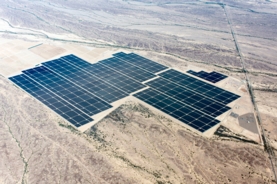
An Array
An Array of Solar Panels

Source:Scientific American

Author: David Biello

Emphasis Mine

A blue-black field of 5.2 million solar panels tilted toward the Arizona sun might just be the Hoover Dam project of the Great Recession. The Agua Caliente Solar Power Project hosts nearly 300 megawatts of silicon photovoltaics (PV) that turn sunshine into electricity. That made the Yuma County facility the largest working solar farm in the world when it opened in April 2014. But when it comes to mega–energy projects, Agua Caliente has competition, including four of the world’s largest solar-power plants to use the sun’s heat and one of the largest wind farms on the planet. And its all thanks to billions in loans from the U.S. Department of Energy’s Loan Programs Office (LPO).

The most important thing the Obama administration has done to combat climate change may not end up being raised fuel-efficiency standards for cars and trucks or even its Clean Power Plan to cut carbon dioxide emissions from power plants. The most important thing may turn out to be the loans that enabled large power facilities that run on sunshine or Earth’s heat to break ground out west, wind farms to be built from coast to coast and construction of the nation’s first brewery for biofuels not made from food—as well as a host of other advanced manufacturing energy projects.

The loan program got its start a full decade ago with the Energy Policy Act of 2005—legislation that aimed to provide incentives to produce energy in the U.S., whether by drilling for oil in the Gulf of Mexico or building new power plants. Only companies with established credit histories, however, like utility giant Southern Co., could take advantage of the loan program created by that bill. Companies behind new, alternative energy projects, like electric-carmaker Tesla Motors, typically did not have the benefit of such track records, however. As a result, almost no one applied for a loan.

So in 2009, as part of the American Recovery and Reinvestment Act to deal with the economic fallout of the Great Recession, the loan program got new terms. Most importantly, the federal government agreed to take more of the financial risk for renewable energy projects. The result was a stampede of applications. “There were hundreds of applications and 15 people working as hard as they possibly could when I got there,” recalls Jonathan Silver, who became head of the LPO in 2009 and is now a managing director at Tax Equity Advisors and a clean-energy investor and consultant. “We were building this car as we drove it, which is not easy.”

The loan program still required innovative technology, defined as “new or significantly improved technologies as compared with commercial technologies” (with commercial defined as used in three or more other projects over more than five years), but suddenly had a lot more money, specifically some $16 billion to loan before September 2011 on top of the $56 billion already available. The program also had the full expertise of the Energy Department to evaluate projects and help new technologies overcome the hurdles to commercialization, often dubbed the “valley of death” by those in the finance and tech industries. Those innovations range from the basic layout of solar farms of more than 100 megawatts to storing sunshine in molten salts and using lens to concentrate it and improve photovoltaic efficiency.

Between March 2009 and August 2010, when the window closed for new applications, the loan program received hundreds of submissions. By September 2011, the $16 billion had been loaned to various renewable energy projects. An additional $16 billion in loans, guarantees or commitments have been made since then, including $8 billion to help build the nation’s first new nuclear reactors in more than 30 years in Georgia.

The biggest challenge the loan program faced may not have been public criticism of failed deals like Solyndra, Fisker Automotive and Beacon Power or technology letdowns such as the Ivanpah solar-thermal power plant producing less electricity than expected. Rather, the biggest challenge came from within the Obama administration itself, particularly the White House Office of Management and Budget (OMB), which stood athwart greater ambition. For example, one deal, dubbed SolarStrong, would have loaned $344 million to put solar panels on housing on military bases across the country. But OMB axed the deal because budget rules require it to assume that the Department of Defense might not have the appropriations to repay the loan in future decades. “At which point, all you can do is go home and have a scotch,” Silver recalls.

Military appropriations are not considered permanent appropriations,” explains Peter Davidson, who oversaw the LPO from 2013 to June of this year. “It’s the environment we have to work in, we try and do what we can.”

In the end, the LPO’s successes helped kill off some of its own portfolio of projects. Building utility-scale solar photovoltaic plants like Agua Caliente and Antelope Valley helped render obsolete solar thermal power plants like Ivanpah and Solana as silicon technology improved dramatically and costs dropped whereas the price of steel and glass remained relatively high. Large photovoltaic installations also helped make solar panels so cheap that it drove companies like Solyndra—whose business model relied on PV remaining expensive—into bankruptcy. “We were simply financing the best deals available,” Silver says, noting that the program could not independently seek out good projects. “The single thing that bound all these applications together was not their size or technology or geography or financing structure. The single thing that bound them together is that they applied.”

That also means the loan program may have taken too little risk. The program has made a profit of nearly $1 billion in interest payments to the U.S Treasury to date. At least $5 billion more is expected over the next few decades as loans are paid back. That compares with $780 million in losses to date, the bulk of which is accounted for by the $535 million loaned to Solyndra. And more money could be made if the program were to ever sell its group of loans rather than managing them for the next few decades.

Already, Tesla has repaid its $465-million loan nine years early, thanks to the innovative financing terms devised in its deal, part of $3.5 billion in loans that have already been repaid. Such advanced vehicle loans, for projects like Ford’s EcoBoost engine, will help achieve the Obama administration’s higher fuel-efficiency standard. Combined, these fuel-efficiency technologies are expected to help save some 600 million metric tons of CO2 per year compared with existing vehicles. Elsewhere, 1366 Technologies, another loan recipient, may yet make silicon photovoltaics even cheaper with its new, less wasteful manufacturing technique. And wind turbines produce electricity at a price that is now competitive with burning fossil fuels.

Private banks have followed where the LPO first tread, building 17 additional photovoltaic power plants larger than 100 megawatts. “Since September 2011 more than 1,700 megawatts of solar [PV] projects have been built,” Davidson notes. “There is not one dime of federal financing in any of those projects. That, for us, is a success.” And the solar-thermal technology in use at facilities like Crescent Dunes is also being built worldwide, in countries like Chile and South Africa.

But much more is needed to accomplish an energy transition that would see U.S. greenhouse gas pollution drop by 80 percent in the next 35 years. That’s why some would like to see the loan program turned into a kind of permanent green development bank, although that is unlikely to happen in the current political environment. That’s even though the LPO is a bipartisan achievement, launched under Republican Pres. George W. Bush and accelerated and amplified by the Democratic administration of Barack Obama. “Let’s take the profits back and turn it into an evergreen fund,” Silver suggests.

Regardless, the success of the loan program with Recovery Act money encouraged the Obama administration to reopen solicitations for loan applications in 2013: $8 billion for “advanced fossil projects,” including coal, gas and oil, especially employing technology to capture and store CO2; $4 billion for renewable and energy-efficiency projects; and $12 billion for advanced nuclear projects, including any efforts to build the first so-called small modular reactors in the U.S.

All told, there is still $40 billion waiting to be used in the loan program, including the money in its Advanced Technology Vehicles Manufacturing program for electric cars, better batteries, more efficient engines and the like. Still a large portion of all those monies may never be used, given the challenges faced by carbon capture and storage and nuclear, although there is an “active pipeline” of projects being evaluated, according to Energy Department spokesman Brian Mahar. The loan program also now hopes to receive applications for Distributed Energy Projects, including solar on home rooftops, grid batteries and similar technologies, though that will likely require bundling together a large number of these typically smaller clean energy projects.

Still, the loan program is not what it once was, helping to turbocharge a clean-energy economy. But it did seed the ground for an energy revolution with some 30 major projects so far, 20 of which are already producing clean power or churning out clean vehicles. All that is left to fight about is the speed at which clean energy will grow. “We launched the utility PV and cellulosic ethanol industry,” Davidson says, just as federal investment helped enable everything from the origins of the Internet to hydraulic fracturing (or “fracking”).

These clean-energy projects will prevent the emission of some 14 million metric tons of CO2 and the clean-power plants will produce enough electricity for more than one million average U.S. homes, by Energy’s estimates. These technologies will be available to help states meet the CO2-reduction goals laid out in the Clean Power Plan, already proved to work and just waiting to be built. The Obama administration has left a clean-power legacy that will stand as facts on the ground in the fight against climate change.

See: http://www.scientificamerican.com/article/obama-has-done-more-for-clean-energy-than-you-think/?WT.mc_id=SA_BS_20150911

Obama Shatters Republican Fantasies By Posting Lower Unemployment Numbers Than Reagan

Source: PoliticsUSA

Author: Jason Easley

Emphasis Mine

Reality bites Republicans again, as the unemployment numbers under President Obama are lower than at any time during the Reagan presidency.

This chart from Matt Yglesias at Vox delivers the stone cold truth:

Vox-reagan-obama

Before Republicans start scrambling for excuses, Yglesias pointed out that labor participation is lower now than when Reagan was in office, but that is due to the fact that the United States is an older country that has more retired people than when Reagan was in office. Labor participation rates have been dropping for decades so blaming Obama for decreasing labor participation rate is both false and disingenuous.

In 2011, President Obama became the biggest tax cutter in history, “Beneath all of the Republican and Tea Party grumbling about taxes, one key fact continues to be ignored. According to the Tax Policy Center, Federal taxes are lower than at any time since 1955. Obama has now reduced taxes by more than any president since Dwight D. Eisenhower.”

President Obama’s 2009 stimulus was the single biggest tax cut in US history:

The Obama tax cut is $282 billion which is larger than the tax cuts of Ronald Reagan, JFK, and George W. Bush. Even worse, Republicans voted against it.

According to the Wall Street Journal, George W. Bush’s first tax cut in 2001 was $174 billion. His second tax cut in 2004 and 2005 was $231 billion. As Steven Waldman of Beliefnet pointed out last week, Obama has kept a campaign promise to cut taxes that few Republicans thought he would keep.

Barack Obama has proven to be a more successful president than Ronald Reagan. President Obama brought the country back from a bigger economic crisis, has a lower unemployment rate, and reduced the deficit instead of shattering the finances of the nation like Ronald Reagan did with trickle down economics.

In the face of Republican obstruction, President Obama has built a lasting legacy of presidential accomplishments.

If you want to make a Republican explode, simply point out that even by their own metrics of success Barack Obama has been a better president than Ronald Reagan.

See:http://www.politicususa.com/2015/09/05/obama-shatters-republican-fantasies-posting-unemployment-numbers-reagan.html