We’re Not in Lake Wobegon Anymore

“I don’t want to abolish government. I simply want to reduce it to the size where I can drag it into the bathroom and drown it in the bathtub.” Republicans: The No.1 reason the rest of the world thinks we’re deaf, dumb and dangerous.

Written in 2004.

How did the Party of Lincoln and Liberty transmogrify into the party of Newt Gingrich’s evil spawn and their Etch-A-Sketch president, a dull and rigid man, whose philosophy is a jumble of badly sutured body parts trying to walk?

By GARRISON KEILLOR

Something has gone seriously haywire with the Republican Party. Once, it was the party of pragmatic Main Street businessmen in steel-rimmed spectacles who decried profligacy and waste, were devoted to their communities and supported the sort of prosperity that raises all ships. They were good-hearted people who vanquished the gnarlier elements of their party, the paranoid Roosevelt-haters, the flat Earthers and Prohibitionists, the antipapist antiforeigner element. The genial Eisenhower was their man, a genuine American hero of D-Day, who made it OK for reasonable people to vote Republican. He brought the Korean War to a stalemate, produced the Interstate Highway System, declined to rescue the French colonial army in Vietnam, and gave us a period of peace and prosperity, in which (oddly) American arts and letters flourished and higher education burgeoned—and there was a degree of plain decency in the country. Fifties Republicans were giants compared to today’s. Richard Nixon was the last Republican leader to feel a Christian obligation toward the poor.

In the years between Nixon and Newt Gingrich, the party migrated southward down the Twisting Trail of Rhetoric and sneered at the idea of public service and became the Scourge of Liberalism, the Great Crusade Against the Sixties, the Death Star of Government, a gang of pirates that diverted and fascinated the media by their sheer chutzpah, such as the misty-eyed flag-waving of Ronald Reagan who, while George McGovern flew bombers in World War II, took a pass and made training films in Long Beach. The Nixon moderate vanished like the passenger pigeon, purged by a legion of angry white men who rose to power on pure punk politics. “Bipartisanship is another term of date rape,” says Grover Norquist, the Sid Vicious of the GOP. “I don’t want to abolish government. I simply want to reduce it to the size where I can drag it into the bathroom and drown it in the bathtub.” The boy has Oedipal problems and government is his daddy.

The party of Lincoln and Liberty was transmogrified into the party of hairy-backed swamp developers and corporate shills, faith-based economists, fundamentalist bullies with Bibles, shriekChristians of convenience, freelance racists, misanthropic frat boys, shreiking midgets of AM radio, tax cheats, nihilists in golf pants, brownshirts in pinstripes, sweatshop tycoons, hacks, fakirs, aggressive dorks, Lamborghini libertarians, people who believe Neil Armstrong’s moonwalk was filmed in Roswell, New Mexico, little honkers out to diminish the rest of us, Newt’s evil spawn and their Etch-A-Sketch president, a dull and rigid man suspicious of the free flow of information and of secular institutions, whose philosophy is a jumble of badly sutured body parts trying to walk. Republicans: The No.1 reason the rest of the world thinks we’re deaf, dumb and dangerous.

Rich ironies abound! Lies pop up like toadstools in the forest! Wild swine crowd round the public trough! Outrageous gerrymandering! Pocket lining on a massive scale! Paid lobbyists sit in committee rooms and write legislation to alleviate the suffering of billionaires! Hypocrisies shine like cat turds in the moonlight! O Mark Twain, where art thou at this hour? Arise and behold the Gilded Age reincarnated gaudier than ever, upholding great wealth as the sure sign of Divine Grace.

Here in 2004, George W. Bush is running for reelection on a platform of tragedy—the single greatest failure of national defense in our history, the attacks of 9/11 in which 19 men with box cutters put this nation into a tailspin, a failure the details of which the White House fought to keep secret even as it ran the country into hock up to the hubcaps, thanks to generous tax cuts for the well-fixed, hoping to lead us into a box canyon of debt that will render government impotent, even as we engage in a war against a small country that was undertaken for the president’s personal satisfaction but sold to the American public on the basis of brazen misinformation, a war whose purpose is to distract us from an enormous transfer of wealth taking place in this country, flowing upward, and the deception is working beautifully.

The concentration of wealth and power in the hands of the few is the death knell of democracy. No republic in the history of humanity has survived this. The election of 2004 will say something about what happens to ours. The omens are not good.

Our beloved land has been fogged with fear—fear, the greatest political strategy ever. An ominous silence, distant sirens, a drumbeat of whispered warnings and alarms to keep the public uneasy and silence the opposition. And in a time of vague fear, you can appoint bullet-brained judges, strip the bark off the Constitution, eviscerate federal regulatory agencies, bring public education to a standstill, stupefy the press, lavish gorgeous tax breaks on the rich.

There is a stink drifting through this election year. It isn’t the Florida recount or the Supreme Court decision. No, it’s 9/11 that we keep coming back to. It wasn’t the “end of innocence,” or a turning point in our history, or a cosmic occurrence, it was an event, a lapse of security. And patriotism shouldn’t prevent people from asking hard questions of the man who was purportedly in charge of national security at the time.

Whenever I think of those New Yorkers hurrying along Park Place or getting off the No.1 Broadway local, hustling toward their office on the 90th floor, the morning paper under their arms, I think of that non-reader George W. Bush and how he hopes to exploit those people with a little economic uptick, maybe the capture of Osama, cruise to victory in November and proceed to get some serious nation-changing done in his second term.

This year, as in the past, Republicans will portray us Democrats as embittered academics, desiccated Unitarians, whacked-out hippies and communards, people who talk to telephone poles, the party of the Deadheads. They will wave enormous flags and wow over and over the footage of firemen in the wreckage of the World Trade Center and bodies being carried out and they will lie about their economic policies with astonishing enthusiasm.

The Union is what needs defending this year. Government of Enron and by Halliburton and for the Southern Baptists is not the same as what Lincoln spoke of. This gang of Pithecanthropus Republicanii has humbugged us to death on terrorism and tax cuts for the comfy and school prayer and flag burning and claimed the right to know what books we read and to dump their sewage upstream from the town and clear-cut the forests and gut the IRS and mark up the constitution on behalf of intolerance and promote the corporate takeover of the public airwaves and to hell with anybody who opposes them.

This is a great country, and it wasn’t made so by angry people. We have a sacred duty to bequeath it to our grandchildren in better shape than however we found it. We have a long way to go and we’re not getting any younger.

Dante said that the hottest place in Hell is reserved for those who in time of crisis remain neutral, so I have spoken my piece, and thank you, dear reader. It’s a beautiful world, rain or shine, and there is more to life than winning.

  • Help In These Times publish more articles like this. Donate today!
  • Subscribe today and save 46% off the newsstand price!
Garrison Keillor is the host and writer of A Prairie Home Companion, now in its 34th year on the air and a syndicated newspaper columnist.

Emphasis Mine.

see:http://readersupportednews.org/off-site-opinion-section/72-72/7193-were-not-in-lake-wobegon-anymore

3 Reality-Based Charts Your Right-Wing Relatives Will Have a Hard Time Ignoring

Here are some reality-based charts to help knock down absurd right-wing propaganda about the economy

From AlterNet, by RJ Eskow

Problem: Your right-wing brother-in-law is plugged into the FOX-Limbaugh lie machine, and keeps sending you emails about “Obama spending” and “Obama deficits” and how the “Stimulus” just made things worse.

Solution: Here are three “reality-based” charts to send to him. These charts show what actually happened.

Spending

Bush-Obama Spending Chart

Government spending increased dramatically under Bush. It has not increased much under Obama. Note that this chart does not reflect any spending cuts resulting from deficit-cutting deals.

Deficits

Bush-Obama Deficit Chart

Notes, this chart includes Clinton’s last budget year for comparison.

The numbers in these two charts come from Budget of the United States Government: Historical Tables Fiscal Year 2012. They are just the amounts that the government spent and borrowed, period, Anyone can go look then up. People who claim that Obama “tripled the deficit” are either misled or are trying to mislead.

The Stimulus and Jobs

Bush-Obama-Jobs-Chart

In this chart, the RED lines on the left side — the ones that keep doing DOWN — show what happened to jobs under the policies of Bush and the Republicans. We were losing lots and lots of jobs every month, and it was getting worse and worse.The BLUE lines — the ones that just go UP — show what happened to jobs when the stimulus was in effect. We stopped losing jobs and started gaining jobs, and it was getting better and better. The leveling off on the right side of the chart shows what happened as the stimulus started to wind down: job creation leveled off at too low a level.

It looks a lot like the stimulus reversed what was going on before the stimulus.

Conclusion: THE STIMULUS WORKED BUT WAS NOT ENOUGH!

More False Things

These are just three of the false things that everyone “knows.” Some others are (click through): Obama bailed out the banks, businesses will hire if they get tax cuts, health care reform cost $1 trillion, Social Security is a Ponzi Scheme or is “going broke”, government spending “takes money out of the economy.”

Why This Matters

These things really matter. We all want to fix the terrible problems the country has. But it is so important to know just what the problems are before you decide how to fix them. Otherwise the things you do to try to solve those problems might just make them worse. If you get tricked into thinking that Obama has made things worse and that we should go back to what we were doing before Obama — tax cuts for the rich, giving giant corporations and Wall Street everything they want — when those are the things that caused the problems in the first place, then we will be in real trouble.

Emphasis Mine

see:http://www.alternet.org/story/152201/3_reality-based_charts_your_right-wing_relatives_will_have_a_hard_time_ignoring?akid=7484.123424.OxQ7x8&rd=1&t=12

The Dangerous Reagan Cult

Exclusive: Ronald Reagan’s anti-government philosophy inspires Tea Party extremists to oppose any revenue increase, even from closing loopholes on corporate jets. Democrats try the spin that “even Reagan” showed flexibility on debt and taxes. But Robert Parry says it is the “Reagan cult” that is at the heart of America’s crisis.

From RSN, by Robert Parry

“Exclusive: Ronald Reagan’s anti-government philosophy inspires Tea Party extremists to oppose any revenue increase, even from closing loopholes on corporate jets. Democrats try the spin that “even Reagan” showed flexibility on debt and taxes. But Robert Parry says it is the “Reagan cult” that is at the heart of America’s crisis.

In the debt-ceiling debate, both Republicans and Democrats wanted Ronald Reagan on their side. Republicans embraced the 40th president’s disdain for government and fondness for tax cuts, while Democrats noted that “even Reagan” raised the debt limit many times and accepted some tax increases.

But Reagan – possibly more than any political leader – deserves the blame for the economic/political mess that the United States now finds itself in. He was the patriarch for virtually every major miscalculation that the country has made over the past three decades.

It was Reagan who slashed taxes on the rich to roughly their current level; he opened the flood gates on deficit spending; he accelerated the decline of the middle class by busting unions and slashing support for local communities; he disparaged the value of government regulations; he squandered money on the Pentagon; he pushed more militaristic strategies abroad; and he rejected any thoughtful criticism of past U.S. foreign policies.

Reagan also created what amounted to a “populist” right-wing cult that targeted the federal government as the source of nearly all evil. In his First Inaugural Address, he famously declared that “government is not the solution to our problem; government is the problem.”

It is that contempt for government that today is driving the Tea Party extremists in the Republican Party. Yet, as with many cults, the founder of this one was somewhat more practical in dealing with the world around him, thus explaining some of Reagan’s compromises on the debt ceiling and taxes.

But once the founder is gone, his teachings can become definitive truth to the disciples. Flexibility disappears. No deviation is permitted. No compromise is tolerated.

So, at a time when government intervention is desperately needed to address a host of national problems, members of this Reagan cult apply the teachings of the leader in the most extreme ways. Since “government is the problem,” the only answer is to remove government from the equation and let the corporations, the rich and the magical “market” dictate national solutions.

It is an ironic testament to Ronald Reagan’s enduring influence that America’s most notable “populist” movement, the Tea Party, insists that tax cuts for the wealthy must be protected, even minor ones like tax loopholes for corporate jets. Inside the Tea Party, any suggestion that billionaire hedge-fund managers should pay a tax rate equal to that of their secretaries is anathema.

Possibly never in history has a “populist” movement been as protective of the interests of the rich as the Tea Party is. But that is because it is really a political cult dedicated to the most extreme rendering of Ronald Reagan’s anti-government philosophy.

Astro-Turf ‘Populists’

Granted, the Tea Party also can be viewed as an astro-turf outfit financed by billionaires like the Koch brothers and promoted by billionaire media mogul Rupert Murdoch. But Election 2010 proved that the movement is capable of putting like-minded politicians into office, especially when discouraged elements of the American Left choose to sit on the sidelines.

During the debt-ceiling battle, the GOP’s Tea Party caucus showed it was strong enough to block any compromise that included a revenue increase. The thinking is that the “evil” government must be starved even if that means defending indefensible tax loopholes and shoving the world’s economy to the brink of catastrophe.

The Tea Party’s rabid enforcement of the Reagan orthodoxy instills such fear among top Republicans that every one of the eight presidential hopefuls at a recent Iowa debate vowed to reject a deal that would include just $1 of higher taxes for each $10 in spending cuts. Even supposed moderates like Mitt Romney and Jon Huntsman threw up their hands.

But the Reagan cult reaches far beyond the Republican Party. Last February, a Gallup poll of Americans cited Reagan as the greatest president ever, with a five percentage point lead over Abraham Lincoln.

These days, virtually no one in Washington’s political or media circles dares to engage in a serious critique of Reagan’s very checkered record as president. It’s much easier to align yourself with some position that Reagan took during his long career, much like a pastor selectively picking a Bible passage to support his theological argument.

When negative national trends are cited – such as the decline of the middle class or the widening gap between rich and poor – the self-censorship demands that Reagan’s name not be spoken. Instead, there are references to these problems deepening “over the past three decades,” without mentioning whose presidency got things going big time.

Creating an Icon

And there is a self-interested reason for this hesitancy. The Republicans and the Right have made it a high priority to transform Reagan into an icon and to punish any independent-minded political figure or journalist who resists the group think.

The first step in this process occurred in the late 1980s, with aggressive cover-ups of Reagan’s crimes of state, such as scandals over the Iran-Contra arms-for-hostages affair, Contra-cocaine trafficking, and the Iraq-gate support of dictator Saddam Hussein.

Faced with furious Republican defenses of Reagan and his inner circle, most Democrats and mainstream journalists chose career discretion over valor. By the time Bill Clinton was elected in 1992, the refrain from Democrats and Washington pundits was to “leave that for the historians.”

Those who didn’t go along with the cover-ups – like Iran-Contra special prosecutor Lawrence Walsh – were subjected to ridicule from both the right-wing and mainstream media, from both the Washington Times and the Washington Post. Journalists who challenged the implausible Reagan cover-ups also found themselves marginalized as “conspiracy theorists.”

Leading Democrats decided it made more sense to look to the future, not dwell on the past. Plus, acquiescing to the cover-ups was a way to show their bipartisanship.

However, Republicans had other ideas. Having pocketed the concessions regarding any serious investigations of Reagan and his cohorts, the Republicans soon went on the offensive by investigating the heck out of President Clinton and his administration.

Then, having stirred up serious public doubts about Clinton’s integrity, the Republicans trounced the Democrats in the 1994 congressional elections. With their new majorities, the Republicans immediately began the process of enshrining Reagan as a national icon.

By and large, the Democrats saw these gestures, like attaching Reagan’s name to National Airport, as another way to demonstrate their bipartisanship.

But Republicans knew better. They understood the strategic value of elevating Reagan’s legacy to the status of an icon. If everyone agreed that Reagan was so great, then it followed that the hated “guv-mint” must be that bad.

More Accommodations

Increasingly, Democrats found themselves arguing on Republican ground, having to apologize for any suggestion that the government could do anything good for the country. Meanwhile, the Clinton-era stock market boom convinced more Americans that the “market” must know best.

Going with that flow, President Clinton signed a Republican-sponsored bill that removed Depression-era regulations in the Glass-Steagall Act, which had separated commercial and investment banks. With the repeal, the doors were thrown open for Wall Street gambling.

In the short run, lots of money was made, encouraging more Americans to believe that the government and its “safety net” were indeed anachronisms for losers. People with any gumption could simply day-trade their way to riches.

Reagan, it seemed, was right all along: government was the problem; the “free market” was not only the solution but it could “self-regulate.”

That was the political/media environment around Election 2000 when the wonkish Vice President Al Gore ran against the brash Texas Gov. George W. Bush, who came across to many as another version of Ronald Reagan, someone who spoke simply and disdained big government.

Though Gore could point to the economic successes of the Clinton years, including a balanced federal budget and the prospect of the total elimination of the federal debt, the major media mocked him as a know-it-all nerd who wore “earth-toned sweaters.” Meanwhile, mainstream journalists swooned over Bush, the regular guy.

Still, Gore eked out a narrow victory in the national popular vote and would have carried the key state of Florida if all legally cast votes were counted. But Bush relied on his brother’s administration in Florida and his father’s friends on the U.S. Supreme Court to make sure that didn’t happen. Bush was declared the winner in Florida and thus the new president. [For details, see Neck Deep.]

In retrospect, Election 2000 was a disastrous turning point for the United States, putting into the highest office in the land an unqualified ne’er do well who had lost the election.

But this outrage against democracy was largely accepted because of the muscular right-wing machine, the on-bended-knee mainstream media and the weak-kneed Democrats – a political/media dynamic that Reagan had helped create and had left behind.

The progress that the Clinton administration had made toward putting the U.S. financial house in order was quickly undone as Bush pushed through two massive tax cuts benefiting mostly the rich and waged two open-ended wars financed with borrowed money.

Years of Reaganism also had taken its toll on the government’s regulatory structures. Reagan had consistently appointed regulators who were hostile to the very concept of regulating, such as Anne Gorsuch at the Environmental Protection Agency and James Watt at Interior. He also elevated Alan Greenspan, a “free market” admirer of Ayn Rand, to be chairman of the Federal Reserve Board.

In the 1980s, the looting of America was underway in earnest, but the elites of Washington and New York saw little to protest since they were getting a cut of the plunder. The real losers were the average Americans, especially factory workers who saw their unions broken or their jobs shipped overseas under the banner of “free trade.”

Feeling Good

But many Americans were kept entranced by Reagan’s feel-good magic.

Taking office after a difficult decade of the 1970s, when America’s defeat in Vietnam and the Arab oil price hikes had shaken the nation’s confidence, Reagan simply assured everyone that things would work out just fine and that no excessive sacrifice was in order. Nor should there be any feelings of guilt, Reagan made clear.

By the late 1970s, it was widely accepted even among many Republicans that the Vietnam War had been an abomination. But Reagan simply rebranded it a “noble cause,” no reason for any serious self-reflection on America’s imperial role in the world.

Reagan then allied the United States with “death-squad” regimes all over Latin America and across the Third World. His administration treated the resulting carnage as a public-relations problem that could be managed by challenging the patriotism of critics.

At the 1984 Republican National Convention, Reagan’s United Nations Ambassador Jeane Kirkpatrick labeled Americans who dared criticize U.S. foreign policy as those who would “blame America first.”

To continue this sort of verbal pummeling on those who continued to get in the way, Reagan credentialed a bunch of thuggish intellectuals known as the neoconservatives.

For the rest of the country, there were happy thoughts about “the shining city on a hill” and “morning in America.”

In reality, however, Reagan had set the stage for the tragedies that would follow. When George W. Bush grabbed power in 2001, he simply extended the foreign and economic policies of the Republican cult leader: more tax cuts, more militarism, less regulation, more media manipulation.

Soon, the gap between rich and poor was widening again. Soon, the United States was at open war in two countries and involved in secret wars in many others. Soon, the nation was confronted with new scandals about torture and deception. Soon, the federal budget was flowing with red ink.

And near the end of Bush’s presidency, the de-regulated excesses of Wall Street pushed the country to the brink of a financial cataclysm. Bush supported a bail-out to save the bankers but didn’t do much for the millions of Americans who lost their jobs or their homes.

Second Thoughts?

One might have thought that the financial crack-up in 2008 (plus the massive federal deficits and the botched wars in Iraq and Afghanistan) would have confronted the Reagan cult with an existential crisis of faith. It would seem obvious that Reagan’s nostrums just didn’t work.

However, after only a brief interregnum of Barack Obama, the Republicans seem poised to restore the Reagan cult to full power in the United States. The new apparent GOP frontrunner, Texas Gov. Rick Perry, is already being hailed in the Washington Post as “The Texas Gipper.”

The Washington Times (yes, Rev. Sun Myung Moon’s right-wing propaganda sheet is still around) fairly cooed over Perry’s tough attacks on Obama, depicting America’s first black president as someone who apologizes for America and isn’t deserving of its soldiers in uniform.

“One of the powerful reasons for running for president of the United States is to make sure every man and woman who puts on the uniform respects highly the president of the United States,” Perry said. “We are indignant about a president who apologizes for America.”

As far as Perry is concerned, America has nothing to apologize for.

These are themes right out of Ronald Reagan’s playbook. And it appears likely that Election 2012 will be fought over terrain defined by Reagan, even though he left office in 1989 and died in 2004.

It is already clear that President Obama will be on the defensive, trying to justify a role for the federal government in America and explaining why the Reaganesque policy of low taxes on the rich must finally be reversed. Obama also is certain to shy away from any serious examination of how U.S. foreign policy went so wrong, so as not to be labeled “apologist-in-chief.”

Rick Perry or whatever other Republican gets the party’s nomination will hold the high ground of Reagan’s lofty standing among the American people. The GOP nominee can continue blaming “guv-mint” for the nation’s problems and promising another “morning in America” if only the nation further reduces the size of “guv-mint.”

With Democrats also trying to associate themselves with the “greatest president ever,” it appears doubtful that any serious effort will be made to explain to the American people that the charming Reagan was the pied piper who led them to their current demise.”

[For more on these topics, see Robert Parry’s Secrecy & Privilege and Neck Deep, now available in a two-book set for the discount price of only $19. For details, click here.]

Robert Parry broke many of the Iran-Contra stories in the 1980s for the Associated Press and Newsweek. His latest book,Neck Deep: The Disastrous Presidency of George W. Bush, was written with two of his sons, Sam and Nat, and can be ordered at neckdeepbook.com. His two previous books, Secrecy & Privilege: The Rise of the Bush Dynasty from Watergate to Iraq and Lost History: Contras, Cocaine, the Press & ‘Project Truth’ are also available there.

emphasis mine

Why the Mainstream Media Are Clueless About the Religious Right

Though it has shaped American politics for the last 40 years, the religious right still baffles reporters.

N.B.: Keep Separation of religion and government.

From AlterNet, by Adele M. Stan

“Every four years, just as a presidential campaign kicks up, legions of media types who make their living outside the right-wing echo chamber emerge as a militia of Margaret Meads, descending on flyover country, trying to make sense of that exotic phenomenon, the religious right. In the end, those who actually get it are few.
From the attitudes shown by media toward the religious right, you’d never know that more than one-quarter of the U.S. population identify as evangelicals, according to a 2007 survey by the Pew Forum on Religion and Public Life, and among white self-identified evangelicals, 62 percent told Pew in 2006 that they believe the Bible to be the literal word of God.

These, by and large, are the people who determine the outcome of the Republican presidential primary, thanks to the early stacking of states heavily populated by evangelicals, and the propensity of most evangelicals to align with the Republican Party. And yet, we who cover these races often know very little about the voters whose person-on-the-street interviews they’re recording, except to know that these people are very different from us in their view of the world. So as everyday doctrines come to light in one or another campaign incident, the media either find themselves aghast at the implications, or simply choose to ignore them.

Surprise

Take, for instance, Rep. Michele Bachmann‘s profession of the doctrine of “wifely submission.” When a 2006 video of Bachmann surfaced showing her at a church gathering professing her submission to her husband, media types grew quite excited. At the Fox News debate in Ames, Iowa, last week, Washington Examiner columnist Byron York asked Bachmann, “As president, would you be submissive to your husband?” Before Bachmann could speak, York’s question was met with a round of boos and hisses from the audience, whose members likely heard in his question a challenge to one of their fundamental doctrines. (Bachmann, aware that she was playing to a national television audience, dodged the question, saying that she and her husband respected each other.)

The doctrine of wifely submission is common to a number of evangelical faiths, espoused by faithful who range from dour fundamentalists who forbid dancing to writhing, tongues-speaking Pentecostals. The largest among these denominations is the Southern Baptist Convention, the second largest religious body in the United States. York was certainly entitled to his question, and the people of the United States were entitled to a better reply than that which Bachmann gave them. But what we in the media are not entitled to is any sense of shock that a conservative Christian such as Bachmann believes such things. Such surprise simply means we haven’t been paying attention.

Denial

When media types aren’t expressing surprise at the everyday beliefs of the ordinary Americans who comprise the Republican primary electorate, they often turn to denial. Take the curious case of Rep. Ron Paul, Texas, who came within 200 votes of Michele Bachmann’s first-place finish in the Ames, Iowa, straw poll. Paul’s perennial, quixotic presidential campaign (the 2012 contest marks his third run for the nomination) has clearly had a profound impact on the ideology expressed by all of the GOP presidential candidates, but Paul, even after winning the presidential straw poll at the Conservative Political Action Conference for a second year in a row, is just another Rodney Dangerfield to the media. The man just can’t get no respect.

Yet, in consistently putting forward themes derived directly and indirectly from the doctrines of Christian Reconstructionists and the John Birch Society, Paul has made it safe for Texas Gov. Rick Perry to name as “treason” the printing of money by Fed, for former Massachusetts Gov. Mitt Romney to spout off about states’ rights and the 10th amendment, and for former Pennsylvania Sen. Rick Santorum to espouse a no-exceptions anti-abortion position.

While mainstream media dismiss Paul as a quirky, secular libertarian, progressive reporters sometimes express a certain affection for Paul because of his anti-war stance. But Paul’s anti-war position stems from his far-right isolationist views, as expressed in such documents as the Institutes of Biblical Law, by Christian Reconstructionist founder Rousas John Rushdoony, and the platform of the Constitution Party, which, despite its secular-sounding name, seeks to implement “God’s law” in the United States. (Constitution Party founder Howard Phillips is a follower of the late Rushdoony.)

Paul’s 2008 shadow convention to the Republican National Convention in Minneapolis featured Phillips and John Birch Society President John McManusas speakers, and Paul is part Phillips’ coalition against the non-existent North American Union (one of the far right’s favorite conspiracy theories).

The fact is, if you lift up the covers on Ron Paul’s beliefs and associates, it’s all a bit creepy. Paul’s ideology and apparent theological links to Reconstructionism represent nothing new in American politics; the ideology can be traced back to the backers of 1964 campaign of Barry Goldwater. But you’d never know that from reading the mainstream media.

The mainstream media — and to an extent, the progressive media, as well — are made up of elites, people who went to good schools, most of them raised on either the east or west coasts. To these elites, the thought of someone espousing the sort of frightening beliefs that Paul embodies having a serious impact on American politics is just too much to bear, so denial becomes the default position. It’s not conscious — not a deliberate attempt to cover something up, just something too weird and awful to be true, so the notion is simply dismissed. Yet if you look at Paul’s positions and look at how successive GOP fields have moved closer to them (with the exception of the anti-war stance) over the last three election cycles, his impact is clear.

And the notion that regular Americans would buy into an ideology that seeks to implement biblical law as the law of the land really shouldn’t come as a surprise to reporters. The Pew 2006 survey found that nearly one-third of Americans said they felt the law of the Bible should outweigh citizen preferences in the formation of civil law.

Differences Blurred

To mainstream reporters, Rick Perry’s big prayer rally in Houston earlier this month looked like just another religious-right gathering. To their eyes, what made it unusual was that a sitting governor had used his official gubernatorial letterhead and Web site to promote it.

The greater departure, however, was the way in which the gathering represented a coming together of the New Apostolic Reformation, a far-right charismatic movement that seeks to defeat what its followers believe to be real-life demons located in certain geographical areas with the old-line organizations of the religious right, such as the American Family Association. Even James Dobson, the Focus on the Family founder who rarely makes public appearances anymore, appeared on Perry’s stage, lending credence and political power to the demon-chasers. (If mainstream reporters view the doctrine of wifely submission with incredulity and surprise, the NAR doctrine, as described for AlterNet by Rachel Tabachnik, could cause apoplexy.)

In the New York Times‘ coverage of the rally, the name, New Apostolic Reformation, never appeared, even though one of the movement’s more controversial organizations, the International House of Prayer, was among the event’s organizers. (Although IHOP was named as an organizer by reporter Manny Fernandez, nothing about its place in the NAR was mentioned in the article. To his credit, though, Fernandez did note that the American Family Association has been named an anti-gay hate group by the Southern Poverty Law Center.) But this enlargement of the religious-right coalition to include elements once deemed “fringe” even by fellow evangelicals is a major story, especially given the 50-state, cell-based “prayer networks” that are part of the NAR infrastructure.

Meanwhile, at the Washington Post, Jacques Berlinerblau, writing in the paper’s “On Faith” section, tsk-tsk’d Perry for talking about Jesus too much, reading too much scripture and generally being unecumenical.

“If he intends on using the religion card effectively beyond the Iowa and South Carolina caucuses and primaries,” wrote Berlinerblau, “Governor Perry will have to come up with something more inclusive than this.”

Yes, but first he has to win the nomination — and that will require the votes of millions of Americans who believe that biblical law should supplant the will of the people, and who think the Bible is the literal truth. Right now, they’re the ones who matter. And no reporter should be surprised by that.

As a nation, we’ve been headed down this path for more than 40 years. As the economic fortunes of the U.S. turn downward, we should expect the attraction of right-wing religion, especially its more charismatic and viscerally-felt forms, to expand. Anyone who doesn’t just hasn’t been paying attention.”

Adele M. Stan is AlterNet’s Washington bureau chief. Follow her on Twitter:www.twitter.com/addiestan

emphasis mine

see: http://www.alternet.org/story/152053/why_the_mainstream_media_are_clueless_about_the_religious_right?akid=7419.123424.qJ7Z66&rd=1&t=5

Don’t Fall for the GOP Lie

Don’t fall for the GOP lie: There is no budget crisis. There’s a job and growth crisis.

By Robert Reich, Robert Reich’s Blog

Don’t fall for the GOP lie: There is no budget crisis. There’s a job and growth crisis.

“A friend who’s been watching the absurd machinations in Congress asked me “what happens if we don’t solve the budget crisis and we run out of money to pay the nation’s bills?”

It was only then I realized how effective Republicans lies have been. That we’re calling it a “budget crisis” and worrying that if we don’t “solve” it we can’t pay our nation’s bills is testament to how successful Republicans have been distorting the truth.

The federal budget deficit has no economic relationship to the debt limit. Republicans have linked the two, and the Administration has played along, but they are entirely separate. Republicans are using what would otherwise be a routine, legally technical vote to raise the debt limit as a means of holding the nation hostage to their own political goal of shrinking the size of the federal government.

In economic terms, we will not “run out of money” next week. We’re still the richest nation in the world, and the Federal Reserve has unlimited capacity to print money.

Nor is there any economic imperative to reach an agreement on how to fix the budget deficit by Tuesday. It’s not even clear the federal budget needs that much fixing anyway.

Yes, the ratio of the national debt to the total economy is high relative to what it’s been. But it’s not nearly as high as it was after World War II – when it reached 120 percent of the economy’s total output.

If and when the economy begins to grow faster – if more Americans get jobs, and we move toward a full recovery – the debt/GDP ratio will fall, as it did in the 1950s, and as it does in every solid recovery. Revenues will pour into the Treasury, and much of the current “budget crisis” will be evaporate.

Get it? We’re really in a “jobs and growth” crisis – not a budget crisis.

And the best way to get jobs and growth back is for the federal government to spend more right now, not less – for example, by exempting the first $20,000 of income from payroll taxes this year and next, recreating a WPA and Civilian Conservation Corps, creating an infrastructure bank, providing tax incentives for small businesses to hire, expanding the Earned Income Tax Credit, and so on.

But what happens next week if Congress can’t or won’t deliver the President a bill to raise the debt ceiling? Remember: This is all politics, mixed in with legal technicalities. Economics has nothing to do with it.

One possibility, therefore, is for the Treasury to keep paying the nation’s bills regardless. It would continue to issue Treasury bills, which are our nation’s IOUs. When those IOUs are cashed at the Federal Reserve Board, the Fed would do what it has always done: Honor them.

How long could this go on without the debt ceiling being lifted? That’s a legal question. Republicans in Congress could mount a legal challenge, but no court in its right mind would stop the Fed from honoring the full faith and credit of the United States.

The wild card is what the three big credit-rating agencies will do. As long as the Fed keeps honoring the nation’s IOUs, America’s credit should be deemed sound. We’re not Greece or Portugal, after all. We’ll still be the richest nation in the world, whose currency is the basis for most business transactions in the world.

Standard & Poor’s has warned it will downgrade the nation’s debt from a triple-A to a double-A rating if we don’t tend to the long-term deficit. But, as I’ve noted, S&P has no business meddling in American politics – especially since its own non-feasance was partly responsible for the current size of the federal debt (had it done its job the debt and housing bubbles wouldn’t have precipitated the terrible recession, and the federal outlays it required).

As long as we pay our debts on time, our global creditors should be satisfied. And if they’re satisfied, S&P, Moody’s, and Fitch should be, too.

Repeat after me: The federal deficit is not the nation’s biggest problem. The anemic recovery, huge unemployment, falling wages, and declining home prices are bigger problems. We don’t have a budget crisis. We have a jobs and growth crisis.

The GOP has manufactured a budget crisis out of the Republicans’ extortionate demands over raising the debt limit. They have succeeded in hoodwinking the public, including my friend.”


Robert Reich is Chancellor’s Professor of Public Policy at the University of California at Berkeley. He has served in three national administrations, most recently as secretary of labor under President Bill Clinton. He has written thirteen books, including “The Work of Nations,” “Locked in the Cabinet,” “Supercapitalism” and his latest book, “AFTERSHOCK: The Next Economy and America’s Future.” His ‘Marketplace’ commentaries can be found on publicradio.com and iTunes.

Emphasis mine

see:http://www.readersupportednews.org/opinion2/277-75/6813-dont-fall-for-the-gop-lie

The 6 Biggest Lies About the U.S. Debt

As Congress nears a vote on the various debt ceiling deals, let’s look at the lies and misinformation that got us into this mess.

From Alternet, by Arun Gupta

“There is one simple truth about the discussion of the looming U.S. debt crisis: it is largely a compendium of half-truths, distortions, myths and outright lies.”

“For example, is it true that the U.S. debt is unsustainable, which is spurring the budget-cutting fever? Far from it. While U.S. debt is at one of its highest levels ever in terms of gross domestic product, the interest payments in 2011 on the  $14.3 trillion public debt will be a mere $386 billion. This is barely more than the $364 billion paid way back in 1998. In real terms, the U.S. economy has grown nearly 30 percent since then. Rock-bottom interest rates on U.S. government debt account for the low payments today, but the practical effect is that servicing the debt as a percentage of GDP is the lowest it’s been in decades.

Or what about hysterical headlines like “U.S. Debt Default Looms” (courtesy of NPR) unless Democrats and Republicans agree to raise the debt ceiling? They are completely untrue. Richard Wolff, professor of economics emeritus at the University of Massachusetts, Amherst, says, if there is no agreement by Aug. 2 to allow the U.S. Treasury to borrow more funds, then “the government instead would choose among cutbacks on various expenditures such as state and local aid, medical aid, for war, for infrastructure. It would extraordinarily unusual for a government in such a situation to attack its creditors.”

If no deal on the debt ceiling is reached this sucks for the rest of us, such as the millions depending on their portion of the $23 billion in Social Security payments scheduled for Aug. 3. A short delay would do no serious harm, but a longer delay, perhaps just a week or two, would be devastating.

For one, removing income support payments would have a major ripple effect in our consumer-based economy. Spending would drop precipitously on items like food, medicine, transportation, clothing and household goods. Peter Bratsis, a professor of Political Theory at the University of Salaford in England and a Greek-American, says his home country is a cautionary tale. Speaking from Greece, Bratsis said since the debt crisis hit last summer many people’s income have dropped up to 25 percent as wages, pensions and social welfare have been sacrificed to please the banks. As a result “Greece is in an economic depression. In Athens, on every block, you have shuttered bakeries, cafes, shoe stores, plumbers and other small businesses that are closed because either people don’t have the money to spend or are afraid to spend.”

Second, says Wolff, “The U.S. Government is one of the largest buyers, if not the largest purchaser of commodities in the world of oil, of computers, of weapons. In an already shaky global economy, the biggest buyer of goods would be making cutbacks. This would be stupefyingly dumb.” He adds that by playing chicken with the national debt, Washington has already irreparably wounded the economy. “The world depends on the U.S. economy running smoothly. A default would lead governments and companies to rethink their relation to the United States, and this has already happened.”

The point is while the dangers are rife in a delay in raising the debt ceiling the doomsday scenario of a government default on debt is not going to occur. The creditors will be kept happy and there will be no default because that is how government works in a capitalist economy. And even if the impasse dragged on, the Fed could dip into its $550 billion in reserves, including more than $400 billion in gold at current prices, to keep making debt payments.

One blatant lie is that Republicans and Democrats, the Congress and the White House are serious about reining in budget deficits to reduce the long-term debt. They are not. The Congressional Budget Office calculates that the deficit from 2011 to 2013 will be $3.5 trillion. Over the decade it will be $8.5 trillion. Now, lots of numbers are being thrown about on spending cuts over a 10-year period, but they keep dropping – the Senate Democrats are proposing $2.2 trillion in cuts and costs savings while the Republicans weigh in at $915 billion.

Cutting one or two hundred billion dollars a year is meaningless. Wolff says, “Even if you cut the debt $300 billion, you are left with an enormous annual deficit that adds hugely to the national debt they all claim to care so much about. It gives lie to the idea that the Republicans and Democrats are interested in trying to cut the national debt.”

If you really believe shrinking the debt is an imperative, then there are easier ways to do it then stealing grandma’s meds. The Bush wars and tax cuts – which are still going – cost $3.3 trillion from 2002 to 2009. Cutting the trillion-dollar war budget in half, ending the Bush tax cuts (which Obama could have done with no sweat when he was bursting with political capital in early 2009 or by calling the GOP bluff before or after the 2010 midterm elections) and raising tax rates on corporations would pretty much wipe out the deficit over the next decade. In the case of corporate taxes, during the last decade it averaged only 10.7 percent of federal revenues – and since 2008 it’s shrunk to barely 5 percent – versus 29.8 percent in the 1950s.

Of course, the stand-off is based on another lie: that Congress and Obama administration can enforce cuts over a 10-year period. The budget process is an annual exercise. There is no provision whatsoever to make cuts permanent because they can always be undone by Congress, and taxes can always be lowered or costly new wars started, both of which always seem to happen, widening the deficit once more.

There is no end to the falsehoods and fantasies from the chattering classes. “We are in recovery.” So says Ben Bernanke – since 2009 no less. Obama has been saying the same since 2010, while hedging that it is “painfully slow.” Really? Tell that to the 25 million Americans who are unemployed, underemployed or have dropped out of the labor force. This amounts to an unemployment rate of16.2 percent, but the real rate is probably closer to 20 percent after factoring in youth unable to enter the workforce or those who have taken early retirement. Or try telling the 100 million Americans who are effectively caught in poverty (using far more realistic measures than the government does) or the 6.5 million households with mortgages that are delinquent or in foreclosure that we are in recovery.

The notion we are in recovery is based on believing the downturn was “the Great Recession,” a distortion the New York Times helped spread. Paul Krugman is one of the few mainstream commentators saying that not only is there no end in sight to the four-year-long slump, let’s give it a more accurate label such as, “the Lesser Depression.” Suppose the corporate media had been saying “Depression” for the last few years. It would have bolstered support for extraordinary measures to dig out of an extraordinary crisis, such as policies that did work during the last depression: jobs programs, infrastructure, social welfare, stronger labor rights and aid to local governments. But this would mean redistribution of wealth downwards instead of upwards. Therefore, saying recession makes it sound part of the normal boom-and-bust cycle, one we will overcome through the magic of the market as we have so many times before.

We can then move on to the recovery phase, which means getting our economic house in order by reducing the debt, a lie told by Serious People whether pundits, politicians or experts. We are being led to think the wisest course is repeating the major mistake of the Great Depression – enforcing austerity in a deep economic funk. When the New York Times backs huge cuts to social spending, you can be sure the rest of the media assumes squeezing the poor and middle class harder is the tonic for economic health. Sure, the Times may sniffle that Obama’s stunning offer to hack $650 billion from Medicare, Medicaid and Social Security was “overly generous” to Republicans but that is just code for “we in the liberal penthouse support it with mild reservations.” On the other side of the media aisle, the Wall Street Journal endorsed the Republican sadism, saying that none of the critics on the right offer “anything nearly as fiscally or politically beneficial as Mr. Boehner’s plan.”

This is what passes for the range of opinion in the two most esteemed newspapers in the country. That’s because we are still in thrall of the biggest lie of all – market fundamentalism. An eternity ago, in 2009, Newsweek declared, “We Are All Socialists Now.” They were right, but only in the way America has always been socialists: we socialize the rich when they lose money, and then we socialize their ability to profit. (The esteemed economic historian Karl Polanyi argued “laissez-faire was planned.” By that, he meant profit-making depends on government regulation of land, labor, finance and the environment. On top of that, there are outright transfers of wealth that occur during wars, infrastructure building and as part of social reforms, such as the railways, the Cold War, Medicare, the internet, and the bank bailouts.)

Thus, the debate is about differing Democratic and Republican visions on which parts of the welfare state should be sent to the glue factory. “We all must sacrifice,” is the mantra. Never mind that the effect on the national debt will be laughably small. Slashing $650 billion from entitlements – Obama’s burnt offering – will nick a miniscule 3 percent off the national debt by 2020, while the suffering will be enormous. But we must do it to appease the markets.

Pleasing the markets means pleasing the credit rating agencies – Standard & Poor’s, Moody’s and Fitch – an example of cult-like devotion in which the elite command us to drink the Kool-Aid. Like a death watch, the media turn anxiously to the rating agencies to ask the condition of U.S. government debt. Are they going to downgrade it, which would mean higher interest rates and an even bigger debt problem? This is one more big lie as Japan’s huge debt – more than twice the size of U.S. debt as a percentage of GDP – was downgraded in January and “there was no negative impact at all,” according to one analyst.

But first let’s go to the tape and review how the big three credit rating agencies inflated the mortgage bubble. The bubble was driven by the banking industry’s insatiable appetite for debt, the repackaging of dicey mortgages into profitable securities. The agencies, especially Moody’s and S&P, gave investment-grade ratings to almost any sack of residential mortgage backed securities (RMBS) and collateralized debt obligations (CDO) that passed across their desks. By law, banks, pension funds, insurance companies and other institutional investors need investment-grade ratings on these securities to hold them. Since the rating agencies were paid by the issuers, they were raking in the cash by gold-plating shit. Moody’s revenue on these securities quadrupled from over $61 million in 2002 to over $260 million by 2006. For S&P, it went from $64 million to $265 million for CDOs in the same four years and from $184 million in 2002 to $561 million in 2007 for RMBSs.

Don’t think they didn’t know exactly what they were doing. At S&P, one manager emailed a co-worker in December 2006, “Let’s hope we are all retired and wealthy before this house of cards falters.” Then, according to a U.S. Senate report, the ratings firm triggered the financial collapse by downgrading huge amounts of these securities from AAA to junk. In one day, on Jan. 30, 2008, S&P downgraded an astonishing 6,300 ratings. In 18 months the two firms downgraded more securities than they had done in their entire 90-year histories. Once the securities turned to junk, the big players could no longer hold them, which burst the bubble as they were sold in a panic and losses began mounting on the bank’s balance sheets.

We know the rest of the story – the financial collapse, the trillions in bailouts and credit lines, the lack of punishment for executives at any of these firms, the return to obscene profits a year later, the de-fanging of any credible reform. But now, we are being told, the rating agencies word on debt is the word of God.

This time, S&P is not so much looking for a fast buck as nakedly pushing an agenda. In a blatant lie, S&P President Deven Sharma, who was summoned to testify before a House subcommittee on financial oversight on July 27, said his firm was “misquoted” in demanding $4 trillion in cuts and unctuously preached that ratings should be free of politics.

What happened is two weeks earlier, on July 14, S&P issued a detailed statement, explaining that it was placing both long-term and short-term U.S. debt “on CreditWatch with negative implications.” It explained that “there is an increasing risk of a substantial policy stalemate enduring beyond any near-term agreement to raise the debt ceiling.”

It did offer a safe passage. S&P said that if “an agreement would be enacted and maintained throughout the decade” to realize “budget savings of $4 trillion,” then “other things unchanged” it could affirm the stellar ratings on both short- and long-term U.S. debt. But, it warned, any “credible” agreement “would require support from leaders of both political parties.”

S&P knew exactly what it was saying. The only budget number it mentioned (three times) was $4 trillion. By saying both parties needed to sign on to an agreement to be credible, it knew the Republican agenda of strangling the last of social welfare would triumph. And by issuing the statement in the heat of negotiations, it threw its lot in with the Tea Party mob.

S&P was telling Capitol Hill to drive a stake through the heart of the welfare state. To let us peasants know we must till the corporate fields until the day we die. Otherwise, the credit rating deities will rain downgrades upon our heads, blighting the land for future generations.

We must pay now and forever. That is the truth, a truth so crude and cartoonish it seems comical. Which is why we need so many lies.

Arun Gupta is a founding editor of The Indypendent newspaper. He is writing a book on the decline of American Empire for Haymarket Books.

Emphasis Mine

see:http://www.alternet.org/story/151827/the_6_biggest_lies_about_the_u.s._debt?akid=7335.123424.kt7uO7&rd=1&t=2

Taxes are Way Too Low!

If you count payroll taxes, the richest 400 Americans, pocketing over $354 million a year, are paying a lower tax rate than a hospital orderly working for $29,000 a year.

Robert Borosage, Our Future

“.. Washington doesn’t have a revenue problem, it has a spending problem,” says House Majority Leader Eric Cantor (R-Va.). All Republican legislators have been taught to chant this tired Republican “talking point” as if it were the Hare Krishna mantra.

To borrow one of Cantor’s favorite sneers,How could anyone believe that? Here’s a graph showing federal revenues as a percentage of GDP. Clearly Washington has a revenue problem.

In fact, Americans are paying the lowest percentage of their income in taxes since 1958. Corporate taxes which brought in over 6% of GDP in 1950 are nownear historic lows of barely 1%. Senator Carl Levin has just introduced the Stop Tax Haven Abuse Act of 2011 targeting the $100 billion in taxes lost annually to offshore tax havens. (Needless to say, House Republicans vow to go to the mat to protect the corporate tax dodges since loopholes are deemed tax hikes in their Fox world)

It gets worse. Hedge Fund billionaires now pay a lower tax rate than their chauffeurs, or the teachers of their children, or the cops that patrol their streets. The IRS reports that the richest 400 Americans – who made an average of $354 million a year in 2007 – paid an effective tax rate of 16.6%, down from 30% in 1995 and 23% in 2002. Even as their incomes doubled from 2001 to 2007, their effective tax rates were virtually halved from 1995.

If you count payroll taxes, the richest 400 Americans, pocketing over $354 million a year, are paying a lower tax rate than a hospital orderly working for $29,000 a year.

Clearly we have a “revenue problem” – and a major league indecency problem.”

emphasis mine

see:http://www.ourfuture.org/blog-entry/2011072814/ignorance-index-iii-revenue-problem

Ten things the GOP Doesn’t want you to know about the debt!

the inconvenient truth that the nation’s mounting debt is largely attributable to wars, a recession and tax policies put in place under his party’s watch.

From perspectives see:http://www.perrspectives.com/blog/archives/002215.htm

(N.B.: the author of this blog observes that the correct way to describe the results under each POTUS administration is to add the qualifying word ‘administration’  (and perhaps the definite article ‘the’) to each usage, e.g.: the Clinton administration – the POTUS signs laws passed by both houses.)

“Just two weeks after he seconded Treasury Secretary Tim Geithner’s dire warnings about the August 2 deadline to raise the U.S debt ceiling, House Majority LeaderEric Cantor walked out of the budget talks aimed at reaching a bipartisan compromise over deficit reduction. Like Arizona GOP Senator Jon Kyl, Cantor shifted the burden to Speaker John Boehner, Senate Minority Mitch McConnell and President Obama to “get over this impasse on taxes.”

For his part, McConnell promised that no deal to end the GOP’s hostage taking of the U.S. economy will include tax hikes. But while McConnell boasted that “If they couldn’t raise taxes when they owned the government, you know they can’t get it done now,” left unsaid was the inconvenient truth that the nation’s mounting debt is largely attributable to wars, a recession and tax policies put in place under his party’s watch.

Here, then, are 10 things the GOP doesn’t want you to know about the debt:

  1. Republican Leaders Agree U.S. Default Would Be a “Financial Disaster”
  2. Ronald Reagan Tripled the National Debt
  3. George W. Bush Doubled the National Debt
  4. Republicans Voted Seven Times to Raise Debt Ceiling for President Bush
  5. Federal Taxes Are Now at a 60 Year Low
  6. Bush Tax Cuts Didn’t Pay for Themselves or Spur “Job Creators”
  7. Ryan Budget Delivers Another Tax Cut Windfall for Wealthy
  8. Ryan Budget Will Require Raising Debt Ceiling – Repeatedly
  9. Tax Cuts Drive the Next Decade of Debt
  10. $3 Trillion Tab for Unfunded Wars Remains Unpaid

1. Republican Leaders Agree U.S. Default Would Be a “Financial Disaster”
Senator Pat Toomey (R-PA), Rep. Michele Bachmann (R-MN) and White House hopeful Tim Pawlenty are among the GOP luminaries who have joined the ranks of what Dana Milbank called the “default deniers.” But you don’t have to take Treasury Secretary Timothy Geithner’s word for it “that if Congress doesn’t agree to an increase in the debt limit by August 2, the United States will be forced to default on its debt, potentially spreading panic and collapse across the globe.” As it turns out, Republican leaders (and their big business backers) have said the same thing.

In their few moments of candor, Republican leaders expressed agreement with Tim Geithner’s assessment that default by the U.S. “would have a catastrophic economic impact that would be felt by every American.” The specter of a global financial cataclysm has been described as resulting in “severe harm” (McCain economic adviser Mark Zandi), “financial collapse and calamity throughout the world” (Senator Lindsey Graham) and “you can’t not raise the debt ceiling” (House Budget Committee Chairman Paul Ryan). In January, even Speaker John Boehner acknowledged as much:

“That would be a financial disaster, not only for our country but for the worldwide economy. Remember, the American people on election day said, ‘we want to cut spending and we want to create jobs.’ And you can’t create jobs if you default on the federal debt.”

2. Ronald Reagan Tripled the National Debt
Among the Republicans who prophesied the default doomsday scenario was none other than conservative patron saint, Ronald Reagan. As he warned Congress in November 1983:

“The full consequences of a default — or even the serious prospect of default — by the United States are impossible to predict and awesome to contemplate. Denigration of the full faith and credit of the United States would have substantial effects on the domestic financial markets and the value of the dollar.”

Reagan knew what he was talking about. (N.B. Really?  Only by accident). After all, the hemorrhage of red ink at the U.S. Treasury was his doing.

As most analysts predicted, Reagan’s massive $749 billion supply-side tax cuts in 1981 quickly produced even more massive annual budget deficits. Combined with his rapid increase in defense spending, Reagan delivered not the balanced budgets he promised, but record-setting debt. Even his OMB alchemist David Stockman could not obscure the disaster with his famous “rosy scenarios.”

Forced to raise taxes eleven times to avert financial catastrophe, the Gipper nonetheless presided over a tripling of the American national debt to nearly $3 trillion. By the time he left office in 1989, Ronald Reagan more than equaled the entire debt burden produced by the previous 200 years of American history. It’s no wonder Stockman lamented last year:

[The] debt explosion has resulted not from big spending by the Democrats, but instead the Republican Party’s embrace, about three decades ago, of the insidious doctrine that deficits don’t matter if they result from tax cuts.”

It’s no wonder the Gipper cited the skyrocketing deficits he bequeathed to America as his greatest regret.

3. George W. Bush Doubled the National Debt
Following in Reagan’s footsteps, George W. Bush buried the myth of Republican fiscal discipline.

Inheriting a federal budget in the black and CBO forecast for a $5.6 trillion surplus over 10 years, President George W. Bush quickly set about dismantling the progress made under Bill Clinton. Bush’s $1.4 trillion tax cut in 2001, followed by a $550 billion second round in 2003, accounted for the bulk of the yawning budget deficits he produced. (It is more than a little ironic that Paul Ryan ten years ago called the tax cuts “too small” because he believed the estimated surplus Bush eviscerated would be even larger.)

Like Reagan and Stockman before him, Bush resorted to the rosy scenario to claim he would halve the budget deficit by 2009. Before the financial system meltdown last fall, Bush’s deficit already reached $490 billion. (And even before the passage of the Wall Street bailout, Bush had presided over a $4 trillion increase in the national debt, a staggering 71% jump.) By January 2009, the mind-numbing deficit figure reached $1.2 trillion, forcing President Bush to raise the debt ceiling to $11.3 trillion.

4. Republicans Voted Seven Times to Raise Debt Ceiling for President Bush
“Reagan,” Vice President Dick Cheney famously declared in 2002, “proved deficits don’t matter.” Not, that is, unless a Democrat is in the White House.

As Donny Shaw documented in January 2010, Republican intransigence on the debt ceiling only began in earnest when Bush left the White House for good.

The Republicans haven’t always been against increasing the federal debt ceiling. This is the first time in recent history (the past decade or so) that no Republican has voted for the increase. In fact, on most of the ten other votes to increase the federal debt limit that the Senate has taken since 1997, the Republicans provided the majority of the votes in favor.

As it turns out, Republican majorities voted to raise the U.S. debt ceiling seven times while George W. Bush sat in the Oval Office. (It should be noted, as Ezra Kleindid, that party-line votes on debt ceiling increases tied to other legislation is not solely the province of the GOP.) As ThinkProgress pointed out, during the Bush presidency, the current GOP leadership team voted 19 times to increase debt limit. During his tenure, the U.S. national debt doubled, fueled by the Bush tax cuts of 2001 and 2003, the Medicare prescription drug plan and the unfunded wars in Iraq and Afghanistan. And Mitch McConnell and John Boehner voted for all of it and the debt which ensued because, as Orrin Hatch later explained:

“It was standard practice not to pay for things.”

5. Federal Taxes Now at a 60 Year Low
Even as Vice President Biden leads bipartisan negotiations to trim at least $1 trillion from the national debt, Republican leaders faithfully regurgitate the refrain that tax increases are “off the table.” In one form or another, Mitch McConnell, Eric Cantor and just about every other conservative mouthpiece parroted Speaker John Boehner’s line that:

“Medicare, Medicaid – everything should be on the table, except raising taxes.”

Which purely by the numbers (if not ideology) is an odd position to take. After all, as a percentage of the U.S. economy, the total federal tax bite hasn’t been this low in 60 years.

As the chart representing President Obama’s 2012 budget proposal above reflects, the American tax burden hasn’t been this low in generations. Thanks to the combination of the Bush Recession and the latest Obama tax cuts, the AP reported, “as a share of the nation’s economy, Uncle Sam’s take this year will be the lowest since 1950, when the Korean War was just getting under way.” In January, the Congressional Budget Office (CBO) explained that “revenues would be just under 15 percent of GDP; levels that low have not been seen since 1950.” That finding echoed an earlier analysis from the Bureau of Economic Analysis. Last April, the Center on Budget and Policy Priorities concluded, “Middle-income Americans are now paying federal taxes at or near historically low levels, according to the latest available data.” As USA Today reported last May, the BEA data debunked yet another right-wing myth:

Federal, state and local taxes — including income, property, sales and other taxes — consumed 9.2% of all personal income in 2009, the lowest rate since 1950, the Bureau of Economic Analysis reports. That rate is far below the historic average of 12% for the last half-century. The overall tax burden hit bottom in December at 8.8% of income before rising slightly in the first three months of 2010.“The idea that taxes are high right now is pretty much nuts,” says Michael Ettlinger, head of economic policy at the liberal Center for American Progress.

Or as former Reagan Treasury official Bruce Bartlett explained it this week the New York Times:

In short, by the broadest measure of the tax rate, the current level is unusually low and has been for some time. Revenues were 14.9 percent of G.D.P. in both 2009 and 2010. Yet if one listens to Republicans, one would think that taxes have never been higher, that an excessive tax burden is the most important constraint holding back economic growth and that a big tax cut is exactly what the economy needs to get growing again.

6. Bush Tax Cuts Didn’t Pay for Themselves or Spur “Job Creators”
That Republican intransigence persists despite the complete debunking of two of the GOP’s favorite myths.

The first tried and untrue Republican talking point is that “tax cuts pay for themselves.” Sadly, that right-wing mythmaking is belied by the massive Bush deficits, half of which (as the CBPP chart in section 3 above shows} were the result of the Bush tax cuts themselves. As a percentage of the American economy, tax revenues peaked in 2000; that is, before the Bush tax cuts of 2001 and 2003. Despite President Bush’s bogus claim that “You cut taxes and the tax revenues increase,” Uncle Sam’s cash flow from individual income taxes did not return to its pre-dot com bust level until 2006.

The second GOP fairy tale, as expressed by Speaker Boehner, is that “The top one percent of wage earners in the United States…pay forty percent of the income taxes…The people he’s {President Obama] is talking about taxing are the very people that we expect to reinvest in our economy.”

If so, the Republican’s so-called “Job Creators” failed to meet those expectations under George W. Bush. After all, the last time the top tax rate was 39.6% during the Clinton administration, the United States enjoyed rising incomes, 23 million new jobs and budget surpluses. Under Bush? Not so much.

On January 9, 2009, the Republican-friendly Wall Street Journal summed it up with an article titled simply, “Bush on Jobs: the Worst Track Record on Record.” (The Journal’s interactive table quantifies his staggering failure relative to every post-World War II president.) The dismal 3 million jobs created under President Bush didn’t merely pale in comparison to the 23 million produced during Bill Clinton’s tenure. In September 2009, the Congressional Joint Economic Committee charted Bush’s job creation disaster, the worst since Hoover:

As David Leonhardt of the New York Times aptly concluded last year:

Those tax cuts passed in 2001 amid big promises about what they would do for the economy. What followed? The decade with the slowest average annual growth since World War II. Amazingly, that statement is true even if you forget about the Great Recession and simply look at 2001-7.

7. Ryan Budget Delivers Another Tax Cut Windfall for Wealthy
Looking at that dismal performance, Leonhardt rightly asked, “Why should we believe that extending the Bush tax cuts will provide a big lift to growth?” At a time ofrecord income inequality which saw the incomes of the richest 400 Americans taxpayers double even as their tax rates were halved, that’s a fair question to say the least.

For Paul Ryan and the Republican Party, the answer is simple: because we said so.

As Ezra KleinPaul Krugman and Steve Benen among others noted, the House Republicans “Plan for America’s Job Creators” is simply a repackaging of years of previous proposals and GOP bromides. (As Klein pointed out, the 10 page document “looks like the staffer in charge forgot the assignment was due on Thursday rather than Friday, and so cranked the font up to 24 and began dumping clip art to pad out the plan.”) At the center of it is the same plan from the Ryan House budget passed in April to cut the top individual and corporate tax rates to 25%.

The price tag for the Republican proposal is a jaw-dropping $4.2 trillion. And as Matthew Yglesias explained, earlier analyses of similar proposals in Ryan’s Roadmap reveal that working Americans would have to pick up the tab left unpaid by upper-income households:

This is an important element of Ryan’s original “roadmap” plan that’s never gotten the attention it deserves. But according to a Center for Tax Justice analysis (PDF), even though Ryan features large aggregate tax cuts, ninety percent of Americans would actually pay higher taxes under his plan.In other words, it wasn’t just cuts in middle class benefits in order to cut taxes on the rich. It was cuts in middle class benefits and middle class tax hikes in order to cut taxes on the rich. It’ll be interesting to see if the House Republicans formally introduce such a plan and if so how many people will vote for it.

We now know the answer: 235 House Republicans and 40 GOP Senators.

8. Ryan Budget Will Require Raising Debt Ceiling – Repeatedly
Largely overlooked in the media coverage of the Republican debt ceiling hostage drama is this: those 235 House Republicans and 40 GOP Senators who supported Paul Ryan’s 2012 budget bill voted to add $6 trillion to the U.S. national debt over the next decade. And that means, as Speaker John Boehner acknowledged, Republicans now and in the future would have to increase the debt ceiling – repeatedly.

Of course, you’d never know that based on the incendiary rhetoric from the leading lights of the Republican Party and their right-wing echo chamber. Senator Rand Paul(R-KY) said his vote to bump up the debt ceiling would come at the cost of a balanced budget amendment to the Constitution, “the last time we’re doing it.” His South Carolina colleague Jim Demint threatened to filibuster the increase, even if it meant the GOP’s “Waterloo.” The number two House Republican Eric Cantor (R-VA) regurgitated that line, telling Democrats the GOP “will not grant their request for a debt limit increase” without major spending cuts or budget process reforms.” For his part, House Budget Committee Chairman Paul Ryan insisted, “We won’t raise, just simply raise, the debt limit,” adding, “We will vote to have spending cuts and controls in conjunction with the debt limit increase.” As giddy right-wing bloggers like Patterico described the right-wing’s scorched earth strategy:

If Republicans are going to vote to raise the debt ceiling — and not to do so will indeed cause financial chaos — they have to extract concessions sufficient that they can credibly say: this is the last such vote we will ever have to have.

Sadly, as Ezra Klein of the Washington Post explained last month, “Republicans can’t meet their own deficit and spending targets.” The Ryan plan to privatize Medicare, slash and convert Medicaid into block grants, and deliver another tax-cut windfall for the wealthy nevertheless “blows through both their spending and debt caps”:

House Republicans voted to make the Ryan budget law. But the Ryan budget includes $6 trillion in new debt over the next 10 years, which means that to become law, the Ryan budget would require a substantial increase in the debt ceiling. But before the Republicans agree to increase the debt ceiling so that the budget they passed can become law, Republicans are demanding the passage of either a balanced budget amendment that would make the Ryan budget unconstitutional or a spending cap that the Ryan budget would, in certain years (and if you’re using more realistic numbers, in all years), exceed.

It’s no wonder Klein’s Washington Post colleague Matt Miller deemed the Republican budgetary horror story “The Shining – National Debt Edition” before concluding that Boehner’s “awe-inspiring hypocrisy on the debt limit” is one of those moments of “political behavior that can only be dubbed Super-Duper Hypocrisy So Brazen They Must Really Think We’re Idiots.”

9. Tax Cuts Drive the Next Decade of Debt
“President Obama’s agenda, ambitious as it may be, is responsible for only a sliver of the deficits, despite what many of his Republican critics are saying,” the New York Times’ David Leonhardt explained in 2009, adding, “The economic growth under George W. Bush did not generate nearly enough tax revenue to pay for his agenda, which included tax cuts, the Iraq war, and Medicare prescription drug coverage.” That fall, former Reagan Treasury official Bruce Bartlett offered just that kind of honesty to the born again deficit virgins of his Republican Party. Noting that the FY2009 deficit of $1.4 trillion was solely due to lower tax revenues and not increased spending, Bartlett concluded:

“I think there are grounds on which to criticize the Obama administration’s anti-recession actions. But spending too much is not one of them. Indeed, based on this analysis, it is pretty obvious that spending – real spending on things like public works – has been grossly inadequate. The idea that Reagan-style tax cuts would have done anything is just nuts.”

Which is exactly right. Thanks to the steep recession, as the Congressional Budget Office (CBO) and others have documented time and again, the overall federal tax burden as a percentage of GDP is now down to levels not seen since Harry Truman was in the White House. (The two-year tax cut compromise in December didn’t help any, adding $400 billion to the deficit this year and next.) But is the Bush tax cuts themselves, which Republicans want to make permanent and then (as the Ryan budget mandates) lower further, which account for much of the revenue drain into the future.

As a recent analysis by the Center on Budget and Policy Priorities showed, over the next decade the Bush tax cuts account for more of the nation’s debt than Iraq, Afghanistan, TARP, the stimulus, and revenue lost to the recession combined:

10. $3 Trillion Tab for Unfunded Wars Remains Unpaid
Over the next ten years, the costs of America’s wars in Iraq and Afghanistan will decline as the U.S. commitments there come to an end. But almost ten years, 6,000 U.S. dead and over a trillion dollars after the attacks of September 11, it’s time to pay for our wars.

In May, the National Journal estimated that the total cost to the U.S. economy of the war against Al Qaeda will reach $3 trillion. In 2008, Nobel Prize-winning economistJoseph Stiglitz put the price of the Iraq conflict alone at $3 trillion.

But by 2020 and beyond, the direct cost to U.S. taxpayers could reach $3 trillion. In March, the Congressional Research Service put the total cost of the wars at $1.28 trillion, including $806 billion for Iraq and $444 billion for Afghanistan. For the 2012 fiscal year which begins on October 1, President Obama asked for $117 billion more. (That war-fighting funding is over and above Secretary Gates’ $553 billion Pentagon budget request for next year.)

But in addition to the roughly $1.5 trillion tally for both conflicts through the theoretical 2014 American draw down date in Afghanistan, the U.S. faces staggering bills for veterans’ health care and disability benefits. Last May, an analysis by the Center for American Progress estimated the total projected total cost of Iraq and Afghanistan veterans’ health care and disability could reach between $422 billion to $717 billion. Reconstruction aid and other development assistance represent tens of billions more, as does the additional interest on the national debt. And none of the above counts the expanded funding for the new Department of Homeland Security.

But that two-plus trillion dollar tab doesn’t account for the expansion of the United States military since the start of the “global war on terror.” As a percentage of the American economy, defense spending jumped from 3.1% in 2001 to 4.8% last year. While ThinkProgress noted that the Pentagon’s FY 2012 ask is “the largest request ever since World War II,” McClatchy explained:

Such a boost would mark the 14th year in a row that Pentagon spending has increased, despite the waning U.S. presence in Iraq. In dollars, Pentagon spending has more than doubled in 10 years. Even adjusted for inflation, the Defense Department budget has risen 65% in the past decade.

Even as the World Trade Center site was still smoldering, Republicans insisted Al Qaeda represented an existential threat to the United States. President Bush repeatedly compared 9/11 to Pearl Harbor and his war on terror to World War II. But he never asked Americans to join the military or sacrifice at home. Instead, Bush told us to go shopping and “get down to Disney World.”

From a public policy standpoint, post-9/11 America in no way resembles FDR’s response to Pearl Harbor. George W. Bush was the first modern president to cut taxes during wartime. Barack Obama was the second.

Its time, as Bernie SandersAl Franken and the Congressional Progressive Caucus each proposed, to begin paying for the unfunded conflicts fought in our name.”

Emphasis Mine

The Ideological Crisis of Western Capitalism

A decade ago, in the midst of an economic boom, the US faced a surplus so large that it threatened to eliminate the national debt. Unaffordable tax cuts and wars, a major recession, and soaring health-care costs – fueled in part by the commitment of George W. Bush’s administration to giving drug companies free rein in setting prices, even with government money at stake – quickly transformed a huge surplus into record peacetime deficits.

Joseph E. Stiglitz, Project Syndicate From Truthout

“Just a few years ago, a powerful ideology – the belief in free and unfettered markets – brought the world to the brink of ruin. Even in its hey-day, from the early 1980’s until 2007, American-style deregulated capitalism brought greater material well-being only to the very richest in the richest country of the world. Indeed, over the course of this ideology’s 30-year ascendance, most Americans saw their incomes decline or stagnate year after year.

Moreover, output growth in the United States was not economically sustainable. With so much of US national income going to so few, growth could continue only through consumption financed by a mounting pile of debt.

I was among those who hoped that, somehow, the financial crisis would teach Americans (and others) a lesson about the need for greater equality, stronger regulation, and a better balance between the market and government. Alas, that has not been the case. On the contrary, a resurgence of right-wing economics, driven, as always, by ideology and special interests, once again threatens the global economy – or at least the economies of Europe and America, where these ideas continue to flourish.

In the US, this right-wing resurgence, whose adherents evidently seek to repeal the basic laws of math and economics, is threatening to force a default on the national debt. If Congress mandates expenditures that exceed revenues, there will be a deficit, and that deficit has to be financed. Rather than carefully balancing the benefits of each government expenditure program with the costs of raising taxes to finance those benefits, the right seeks to use a sledgehammer – not allowing the national debt to increase forces expenditures to be limited to taxes.

This leaves open the question of which expenditures get priority – and if expenditures to pay interest on the national debt do not, a default is inevitable. Moreover, to cut back expenditures now, in the midst of an ongoing crisis brought on by free-market ideology, would inevitably simply prolong the downturn.

A decade ago, in the midst of an economic boom, the US faced a surplus so large that it threatened to eliminate the national debt. Unaffordable tax cuts and wars, a major recession, and soaring health-care costs – fueled in part by the commitment of George W. Bush’s administration to giving drug companies free rein in setting prices, even with government money at stake – quickly transformed a huge surplus into record peacetime deficits.

The remedies to the US deficit follow immediately from this diagnosis: put America back to work by stimulating the economy; end the mindless wars; rein in military and drug costs; and raise taxes, at least on the very rich. But the right will have none of this, and instead is pushing for even more tax cuts for corporations and the wealthy, together with expenditure cuts in investments and social protection that put the future of the US economy in peril and that shred what remains of the social contract. Meanwhile, the US financial sector has been lobbying hard to free itself of regulations, so that it can return to its previous, disastrously carefree, ways.

Help fight ignorance. Click here for daily Truthout email updates.

But matters are little better in Europe. As Greece and others face crises, the medicine du jour is simply timeworn austerity packages and privatization, which will merely leave the countries that embrace them poorer and more vulnerable. This medicine failed in East Asia, Latin America, and elsewhere, and it will fail in Europe this time around, too. Indeed, it has already failed in Ireland, Latvia, and Greece.

There is an alternative: an economic-growth strategy supported by the European Union and the International Monetary Fund. Growth would restore confidence that Greece could repay its debts, causing interest rates to fall and leaving more fiscal room for further growth-enhancing investments. Growth itself increases tax revenues and reduces the need for social expenditures, such as unemployment benefits. And the confidence that this engenders leads to still further growth.

Regrettably, the financial markets and right-wing economists have gotten the problem exactly backwards: they believe that austerity produces confidence, and that confidence will produce growth. But austerity undermines growth, worsening the government’s fiscal position, or at least yielding less improvement than austerity’s advocates promise. On both counts, confidence is undermined, and a downward spiral is set in motion.

Do we really need another costly experiment with ideas that have failed repeatedly? We shouldn’t, but increasingly it appears that we will have to endure another one nonetheless. A failure of either Europe or the US to return to robust growth would be bad for the global economy. A failure in both would be disastrous – even if the major emerging-market countries have attained self-sustaining growth. Unfortunately, unless wiser heads prevail, that is the way the world is heading.”

Emphasis Mine

see:http://www.truth-out.org/ideological-crisis-western-capitalism/1310127895

The Failure of The Free Market…

After all, the threat to a healthy democracy from concentrated wealth had been known to American leaders for generations.

From Alternet, By Robert Parry

If Ayn Rand and the Free Market Fetishists Were Right, We’d be Living in a Golden Age — Does This Look Like a Golden Age to You?

The lavish rewards flowing to the titans of industry have not exactly transformed society into a vibrant force for beneficial progress.

If the “free-market” theories of Ayn Rand and Milton Friedman were correct, the United States of the last three decades should have experienced a golden age in which the lavish rewards flowing to the titans of industry would have transformed the society into a vibrant force for beneficial progress.

After all, it has been faith in “free-market economics” as a kind of secular religion that has driven U.S. government policies – from the emergence of Ronald Reagan through the neo-liberalism of Bill Clinton into the brave new world of House Republican budget chairman Paul Ryan.

By slashing income tax rates to historically low levels – and only slightly boosting them under President Clinton before dropping them again under George W. Bush – the U.S. government essentially incentivized greed or what Ayn Rand liked to call “the virtue of selfishness.”

Further, by encouraging global “free trade” and removing regulations like the New Deal’s Glass-Steagall separation of commercial and investment banks, the government also got out of the way of “progress,” even if that “progress” has had crushing results for many middle-class Americans.

True, not all the extreme concepts of author/philosopher Ayn Rand and economist Milton Friedman have been implemented – there are still programs like Social Security and Medicare to get rid of – but their “magic of the market” should be glowing by now.

We should be able to assess whether laissez-faire capitalism is superior to the mixed public-private economy that dominated much of the 20th Century.

The old notion was that a relatively affluent middle class would contribute to the creation of profitable businesses because average people could afford to buy consumer goods, own their own homes and take an annual vacation with the kids. That “middle-class system,” however, required intervention by the government as the representative of the everyman.

Beyond building a strong infrastructure for growth – highways, airports, schools, research programs, a safe banking system, a common defense, etc. – the government imposed a progressive tax structure that helped pay for these priorities and also discouraged the accumulation of massive wealth.

After all, the threat to a healthy democracy from concentrated wealth had been known to American leaders for generations.

A century ago, it was Republican President Theodore Roosevelt who advocated for a progressive income tax and an estate tax. In the 1930s, it was Democratic President Franklin Roosevelt, who dealt with the economic and societal carnage that under-regulated financial markets inflicted on the nation during the Great Depression.

With those hard lessons learned, the federal government acted on behalf of the common citizen to limit Wall Street’s freewheeling ways and to impose high tax rates on excessive wealth.

So, during Dwight Eisenhower’s presidency of the 1950s, the marginal tax rate on the top tranche of earnings for the richest Americans was about 90 percent. When Ronald Reagan took office in 1981, the top rate was still around 70 percent.

Discouraging Greed

Greed was not simply frowned upon; it was discouraged.

Put differently, government policy was to maintain some degree of egalitarianism within the U.S. political-economic system. And to a remarkable degree, the strategy worked.

The American middle class became the envy of the world, with otherwise average folk earning enough money to support their families comfortably and enjoy some pleasures of life that historically had been reserved only for the rich.

Without doubt, there were serious flaws in the U.S. system, especially due to the legacies of racism and sexism. And it was when the federal government responded to powerful social movements that demanded those injustices be addressed in the 1960s and 1970s, that an opening was created for right-wing politicians to exploit resentments among white men, particularly in the South.

By posing as populists hostile to “government social engineering,” the Right succeeded in duping large numbers of middle-class Americans into seeing their own interests – and their “freedom” – as in line with corporate titans who also decried federal regulations, including those meant to protect average citizens, like requiring seat belts in cars and discouraging cigarette smoking.

Amid the sluggish economy of the 1970s, the door swung open wider for the transformation of American society that had been favored by the likes of Ayn Rand and Milton Friedman, putting the supermen of industry over the everyman of democracy.

Friedman tested out his “free-market” theories in the socio-economic laboratories of brutal military dictatorships in Latin America, most famously collaborating with Chile’s Gen. Augusto Pinochet who crushed political opponents with torture and assassinations.

Ayn Rand became the darling of the American Right with her books, such asAtlas Shrugged, promoting the elitist notion that brilliant individuals represented the engine of society and that government efforts to lessen social inequality or help the average citizen were unjust and unwise.

The Pied Piper

Yet, while Rand and Friedman gave some intellectual heft to “free-market” theories, Ronald Reagan proved to be the perfect pied piper for guiding millions of working Americans in a happy dance toward their own serfdom.

In his first inaugural address, Reagan declared that “government is the problem” – and many middle-class whites cheered.

However, what Reagan’s policies meant in practice was a sustained assault on the middle class: the busting of unions, the export of millions of decent-paying jobs, and the transfer of enormous wealth to the already rich. The tax rates for the wealthiest were slashed about in half. Greed was incentivized.

Ironically, the Reagan era came just as technology – much of it created by government-funded research – was on the cusp of creating extraordinary wealth that could have been shared with average Americans. Those benefits instead accrued to the top one or two percent.

The rich also benefited from the off-shoring of jobs, exploiting cheap foreign labor and maximizing profits. The only viable way for the super-profits of “free trade” to be shared with the broader U.S. population was through taxes on the rich. However, Reagan and his anti-government true-believers made sure that those taxes were kept at historically low levels.

The Ayn Rand/Milton Friedman theories may have purported to believe that the “free market” would somehow generate benefits for the society as a whole, but their ideas really represented a moralistic frame which held that it was somehow right that the wealth of the society should go to its “most productive” members and that the rest of us were essentially “parasites.”

Apparently, special people like Rand also didn’t need to be encumbered by philosophical consistency. Though a fierce opponent of the welfare state, Rand secretly accepted the benefits of Medicare after she was diagnosed with lung cancer, according to one of her assistants.

She connived to have Evva Pryor, an employee of Rand’s law firm, arrange Social Security and Medicare benefits for Ann O’Connor, Ayn Rand using an altered spelling of her first name and her husband’s last name.

In 100 Voices: An Oral History of Ayn Rand, Scott McConnell, founder of the Ayn Rand Institute’s media department, quoted Pryor as justifying Rand’s move by saying: “Doctors cost a lot more money than books earn and she could be totally wiped out.” Yet, it didn’t seem to matter much if “average” Americans were wiped out.

Essentially, the Right was promoting the Social Darwinism of the 19th Century, albeit in chic new clothes. The Gilded Age from a century ago was being recreated behind Reagan’s crooked smile, Clinton’s good-ole-boy charm and George W. Bush’s Texas twang.

Whenever the political descendants of Theodore and Franklin Roosevelt tried to steer the nation back toward programs that would benefit the middle class and demand greater sacrifice from the super-rich, the wheel was grabbed again by politicians and pundits shouting the epithet, “tax-and-spend.”

Many average Americans were pacified by reminders of how Reagan made them feel good with his rhetoric about “the shining city on the hill.”

The Rand/Friedman elitism also remains alive with today’s arguments from Republicans who protest the idea of raising taxes on businessmen and entrepreneurs because they are the ones who “create the jobs,” even if there is little evidence that they are actually creating American jobs.

Rep. Paul Ryan, R-Wisconsin, who is leading the fight to replace Medicare with a voucher system that envisions senior citizens buying health insurance from profit-making companies, cites Ayn Rand as his political inspiration.

A Land for Billionaires

The consequences of several decades of Reaganism and its related ideas are now apparent. Wealth has been concentrated at the top with billionaires living extravagant lives that not even monarchs could have envisioned, while the middle class shrinks and struggles, with one everyman after another being shoved down into the lower classes and into poverty.

Millions of Americans forego needed medical care because they can’t afford health insurance; millions of young people, burdened by college loans, crowd back in with their parents; millions of trained workers settle for low-paying jobs; millions of families skip vacations and other simple pleasures of life.

Beyond the unfairness, there is the macro-economic problem which comes from massive income disparity. A healthy economy is one where the vast majority people can buy products, which can then be manufactured more cheaply, creating a positive cycle of profits and prosperity.

With Americans unable to afford the new car or the new refrigerator, American corporations see their domestic profit margins squeezed. So they are compensating for the struggling U.S. economy by expanding their businesses abroad in developing markets, but they also keep their profits there.

There are now economic studies that confirm what Americans have been sensing in their own lives, though the mainstream U.S. news media tends to attribute these trends to cultural changes, rather than political choices.

For instance, the Washington Post published a lengthy front-page article on June 19, describing the findings of researchers who gained access to economic data from the Internal Revenue Service which revealed which categories of taxpayers were making the high incomes.

To the surprise of some observers, the big bucks were not flowing primarily to athletes or actors or even stock market speculators. America’s new super-rich were mostly corporate chieftains.

As the Post’s Peter Whoriskey framed the story, U.S. business underwent a cultural transformation from the 1970s when chief executives believed more in sharing the wealth than they do today.

The article cites a U.S. dairy company CEO from the 1970s, Kenneth J. Douglas, who earned the equivalent of about $1 million a year. He lived comfortably but not ostentatiously. Douglas had an office on the second floor of a milk distribution center, and he turned down raises because he felt it would hurt morale at the plant, Whoriskey reported.

However, just a few decades later, Gregg L. Engles, the current CEO of the same company, Dean Foods, averages about 10 times what Douglas made. Engles works in a glittering high-rise office building in Dallas; owns a vacation estate in Vail, Colorado; belongs to four golf clubs; and travels in a $10 million corporate jet. He apparently has little concern about what his workers think.

“The evolution of executive grandeur – from very comfortable to jet-setting – reflects one of the primary reasons that the gap between those with the highest incomes and everyone else is widening,” Whoriskey reported.

“For years, statistics have depicted growing income disparity in the United States, and it has reached levels not seen since the Great Depression. In 2008, the last year for which data are available, for example, the top 0.1 percent of earners took in more than 10 percent of the personal income in the United States, including capital gains, and the top 1 percent took in more than 20 percent.

“But economists had little idea who these people were. How many were Wall Street financiers? Sports stars? Entrepreneurs? Economists could only speculate, and debates over what is fair stalled. Now a mounting body of economic research indicates that the rise in pay for company executives is a critical feature in the widening income gap.”

Jet-Setting Execs

The Post article continued: “The largest single chunk of the highest-income earners, it turns out, are executives and other managers in firms, according to a landmark analysis of tax returns by economists Jon Bakija, Adam Cole and Bradley T. Heim. These are not just executives from Wall Street, either, but from companies in even relatively mundane fields such as the milk business.

The top 0.1 percent of earners make about $1.7 million or more, including capital gains. Of those, 41 percent were executives, managers and supervisors at non-financial companies, according to the analysis, with nearly half of them deriving most of their income from their ownership in privately-held firms.

“An additional 18 percent were managers at financial firms or financial professionals at any sort of firm. In all, nearly 60 percent fell into one of those two categories. Other recent research, moreover, indicates that executive compensation at the nation’s largest firms has roughly quadrupled in real terms since the 1970s, even as pay for 90 percent of America has stalled.”

While these new statistics are striking – suggesting a broader problem with high-level greed than might have been believed – the Post ducked any political analysis that would have laid blame on Ronald Reagan and various right-wing economic theories.

In a follow-up editorial on June 26, the Post lamented the nation’s growing income inequality but shied away from proposing higher marginal tax rates on the rich or faulting the past several decades of low tax rates. Instead, the Post suggested perhaps going after deductions on employer-provided health insurance and mortgage interest, tax breaks that also help middle-class families.

It appears that in Official Washington and inside the major U.S. news media the idea of learning from past presidents, including the Roosevelts and Dwight Eisenhower, is a non-starter. Instead there’s an unapologetic embrace of the theories of Ayn Rand and Milton Friedman, an affection that can pop out at unusual moments.

Addressing a CNBC “Fast Money” panel last year, movie director Oliver Stone was taken aback when one CNBC talking head gushed how Stone’s “Wall Street” character Gordon Gecko had been an inspiration, known for his famous comment, “Greed is good.” A perplexed Stone responded that Gecko, who made money by breaking up companies and eliminating jobs, was meant to be a villain.

However, the smug attitude of the CNBC stock picker represented a typical tribute to Ronald Reagan’s legacy. After all, greed did not simply evolve from some vague shift in societal attitudes, as the Post suggests. Rather, it was stimulated – and rewarded – by Reagan’s tax policies.

Reagan’s continued popularity also makes it easier for today’s “no-tax-increase” crowd to demand only spending cuts as a route to reducing the federal debt, an ocean of red ink largely created by the tax cuts of Ronald Reagan and George W. Bush.

Tea Partiers, in demanding even more cuts in government help for average citizens and even more tax cuts for the rich, represent only the most deluded part of middle-class America. A recent poll of Americans rated Reagan the greatest U.S. president ever, further enshrining his anti-government message in the minds of many Americans, even those in the battered middle class.

When a majority of Americans voted for Republicans in Election 2010 – and with early polls pointing toward a likely GOP victory in the presidential race of 2012 – it’s obvious that large swaths of the population have no sense of what’s in store for them as they position their own necks under the boots of corporate masters.

The only answer to this American crisis would seem to be a reenergized and democratized federal government fighting for average citizens and against the greedy elites. But – after several decades of Reaganism, with the “free market” religion the new gospel of the political/media classes – that seems a difficult outcome to achieve.

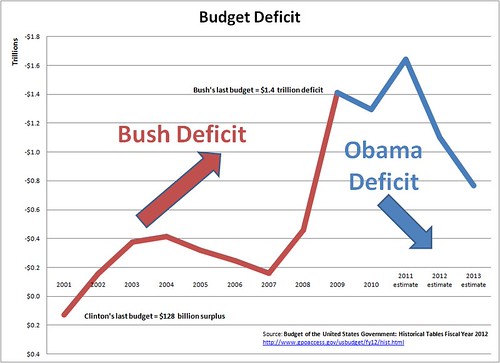
see:http://www.alternet.org/media/151426/why_do_people_believe_stupid_stuff%2C_even_when_they%27re_confronted_with_the_truth/