A Framing Memo for Occupy Wall Street

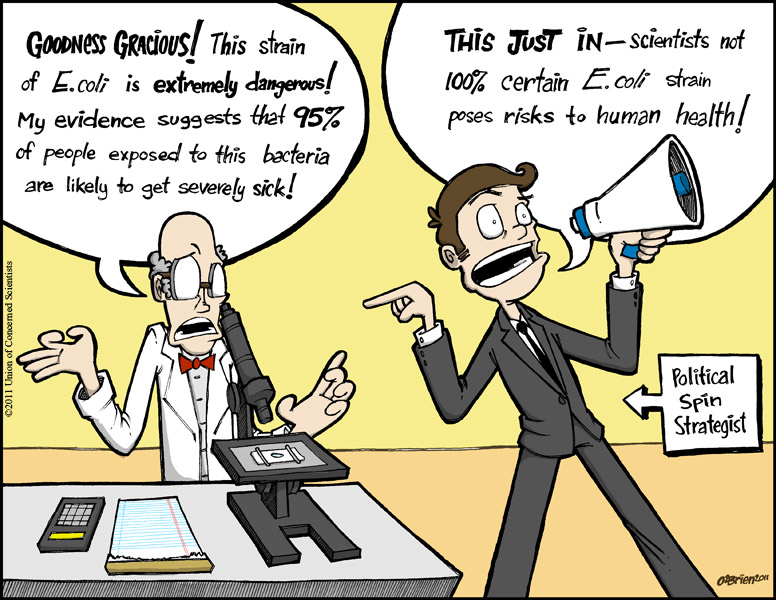
Unless you frame yourself, others will frame you – the media, your enemies, your competitors, your well-meaning friends. Above all: Frame yourselves before others frame you.

From ReaderSupportedNews, by Dr. George Lakoff

“I was asked weeks ago by some in the Occupy Wall Street movement to make suggestions for how to frame the movement. I have hesitated so far, because I think the movement should be framing itself. It’s a general principle: Unless you frame yourself, others will frame you – the media, your enemies, your competitors, your well-meaning friends. I have so far hesitated to offer suggestions. But the movement appears to maturing and entering a critical time when small framing errors could have large negative consequences. So I thought it might be helpful to accept the invitation and start a discussion of how the movement might think about framing itself.

About framing: It’s normal. Everybody engages in it all the time. Frames are just structures of thought that we use every day. All words in all languages are defined in terms of frame-circuits in the brain. But, ultimately, framing is about ideas, about how we see the world, which determines how we act.

In politics, frames are part of competing moral systems that are used in political discourse and in charting political action. In short, framing is a moral enterprise: it says what the character of a movement is. All politics is moral. Political figures and movements always make policy recommendations claiming they are the right things to do. No political figure ever says, do what I say because it’s wrong! Or because it doesn’t matter! Some moral principles or other lie behind every political policy agenda.

Two Moral Framing Systems in Politics

Conservatives have figured out their moral basis and you see it on Wall Street: It includes: The primacy of self-interest. Individual responsibility, but not social responsibility. Hierarchical authority based on wealth or other forms of power. A moral hierarchy of who is “deserving,” defined by success. And the highest principle is the primacy of this moral system itself, which goes beyond Wall Street and the economy to other arenas: family life, social life, religion, foreign policy, and especially government. Conservative “democracy” is seen as a system of governance and elections that fits this model.

Though OWS concerns go well beyond financial issues, your target is right: the application of these principles in Wall Street is central, since that is where the money comes from for elections, for media, and for right-wing policy-making institutions of all sorts on all issues.

The alternative view of democracy is progressive: Democracy starts with citizens caring about one another and acting responsibly on that sense of care, taking responsibility both for oneself and for one’s family, community, country, people in general, and the planet. The role of government is to protect and empower all citizens equally via The Public: public infrastructure, laws and enforcement, health, education, scientific research, protection, public lands, transportation, resources, art and culture, trade policies, safety nets, and on and on. Nobody makes it one their own. If you got wealthy, you depended on The Public, and you have a responsibility to contribute significantly to The Public so that others can benefit in the future. Moreover, the wealthy depend on those who work, and who deserve a fair return for their contribution to our national life. Corporations exist to make life better for most people. Their reason for existing is as public as it is private.

A disproportionate distribution of wealth robs most citizens of access to the resources controlled by the wealthy. Immense wealth is a thief. It takes resources from the rest of the population – the best places to live, the best food, the best educations, the best health facilities, access to the best in nature and culture, the best professionals, and on and on. Resources are limited, and great wealth greatly limits access to resources for most people.

It appears to me that OWS has a progressive moral vision and view of democracy, and that what it is protesting is the disastrous effects that have come from operating with a conservative moral, economic, and political worldview. I see OWS as primarily a moral movement, seeking economic and political changes to carry out that moral movement – whatever those particular changes might be.

A Moral Focus for Occupy Wall Street

I think it is a good thing that the occupation movement is not making specific policy demands. If it did, the movement would become about those demands. If the demands were not met, the movement would be seen as having failed.

It seems to me that the OWS movement is moral in nature, that occupiers want the country to change its moral focus. It is easy to find useful policies; hundreds have been suggested. It is harder to find a moral focus and stick to it. If the movement is to frame itself, it should be on the basis of its moral focus, not a particular agenda or list of policy demands. If the moral focus of America changes, new people will be elected and the policies will follow. Without a change of moral focus, the conservative worldview that has brought us to the present disastrous and dangerous moment will continue to prevail.

We Love America. We’re Here to Fix It

I see OWS as a patriotic movement, based on a deep and abiding love of country – a patriotism that it is not just about the self-interests of individuals, but about what the country is and is to be. Do Americans care about other citizens, or mainly just about themselves? That’s what love of America is about. I therefore think it is important to be positive, to be clear about loving America, seeing it in need of fixing, and not just being willing to fix it, but being willing to take to the streets to fix it. A populist movement starts with the people seeing that they are all in the same boat and being ready to come together to fix the leaks.

Publicize the Public

Tell the truth about The Public, that nobody makes it purely on their own without The Public, that is, without public infrastructure, the justice system, health, education, scientific research, protections of all sorts, public lands, transportation, resources, art and culture, trade policies, safety nets, … That is a truth to be told day after day. It is an idea that must take hold in public discourse. It must go beyond what I and others have written about it and beyond what Elizabeth Warren has said in her famous video. The Public is not opposed to The Private. The Public is what makes The Private possible. And it is what makes freedom possible. Wall Street exists only through public support. It has a moral obligation to direct itself to public needs.

All OWS approaches to policy follow from such a moral focus. Here are a handful examples.

Democracy should be about the 99%

Money directs our politics. In a democracy, that must end. We need publicly supported elections, however that is to be arranged.

Strong Wages Make a Strong America

Middle-class wages have not gone up significantly in 30 years, and there is conservative pressure to lower them. But when most people get more money, they spend it and spur the economy, making the economy and the country stronger, as well as making their individual lives better. This truth needs to be central to public economic discourse.

Global Citizenship

America has been a moral beacon to the world. It can function as such only if it sets an example of what a nation should be.

Do we have to spend more on the military that all other nations combined? Do we really need hundreds of military bases abroad?

Nature

We are part of nature. Nature makes us, and all that we love, possible. Yet we are destroying Nature through global warming and other forms of ecological destruction, like fracking and deep-water drilling.

At a global scale, nature is systemic: its effects are neither local nor linear. Global warming is causing the ferocity of the monster storms, tornados, floods, blizzards, heat waves, and fires that have devastated huge areas of our country. The hotter the atmosphere, the more evaporated water and the more energy going into storms, tornados, and blizzards. Global warming cannot be shown to cause any particular storm, but when a storm system forms, global warming will ramp up the power of the storm and the amount of water it carries. In winter, evaporated water from the overly heated Pacific will go into the atmosphere, blow northeast over the arctic, and fall as record snows.

We depend on nature – on clean air, water, food, and a livable climate. And we find beauty and grandeur in nature, and a sense of awe that makes life worth living. A love of country requires a love of nature. And a fair and thriving economy requires the preservation of nature as we have known it.

Summary

OWS is a moral and patriotic movement. It sees Democracy as flowing from citizens caring about one another as well as themselves, and acting with both personal and social responsibility. Democratic governance is about The Public, and the liberty that The Public provides for a thriving Private Sphere. From such a democracy flows fairness, which is incompatible with a hugely disproportionate distribution of wealth. And from the sense of care implicit in such a democracy flows a commitment to the preservation of nature.

From what I have seen of most members of OWS, your individual concerns all flow from one moral focus.

Elections

The Tea Party solidified the power of the conservative worldview via elections. OWS will have no long-term effect unless it too brings its moral focus to the 2012 elections. Insist on supporting candidates that have your overall moral views, no matter what the local issues are.

A Warning

This movement could be destroyed by negativity, by calls for revenge, by chaos, or by having nothing positive to say. Be positive about all things and state the moral basis of all suggestions. Positive and moral in calling for debt relief. Positive and moral in upholding laws, as they apply to finances. Positive and moral in calling for fairness in acquiring needed revenue. Positive and moral in calling for clean elections. To be effective, your movement must be seen by all of the 99% as positive and moral. To get positive press, you must stress the positive and the moral.

Remember: The Tea Party sees itself as stressing only individual responsibility. The Occupation Movement is stressing both individual and social responsibility.

I believe, and I think you believe, that most Americans care about their fellow citizens as well as themselves. Let’s find out! Shout your moral and patriotic views out loud, regularly. Put them on your signs. Repeat them to the media. Tweet them. And tell everyone you know to do the same. You have to use your own language with your own framing and you have to repeat it over and over for the ideas to sink in.

Occupy elections: voter registration drives, town hall meetings, talk radio airtime, party organizations, nomination campaigns, election campaigns, and voting booths.

Above all: Frame yourselves before others frame you.
George Lakoff is the author of “Moral Politics, Don’t Think of an Elephant!,” “Whose Freedom?,” and “Thinking Points” (with the Rockridge Institute staff). He is Richard and Rhoda Goldman Distinguished Professor of Cognitive Science and Linguistics at the University of California at Berkeley, and a founding senior fellow at the Rockridge Institute.


Emphasis Mine

see:http://www.readersupportednews.org/opinion2/275-42/7970-a-framing-memo-for-occupy-wall-street

Occupy Wall Street and its foes…

Paul Krugman, NY Times (Losing Their Immunity)

“As the Occupy Wall Street movement continues to grow, the response from the movement’s targets has gradually changed: contemptuous dismissal has been replaced by whining. (A reader of my blog suggests that we start calling our ruling class the “kvetchocracy.”) The modern lords of finance look at the protesters and ask, Don’t they understand what we’ve done for the U.S. economy?

The answer is: yes, many of the protesters do understand what Wall Street and more generally the nation’s economic elite have done for us. And that’s why they’re protesting.

On Saturday The Times reported what people in the financial industry are saying privately about the protests. My favorite quote came from an unnamed money manager who declared, “Financial services are one of the last things we do in this country and do it well. Let’s embrace it.”

This is deeply unfair to American workers, who are good at lots of things, and could be even better if we made adequate investments in education and infrastructure. But to the extent that America has lagged in everything except financial services, shouldn’t the question be why, and whether it’s a trend we want to continue?

For the financialization of America wasn’t dictated by the invisible hand of the market. What caused the financial industry to grow much faster than the rest of the economy starting around 1980 was a series of deliberate policy choices, in particular a process of deregulation that continued right up to the eve of the 2008 crisis.

Not coincidentally, the era of an ever-growing financial industry was also an era of ever-growing inequality of income and wealth. Wall Street made a large direct contribution to economic polarization, because soaring incomes in finance accounted for a significant fraction of the rising share of the top 1 percent (and the top 0.1 percent, which accounts for most of the top 1 percent’s gains) in the nation’s income. More broadly, the same political forces that promoted financial deregulation fostered overall inequality in a variety of ways, undermining organized labor, doing away with the “outrage constraint” that used to limit executive paychecks, and more.

Oh, and taxes on the wealthy were, of course, sharply reduced.

All of this was supposed to be justified by results: the paychecks of the wizards of Wall Street were appropriate, we were told, because of the wonderful things they did. Somehow, however, that wonderfulness failed to trickle down to the rest of the nation — and that was true even before the crisis. Median family income, adjusted for inflation, grew only about a fifth as much between 1980 and 2007 as it did in the generation following World War II, even though the postwar economy was marked both by strict financial regulation and by much higher tax rates on the wealthy than anything currently under political discussion.

Then came the crisis, which proved that all those claims about how modern finance had reduced risk and made the system more stable were utter nonsense. Government bailouts were all that saved us from a financial meltdown as bad as or worse than the one that caused the Great Depression.

And what about the current situation? Wall Street pay has rebounded even as ordinary workers continue to suffer from high unemployment and falling real wages. Yet it’s harder than ever to see what, if anything, financiers are doing to earn that money.

Why, then, does Wall Street expect anyone to take its whining seriously? That money manager claiming that finance is the only thing America does well also complained that New York’s two Democratic senators aren’t on his side, declaring that “They need to understand who their constituency is.” Actually, they surely know very well who their constituency is — and even in New York, 16 out of 17 workers are employed by nonfinancial industries.

But he wasn’t really talking about voters, of course. He was talking about the one thing Wall Street still has plenty of thanks to those bailouts, despite its total loss of credibility: money.

Money talks in American politics, and what the financial industry’s money has been saying lately is that it will punish any politician who dares to criticize that industry’s behavior, no matter how gently — as evidenced by the way Wall Street money has now abandoned President Obama in favor of Mitt Romney. And this explains the industry’s shock over recent events.

You see, until a few weeks ago it seemed as if Wall Street had effectively bribed and bullied our political system into forgetting about that whole drawing lavish paychecks while destroying the world economy thing. Then, all of a sudden, some people insisted on bringing the subject up again.

And their outrage has found resonance with millions of Americans. No wonder Wall Street is whining.”

Emphasis Mine

see:http://www.nytimes.com/2011/10/17/opinion/krugman-wall-street-loses-its-immunity.html?_r=1

It’s 2011 — Why Is God Still Involved In American Politics?

The Mormon-bashing directed at Mitt Romney should concern everyone for what it reveals about the undue influence of religion in American elections. There’s a reason the Founding Fathers wrote a national constitution that forbade religious tests for office and required the separation of church and state. It’s not just protection against the escalating religious bigotry we’re seeing lately, but also because religion should have no place in politics in the first place.

From AlterNet, By Amanda Marcotte

N.B.: Separation of Church and State is more important than ever!

“As an atheist and a liberal, it’s been tempting for me to simply laugh at Republicans fighting each other over the issue of whether or not Mitt Romney, a Mormon, gets to consider himself a Christian. From the non-believer point of view, it’s like watching a bunch of grown adults work themselves into a frenzy over the differences between leprechauns and fairies. But watching the debate unfold, I’ve become concerned about what it means to make someone’s religious beliefs such a big campaign issue, because it’s indicative of a larger eroding of the separation of church and state, which concerns not just atheists but all people who understand the importance of maintaining a secular government.

Robert Jeffress, an influential pastor who is the senior pastor of the First Baptist Church of Dallas, went on “Focal Point” with Bryan Fischer and declared that one shouldn’t support Mitt Romney for president because Romney, a Mormon, isn’t a real Christian. This created a media dustup that was silly even by the usual standards of ever-sillier mainstream media campaign coverage. John King of CNN interviewed Jeffress, focusing strictly on the question of who Jeffress believes deserves to be called a Christian, and how firmly he believes that only people he calls Christians should hold public office. Candy Crowley of CNN dogged both Herman Cain and Michele Bachmann on the question of whether or not they believe Romney is a Christian, and then she got irate with the candidates when they refused to answer the question, claiming that it’s irrelevant.

These interviews are remarkable for what the CNN anchors didn’t discuss, which was the most important question of all: the separation of church and state. Even though our nation has a tradition of pastors staying out of partisan politics — in fact, it is illegal for ministers to endorse candidates from the pulpit — it seemingly never occurred to King to challenge Jeffress for overstepping his bounds by telling people that God wants an evangelical Christian who is a Republican for president. By making the story about whether or not Mormons are Christians, CNN left the viewer with the impression that only Christians deserve to hold public office, and that the only thing left to debate is whether or not someone “counts” as a Christian, making him or her eligible for office.

We’re a long way from the days when John Kennedy assured the public that he respected the separation of church and state and would keep his faith separate from his policy-making decisions. Now, even mainstream reporters take it as a given that politicians will let religion govern their actions, and the only thing left to debate on theology is how many angels any single politician believes dance on the head of a pin. Things that used to be considered beyond the pale in politics, such as religious intolerance or ministers blatantly claiming they know who God supports in an election, have become normalized to the point where someone like Mitt Romney, who is odious in most respects but has never really made much of a fuss over his faith, is seeing religious tests becoming a major issue in his campaign.

(N.B. “… but no religious Test shall ever be required as a Qualification to any Office or public Trust under the United States.”  Article VI, US Constitution)

The ramifications for this shift affect more than conservative Mormons trying to win as Republicans. By not challenging the assertion that only Christians should hold office, mainstream journalists encourage bigotry against all religious minorities, including atheists. Atheists already face discrimination when it comes to running for public officeA number of states ban atheists from holding public office, even though the U.S. Constitution explicitly forbids religious tests for office. Of course, it’s difficult for an atheist to win enough votes to get office, so this conflict hasn’t been tested much, although one atheist city council member found himself under fire by religious bigots who wanted to use North Carolina’s ban on atheists holding office to push him out for not swearing his oath of office on the Bible.

There’s a reason the Founding Fathers wrote a national constitution that forbade religious tests for office and required the separation of church and state. It’s not just protection against the escalating religious bigotry we’re seeing lately, but also because religion should have no place in politics in the first place. Neither atheists nor believers benefit when leaders are guided more by religious dogma than by rationality. Angels and demons might be a fine thing to worry about when you’re in church on Sunday, but when you’re trying to govern real people in the real world, it’s far better to rely on evidence and empirical facts, interpreted through reason and not through the guesswork of faith. This is why Kennedy defended himself against questions about his faith by saying, “I believe in an America where the separation of church and state is absolute, where no Catholic prelate would tell the president (should he be Catholic) how to act, and no Protestant minister would tell his parishioners for whom to vote.”

People like Robert Jeffress, when they propose religious tests for office–even ones held privately by voters–should face more challenges than reporters simply asking if they consider Mormons “real” Christians. They should be confronted with Kennedy’s words and asked directly why they disagree with our former president about the separation of church and state. They should be asked why they believe only a certain breed of Christians should hold office, and asked why they think it’s appropriate to demand that politicians put religious dogma before evidence-based and rational approaches to policy. Anything less than that is aiding the religious right in its mission to remake our secular democracy into a theocracy. It shouldn’t be tolerated.”

Emphasis Mine

see:http://www.alternet.org/story/152712/it%27s_2011_–_why_is_the_christian_god_still_involved_in_american_politics?page=entire

“Crossen Combat Chronicles”

Today – 2 Oct 2011 – I attended an event at the Lakewood Public Library.  It was a multi media – sound, slides, and animation – presentation of “Crossen Combat Chronicles” a book – by Chip Heyl –  on the life of Col. John R. Crossen, of Lakewood, Ohio.  Mr. Crossen was born in Cambridge, Ohio in 1904, his parents eventually moved to Lakewood, where he graduated (as class president) in 1923.  He then went on to graduate from Western Reserve University, and received a JD from Marshall College of Law.  Mr. Crossen had joined the National Guard at the age of 19, and when he started his law practice in 1930, he continued in the Guard, becoming an officer.  When the US entered WWII, theOhio National Guard was federalized as the 37th Infantry Division, and as Captain of a battery in the 135th Field Artillery, Crossen left his wife, home , three daughters, his law career, and went to war.
The 37th Division served with valor and distinction in the Pacific theater during the war, and Crossen – who was promoted to Lt. Col. and became Battalion commander – was well-recognized and highly decorated.
He came back from the war, resumed his law practice (Crossen and Chamberlin), and died on 6 March 1965, before his 61st birthday.  He is buried in  Arlington National Cemetery.
Other than my interest in WWII history, and that I was born and lived in Lakewood, why was I at this event?  My late Mother Betty was an RN, and while doing private duty at Lakewood Hospital in the late fifties, she took care of Col Crossen.  They were both divorced, and having met, became – shall we say – very close friends: he was a part of my life for several years.  (He and my mother were no longer together –  for several years – before he died.)
Fast forwarding to 2011, I had been exploring the history of the 37th on the Internet (for another reason), and came across John’s name, and then this book.  I contacted the family from the web page, and John’s youngest daughter – Sue  – and I began corresponding via email.  In those emails – and today in person – we shared our experiences.  The Col – as we called him – must have suffered as a result of his war-time experiences what we call today PTSD,  and became a heavy drinker.  He and his wife divorced, she remarried and moved to Norwalk Oh, where the girls graduated high school.  Sue and I discussed some issues – in detail I need not share – today, and it was good for both of us.  I bought the book and a CD, and Sue Crossen McCreery wrote in it: “of all of the good things that have come out of the ‘Crossen Combat Chronicles’, meeting you is at the top of the list.”: I’ll take that – thank you!
He always treated me with respect – even though we were of different generations and even when were at polar opposites on issues – and I cannot ask for more from any person.  He and my Mother were good for one another, supplied a mutual need, and I had nothing but warm memories of him: he was very intelligent, and was one of the more interesting conversationalist’s I ever met.
“At the end of the day”, that is sufficient…
PostScript: I drove on Brockley Ave going and coming to the library, and stopped to look at 1217-9, the Crossen Home.

Why Aren’t Ayn Rand’s Wealthy “Job Creators” … Creating Jobs?

The myth of the wealthy “job creator” has been used for years to underscore a harmful vision of capitalism.

From AlterNet, by John Paul Rollert

 “With the announcement last Monday of President Obama’s plan to pay for his jobs bill with, among other things, the so-called “Buffett Rule,” we’re going to be hearing a lot more about the “job creators.” Over the last year, Congressional Republicans have consistently invoked them as a hex of sorts against any proposal to raise new tax revenue. “I am not for raising taxes in a recession,” Eric Cantor declared last November, when the Bush tax cuts were a bargaining chip in the protracted budget debate, “especially when it comes to the job creators that we need so desperately to start creating jobs again.”

Ten months, no new taxes, and one debt ceiling crisis later, Cantor said the same thing last week in response to the president’s jobs bill: “I sure hope that the president is not suggesting that we pay for his proposals with a massive tax increase at the end of 2012 on job creators that we’re actually counting on to reduce unemployment.” Given that 44 percent of the nation’s unemployed have been without work for at least six months and more Americans are living below the poverty line than at any time in the last 50 years, one marvels at Cantor’s faith in the truant “job creators” as well as his forbearance in the face of human misery. To the jobless, he is counseling the patience of Job.

But who exactly are these “job creators?” The phrase is not new. Republicans have been using it for years to underscore a particular vision of capitalism in which those who have benefitted most by the system are also most essential to its continued success. As long ago as 1991, Newt Gingrich characterized Democratic opposition to a cut in the capital gains tax as evidence that liberals reject this vision. “They hate job creators,” he told a gathering of Senate Republicans, “they’re envious of job creators.  They want to punish job creators.” With no apparent sense of irony, Gingrich added this was proof liberals “believe in class warfare.”

A more telling example for our current political impasse is the debate over the 1993 Clinton budget plan, which aimed to cut the deficit by, among other things, raising the top income tax rate. Congressional Republicans fought the bill tooth and nail, no one more so than former Texas Senator Phil Gramm. On the eve of its passage, he expressed the hope that the bill would “defy history” and prove that “raising taxes on job creators can promote investment and promote job creation.” Gramm, of course, did not think this was very likely to happen. “Only in Cuba and in North Korea and in Washington, D.C., does anybody believe that today,” he said, “but perhaps the whole world is wrong.”

Hindsight suggests that the world wasn’t wrong so much as Phil Gramm, along with every other Republican member of Congress. Not one of them voted for the bill, which cleared the House by only two votes and required Al Gore’s tie-breaking vote in the Senate. While higher taxes on the “job creators” proved no obvious hurdle to economic growth — the economy grew for 116 consecutive months, the most in U.S. history — it did cut the deficit from $290 billion when Clinton took office to $22 billion by 1997 and helped put the country on a projected path to paying off the national debt by 2012.

So much for ancient history. If the term “job creators” is no new addition to the lexicon of American politics, it has enjoyed quite a renaissance since President Obama took office. A Lexis-Nexis search of U.S. newspapers and wire services turns up 1,082 individual mentions of “job creators” in the month before the debt ceiling deal was reached, or just 175 fewer mentions than for George W. Bush’s entire second term.

Jon Stewart, for one, did not fail to notice the uptick. “Republicans are no longer allowed to say that people are rich,” he noted during the deficit ceiling debate, “You have to refer to them as ‘job creators.’” Stewart’s observation is funny only to the extent to which you believe that saying you’re a member of the top tax bracket and saying that you create jobs is not an obvious redundancy. If you believe, however, that the cast of Jersey Shore has just as much claim to being called “job creators” as Bill Gates or Steve Jobs, then Stewart’s joke not only falls flat, but misses the point. The wealthy are the “job creators,” whether or not they spend their time actually trying to create jobs.

The problem, of course, with upholding a definition of “job creators” that does not turn on the dedicated effort to create jobs is that it becomes hard to figure out what distinguishes the “job creators,” as a group, from everyone else — at least beyond their relative wealth. All Americans spend, save, and invest in varying degrees; most just do so with a lot less money.

In this light, the “jobs creators” rhetoric highlights a theory of capitalism in which those at the very top of the economic pyramid end up supporting the base. We might call this theory the Visible Hand of Capitalism in order to distinguish it from Adam Smith’s Invisible Hand. In The Wealth of Nations, he famously located the enduring success of capitalism in an increasingly complex system of work and exchange that sees “the assistance and co-operation of many thousands.” In such a society, no single group can be meaningfully called the “job creators.” They are as much the managers of capital as the men on the factory line.

As an intellectual matter, the Visible Hand of Capitalism has enjoyed support from figures as disparate as Destutt de Tracy, the French philosopher and economist whom Thomas Jefferson championed, to the steel baron and indefatigable philanthropist, Andrew Carnegie. As a rhetorical matter, however, the phrase “job creators” appears to come directly from the work of Ayn Rand. She favored the term “creators” to describe an elite caste in society and her highest human ideal.

John Boehner made reference to Atlas Shrugged, Rand’s most famous novel, in a speech he gave recently to the Economic Club of Washington, D.C. “Job creators in America are essentially on strike,” he said, in an obvious nod to the decision by the “creators” in the novel to go on strike in defiance of an intrusive federal government. The nation immediately begins to falter, and the books concludes with its hero, John Galt, giving a marathon address in which he explains to the rest of the country why America is crumbling. The nation, in brief, has scared away the very people who keep the economy working, leaving behind those who are ill-equipped to fend for themselves. Describing the economic and social theory underpinning this vision, Galt says:

In proportion to the mental energy he spent, the man who creates a new invention receives but a small percentage of his value in terms of material payment, no matter what fortune he makes, no matter what millions he earns. But the man who works as a janitor in the factory producing that invention, receives an enormous payment in proportion to the mental effort that his job requires of him. And the same is true of all men between, on all levels of ambition and ability. The man at the top of the intellectual pyramid contributes the most to all those below him, but gets nothing except his material payment, receiving no intellectual bonus from others to add to the value of his time. The man at the bottom who, left to himself, would starve in his hopeless ineptitude, contributes nothing to those above him, but receives the bonus of all of their brains.

For all that it lacks in human decency, Rand’s vision of who makes capitalism work at least has the advantage of isolating a group of people who actually create something. By contrast, the current “job creators” rhetoric seems to elevate a group of people whose shared tax bracket is their only outstanding trait.

As the debate over the president’s jobs bill takes shape, the “job creators” rhetoric is certainly deserving of a little more scrutiny, especially by those who don’t qualify for the distinction. Otherwise, they might as well accept the judgment of a far greater authority than even John Galt:

The fault, dear Brutus, is not in our stars,
But in ourselves, that we are underlings.”

John Paul Rollert is a doctoral student at the Committee on Social Thought at the University of Chicago. His essay, “Does the Top Really Support the Bottom? – Adam Smith and the Problem of the Commercial Pyramid,” was recently published by The Business and Society Review.

Emphasis Mine

see:http://www.alternet.org/story/152574/why_aren%27t_ayn_rand%27s_wealthy_%22job_creators%22_…_creating_jobs?page=entire

Increasing Union Membership Would Boost Middle-Class Incomes: Study

From HuffPost, by Jillian Berman

“If the incomes of the union rank-and-file rose by just a tenthmiddle-class incomes would go up $1,479 per year — even for those who aren’t members, according to an analysis of Census data from the Center for American Progress.

The boost in income, while slightly lower than if college-attainment rates went up by 10 percent, is higher than if the unemployment rate dropped by four percentage points — a scenario that would increase middle class incomes by $772 per household, according to the study.

The share of income going to the middle class is below average, in the states with the lowest unionization rates, The Center for American Progress also found.

Union rights have come increasingly under fire as unemployment remains high and companies and municipal governments look to curb spending. In August, a Gallup poll found that approval of unions was just above its lowest-recorded level, dating back to the Great Depression, while union membership dropped to a 70-year low in 2010, according to The New York Times.

In a February poll by the Pew Research Center, though, the number of respondents saying unions have a negative impact on the availability of jobs was the same as those saying they have a positive effect. Opinions like these may be why union influence is dwindling in states including Wisconsin, where last week major state employee unions lost their official status, according to Reuters.

The waning influence of private-sector unions, such as the United Auto Workers, could have something to do with their dwindling numbers, according a Harvard University and University of Washington study. The researchers found that private-sector union membership dropped to 8 percent from 34 percent among men between 1973 and 2007 and to 6 percent from 16 percent for women during the same period.

The effect? A more than 40 percent increase in wage stratification, according to the study.

Here’s where a boost in unionization would most help middle-class incomes, according to the Center for American Progress:

Middle-class household incomes would rise $1,675 per year in New Hampshire, on average, if the unionizaton rate saw a 10 percent boost, according to the Center for American Progress.

Emphasis Mine

see:http://www.huffingtonpost.com/2011/09/27/union-membership-middle-class-income_n_983702.html?ref=fb&src=sp&comm_ref=false#sb=1061349,b=facebook

Our Capitalist System Is Near Meltdown

The ailing euro is part of a wider crisis. A 1930s-style crash threatens us and our financial partners. Collective action is the only solution.

By Will Hutton, Guardian UK

“Eighty years ago, faced with today’s economic events, nobody would have been in any doubt: we would obviously be living through a crisis in capitalism. Instead, there is a collective unwillingness to call a spade a spade. This is variously a crisis of the European Union, a crisis of the euro, a debt crisis or a crisis of political will. It is all those things, but they are subplots of a much bigger story: the way capitalism has been conceived and practised for the last 30 years has hit the buffers. Unless and until that is recognised, western economies will be locked in stagnation which could even transmute into a major economic disaster.

Simply put, the world has trillions upon trillions of excessive private debt financed by too many different currencies whose risk is allegedly mitigated by even more trillions of financial bets which in aggregate do not minimise the systemic risk one iota. This entire financial edifice, underwritten by tiny amounts of capital, has been created over three decades backed by the theory that markets do not make mistakes. Capitalism is best conceived and practised, runs the theory, by hunter-gatherer bankers and entrepreneurs owing no allegiance to the state or society.

This is nonsense. Business and the state co-generate wealth in a system of complex mutual dependence. Markets are beset by mood swings and uncertainty which, if not offset by government action, lead to violent oscillations. Capitalism without responsibility or proportionality degrades into racketeering and exploitation. The prospect of limitless pay is an open invitation to bad, or even criminal, behaviour. Good capitalism cannot happen without referees to blow the whistle or robust frameworks in which markets can function; neither is reliably created by capitalism itself, hence the role of democratic government. Yet the world is trying to solve the legacy of the last 30 years as if none of this were true and, instead, that the practice and theories that created the mess are still valid.

US treasury secretary Tim Geithner, joining EU finance ministers in Poland as again they pondered how best to end the ongoing euro crisis, was at least recognising today’s interdependencies between countries when he urged his fellow ministers to stop bickering because the markets were terrified by the threat of a catastrophic event – with all the risk that posed the US.

George Osborne was also right to declare that a strong euro was in Britain’s interests. But worrying about how a failed euro might impact on yourself is old speak. What the markets need to hear is that western politicians – whether in the eurozone or not – see the euro as part of the potential solution to capitalism’s current crisis, not its cause, and that they are prepared to do all in their power to support the reforms necessary to make the euro survive and take other measures vital to make the world financial system functional again. Geithner and Osborne must put some money where their mouths are.

The euro’s critics, endlessly emphasising that it is a monetary straitjacket and that the best reform now would be its break-up, miss the point. It was not this so-called straitjacket that is the cause of today’s euro crisis. It is the interaction of the euro system with a once-in-a-century crisis of capitalism that its designers and supporters, like its critics, never anticipated. Yes, what the crisis has exposed is that the eurozone needed a ¤1trillion-plus fund to recapitalise bust banks and underwrite sovereign debt write-downs; this was not written into the original treaty. And that the investment and retail banking arms of the EU’s universal banks need to be ringfenced or formally separated, as Sir John Vickers‘s banking commission proposes for Britain – if they are to be remotely safe. But neither notion was a battle cry of the eurosceptics over the last 10 years.

In fact, the existence of the euro has, until now, been a bulwark against disaster. Suppose it had not been created and that the financial crisis in 2008 had broken over a Europe with multiple floating exchange rates and no European central bank – the eurosceptic utopia. The Irish, Portuguese, Greek, Spanish, Italian and French banking systems would have stood alone and they would have collapsed in a domino effect, interacting with the mega-crisis in Britain and the US. Even some German banks would not have been immune. There would have been a 1930s-scale slump, the break up of the EU and a rise in beggar-my-neighbour devaluations and trade protection.

We have not yet escaped that prospect. If the euro breaks up, the cascade of subsequent bank failures and debt write-downs will be no less threatening and Britain will be pulled into the vortex. The EU has created a “financial stabilisation facility” to try to hold the line. But there is no urgency in launching it; it is still not a proper fund but, rather, a stop-gap provider of borrowing facilities and it is too small. As bad, the German and French governments are wedded to collective European austerity; they want to impose long-term balanced budgets not only on themselves but chilling austerity on the unfortunate states which have to borrow to support their banks and bond markets.

An entire continent is to be blighted by lack of demand in the midst of a capitalist crisis, compounded by Britain’s scorched earth, deficit-reduction plans. Already, many European banks are technically insolvent, recognised by Christine Lagarde, the IMF’s new managing director, if not by the banks themselves.

Last week, the Bank of England joined the US Federal Reserve, the Bank of Japan and the Swiss central bank in promising Europe’s banks vital liquidity in dollars, easing the crisis for a while. Time has been bought; we are pitching in to save ourselves. But the outside world needs to go much further. Europe’s stabilisation facility must become a fund with a capacity to lend and intervene to see off speculators: Britain, the US, Switzerland and Japan, along with China and oil-rich Arab states, need to contribute alongside Germany.

In return for coming to the relief of the German taxpayer, we should demand two key concessions: one, that Europe sets about ringfencing its universal banks’ investment banking operations to make them less vulnerable; and second, that no international cash is forthcoming unless the EU commits to a formal plan for growth in which its stronger countries, notably Germany, promise to stimulate their economies. As part of the package, Britain should agree to defer its own deficit- reduction plans and to issue bonds denominated in euros to contribute to the new euro fund.

We are living through the most dangerous confluence of economic circumstances in modern times. Trying to pretend the interdependencies do not exist or that the collapse of the euro is the answer can only make matters worse. It is a straight choice: we do all we can to help each other or risk going down in what could be the worst economic contraction for a century.

Emphasis Mine

see:http://readersupportednews.org/opinion2/279-82/7486-our-capitalist-system-is-near-meltdown

Noah Chomsky on why the right hates social security.

It’s a very successful program. A large number people rely on it. It doesn’t pay munificently, but it at least keeps people alive, not just retired people, people with disabilities and others. Very low administrative costs, extremely efficient, and no burden on the deficit, doesn’t add to the deficit. The effort to try to present the Social Security program as if it’s a major problem, that’s just a hidden way of trying to undermine and destroy it.

From an interview on Democracy Now, see link below.

(N.B.:  While little is new,  it is presented very well.)

AARON MATÉ: Noam, you mentioned entitlements, and obviously this is an issue that’s come up a lot in the deficit debate. Governor Rick Perry, the Republican presidential hopeful, has called it a Ponzi scheme. But even Democrats seem to buy into this narrative that it’s in crisis. Can you address that?

NOAM CHOMSKY: Social Security is not in any crisis. I mean, the trust fund alone will fully pay benefits for, I think, another 30 years or so. And after that, taxes will give almost the same benefits. To worry about a possible problem 30 years from now, which can incidentally be fixed with little—a little bit of tampering here and there, as was done in 1983—to worry about that just makes absolutely no sense, unless you’re trying to destroy the program. It’s a very successful program. A large number people rely on it. It doesn’t pay munificently, but it at least keeps people alive, not just retired people, people with disabilities and others. Very low administrative costs, extremely efficient, and no burden on the deficit, doesn’t add to the deficit. The effort to try to present the Social Security program as if it’s a major problem, that’s just a hidden way of trying to undermine and destroy it.

Now, there has been a lot of opposition to it since—you know, since the 1930s, on the part of sectors of extreme wealth and privilege, especially financial capital. They don’t like it, for several reasons. One is the rich don’t barely—for them, it’s meaningless. Anyone with—you know, who’s had a fairly decent income, it’s a tiny addition to your retirement but doesn’t mean much. Another is, if the financial institutions and the insurance companies can get their hands on this huge financial resource—for example, if it’s privatized in some way or vouchers—I mean, that’s a huge bonanza. They’ll have trillions of dollars to play with, the banks, the investment firms and so on.

But I think, myself, that there’s a more subtle reason why they’re opposed to it, and I think it’s rather similar to the reason for the effort to pretty much dismantle the public education system. Social Security is based on a principle. It’s based on the principle that you care about other people. You care whether the widow across town, a disabled widow, is going to be able to have food to eat. And that’s a notion you have to drive out of people’s heads. The idea of solidarity, sympathy, mutual support, that’s doctrinally dangerous. The preferred doctrines are just care about yourself, don’t care about anyone else. That’s a very good way to trap and control people. And the very idea that we’re in it together, that we care about each other, that we have responsibility for one another, that’s sort of frightening to those who want a society which is dominated by power, authority, wealth, in which people are passive and obedient. And I suspect—I don’t know how to measure it exactly, but I think that that’s a considerable part of the drive on the part of small, privileged sectors to undermine a very efficient, very effective system on which a large part of the population relies, actually relies more than ever, because wealth, personal wealth, was very much tied up in the housing market. That was people’s personal wealth. Well, OK, that, quite predictably, totally collapsed. People aren’t destitute by the standards of, say, slums in India or southern Africa, but very—suffering severely. And they have nothing else to rely on, but what they—the, really, pittance that they’re getting from Social Security. To take that away would be just disastrous.

AMY GOODMAN: We’re talking to Noam Chomsky. He has a new book out, 10 years after his book 9-11. This is called 9-11: Was There an Alternative? We’ll come back to this conversation in a minute. And if you’d like to get a copy of the full show, you can go to our website at democracynow.org. Stay with us.”

Emphasis Mine.

see:http://www.readersupportednews.org/off-site-opinion-section/72-72/7440-noam-chomsky-on-why-the-right-hates-social-security

The 10 Worst Weather Disasters This Year and Why They Are Happening

We’ve already had 10 disasters topping $1 billion each and it’s only September — what gives?…is hoping that people may begin to better understand how global warming can affect us by stepping back and seeing these disasters as part of a bigger picture.

From Alternet, by Tara Lohan

N.B.: The article contained the ambiguous, misleading word ‘midwest’.  I replaced it with one more accurate.

Floodwaters remain threatening in parts of the Northeast. Acresting Susquehanna River caused evacuations late last week in Pennsylvania — the culprit that time was tropical storm Lee, which came on the heels of Hurricane Irene. These days extreme weather is beginning to seem like the new normal in a year marked by disastrous events — deadly tornadoes, raging floods, crippling drought and wildfire, massive hurricanes, and don’t forget the great white-out of “snowpocalpyse.”

All these events have taken their toll on the country, both in terms of human lives lost and the amount of damages incurred. FEMA’s disaster fund has dipped so low it is having to divert funds from Joplin, Missouri, site of the heartbreaking May tornado, to areas clobbered by Irene. The National Climatic Data Center (NCDC) reports that we’ve already set a record of 10 disasters over $1 billion each this year— and it’s only September.

So how bad have things been, and what’s to blame? Let’s take a look at the NCDC’s list of wreckage of the last nine months.

1. Ground Hog Day Blizzard, Jan 29-Feb 3

It may be hard to think back to the frigid days of winter, but the massive storm that blanketed central and eastern states was a killer. It put Chicago under several feet of snow, claimed 36 lives and caused losses over $2 billion. The storm stymied travel, exhausted plowing budgets, and brought major cities to a standstill. For New York, the storm capped a month of snowfall that hit 36 inches.

2.Central/Southeast Tornadoes, April 4-5

Next came the beginning of a horrifying tornado season, which included five events topping $1 billion. The first, on April 4-5 hit 10 southern and central states with 46 tornadoes, losses over $2.3 billion and nine people killed.

3. Southeast/Great Lakes Tornadoes, April 8-11

Then came another 59 tornadoes that battered the Carolinas, Tennessee, Alabama, Texas, Oklahoma, Kansas, Iowa and Wisconsin. Total losses topped $2.2 billion but no casualties were reported.

4. Mid Atlantic/Southeast Tornadoes, April 14-16

This round of 160 tornadoes rocked Oklahoma, Texas, Arkansas, Missouri, Alabama, Georgia, the Carolinas, Virginia and Pennsylvania. North Carolina received the brunt with tornadoes killing 22 people out of the storms’ total of 38 casualties. More than $2 billion in losses were reported.

5. Southeast/Ohio Valley/Miss. Valley Tornadoes, April 25-30

And still the tornadoes kept coming — this time 305 tornadoes and 327 people dead, 240 of them killed in Alabama. The twisters hit more populated areas like Tuscaloosa, Birmingham, Huntsville and Chattanooga, bringing the tab to over $9 billion.

6. Central/Southeast Tornadoes, May 22-27

Then came 180 tornadoes that terrorized central and southern states, claiming 177 lives and costing over $7 billion. The town of Joplin, Missouri lost 141 people and received the unfortunate honor of being the site of the country’s deadliest tornado strike. Before and after photos of Joplin showed obliterated neighborhoods, roads, schools, churches and hospitals, and the media was filled with heartbreaking stories of people searching for loved ones.

7. Southern Plains/Southwest Drought, Heatwave and Wildfires, Spring-Summer

Texas, Oklahoma, New Mexico, Arizona, southern Kansas, western Arkansas and Louisiana have been massively hot and dry. This has resulted in mammoth wildfires, lost crops and livestock, charred homes, and dwindling water supplies. Texans have now experienced the hottest three months (June through August) ever recorded in the U.S. Climate-denying Texas governor Rick Perry has been praying for rain, but his prayers have done nothing to help the 3.6 million acres torched in his state. (It also hasn’t helped that he cut the volunteer fire department budgets from $30 million to $7 million — a really bad decision considering that most Texans’ first line of defense is from the volunteer corps.) Across the Southwest and southern plains states, firefighting costs have reached $1 million a day. The total economic damages are still being tallied as this summer of hell is far from over, but losses to agriculture, cattle and buildings are more than $5 billion.

8. Mississippi River Flooding, Spring-Summer

The combination of massive rainfall and melting snow made for an epic flood event this year along the Mississippi and its tributaries, with losses creeping toward $4 billion and several lives lost. Homes and fields were submerged and towns evacuated. Photos showed water reaching the top of street signs, barns floating away and roadways disappearing into the floodwaters.

9. North Central Flooding, Summer

That wasn’t the only big flood event of the year either. The same disastrous combo of snow melt and hefty precipitation set the Missouri and Souris rivers on a wild ride. Minot, North Dakota‘s 11,000 folks were sent packing as the water claimed 4,000 area homes. In all Montana, the Dakotas, Iowa, Kansas and Missouri lost homes, businesses and farms with damage estimates at over $2 billion and five deaths reported.

10. Hurricane Irene, August 20-29

And that brings us back to Irene’s recent course through Eastern states. The final tab is still a guess, especially in a stunned and soggy Vermont. According to Circle of Blue, “Standard & Poor reported that total economic losses from the disaster could reach $US 20 billion, according to Reuters. Meanwhile, catastrophe modeler AIR Worldwide has insured-loss estimates between $US 3 to 6 billion, and risk-management firm Kinetic Analysis Corporation has estimated the total damage from Hurricane Irene at $US 7 billion.” The death toll has now reached 45.

Why All the Weather Disasters?

After tallying the lives lost and property damaged, has all this weather taken a toll on our consciousness yet? Are people beginning to wonder if it’s just a crappy, unlucky year — or is there something else going on? Bill McKibben, the environmental author and activist, is hoping that people may begin to better understand how global warming can affect us by stepping back and seeing these disasters as part of a bigger picture. As McKibben told Amy Goodman this week on Democracy Now!:

We’re in unprecedented, off-the-charts territory. It’s not that there haven’t been disasters before. There have always been disasters. Nature is relatively random in that sense. But now we’re seeing two things. One, disasters that go beyond the bounds of what we’ve ever seen before. Because there’s more water in the atmosphere, it’s possible to have bigger floods, record snowfalls when it’s cold, record rainstorms. And we’re seeing more of them in conjunction. Think about what’s been going on just on this continent this year. We’re about one-and-a-half percent of the surface area of the globe in the continental U.S., and we’ve had not only this extraordinary flooding, but on the same day that Hurricane Irene was coming down, Houston set its all-time temperature record, 109 degrees. We’re in the middle of the worst drought ever recorded in Texas. And, you know, Governor Perry’s prayers for rain have so far been unanswered, maybe because he’s done so little to ameliorate the flow of carbon into the atmosphere. We’re in a new situation.

It doesn’t mean that everything that happens is caused by global warming. Hurricanes aren’t caused by global warming. They’re caused by tropical waves drifting off the coast of Africa and encountering the earth’s spin that can begin to set them into rotation. But they are made more powerful. As this hurricane rode up the coast, one of the reasons it was able to pick up so much water, that it’s now dumping on Vermont and Quebec, is that sea surface temperatures were at an all-time record high off New York and New Jersey. Never–the last two years have seen the highest temperatures ever recorded in those waters. When you amp up a system–and so far we’ve added about three-quarters of a watt per square meter of the earth’s surface extra solar energy to the planet by burning coal and gas and oil--when you do that, you can expect more dynamic, more amped-up, more violent weather. And that’s exactly what we’re seeing.

So, to recap — it’s not that any one of our weather events was caused by global warming; it’s that global warming can make them worse. There is an increase in the frequency and the severity of storms — wet storms get even wetter, heat waves get hotter and droughts get even drier. As Seth Borenstein writes for the AP, “This year, there’s been a Pacific Ocean climate phenomenon that changes weather patterns worldwide known as La Nina, the flip side to El Nino. La Ninas normally trigger certain extremes such as flooding in Australia and drought in Texas. But global warming has taken those events and amplified them from bad to record levels, said climate scientist Jerry Meehl at the National Center for Atmospheric Research.”

The National Oceanic and Atmospheric Associated reported that this year was the second hottest on record — and last year was the hottest. They also turned up a few more disturbing facts:

  • Only nine of the lower 48 states experienced August temperatures near average, and no state had August average temperatures below average.
  • Wetter-than-normal conditions were widespread across the Northeastern United States, which had its second wettest August, as well as parts of the Northern Plains and California. Drier-than-normal conditions reigned across the interior West, the Midwest, and the South.
  • Despite record rainfall in parts of the country, drought covered about one-third of the contiguous United States, according to the U.S. Drought Monitor. The Palmer Hydrologic Drought Index indicated that parts of Louisiana, New Mexico, Oklahoma and Texas are experiencing drought of greater intensity, but not yet duration, than those of the 1930s and 1950s.
  • An analysis of Texas statewide tree-ring records dating back to 1550 indicates that the summer 2011 drought in Texas is matched by only one summer (1789), indicating that the summer 2011 drought appears to be unusual even in the context of the multi-century tree-ring record.
  • Texas, Oklahoma, New Mexico, and Louisiana had their warmest (June-August) summers on record.
  • The U.S. Climate Extremes Index, a measure of the percent area of the country experiencing extreme climate conditions, was nearly four times the average value was during summer 2011.

And if that’s not enough, Arctic sea ice is at a record level low.

So, we’ve got extreme weather that is getting more dangerous. What are we going to do? Apparently not much. Writing for the Guardian, Jule Boykoff takes politicians — especially the climate-denying Republicans — to task for ignoring the perils of climate change. Boykoff writes:

As Republican candidates rehearse Exxon-esque talking points, journalists need to ask them where their weather and climate change thresholds lie. Someone should ask Perry, “At what specific threshold would you begin to ‘believe’ in global warming?” Would he reconsider his position if Texas were thrashed by an Old Testament-style concoction of droughts and tornadoes on an even more regular basis? How regular would this thrashing have to be? More than 97% of active climate scientists are in consensus that humans are contributing significantly to climate change. What percentage does he require to eliminate doubt? 99%? 109%?

Same goes for Obama. How many deaths and billions in economic damage from extreme weather would it take for him to take action to mitigate climate change and, for example, put the kibosh on the Keystone XL pipeline?

Here’s the crux of this issue — at what point are we willing to do everything we can to change the course we’re on and demand the same from our elected officials? Perry and his Republican cohorts in the presidential race (minus Jon Huntsman) are adamant in their belief that climate change is not real despite the the conviction of 97 percent of people trained in that scientific field. Seems crazy right? Even crazier if you think about it this way: There’s a 97 percent change our ship is going to sink. Wouldn’t you want to get the heck off that boat?

There’s no way off this planet, so why aren’t we doing everything we can — Republicans, Democrats, everyone — to divert our ship from its disastrous course?”

Tara Lohan is a senior editor at AlterNet and editor of the new book Water Matters: Why We Need to Act Now to Save Our Most Critical Resource. You can follow her on Twitter @TaraLohan.

Emphasis Mine

see:http://www.alternet.org/story/152385/the_10_worst_weather_disasters_this_year_and_why_they_are_happening__?page=entire

The Republicans’ intergalactic adventures

In the alternate universe where Republican candidates debated yesterday, tax breaks for the rich apparently create jobs while deregulation spurs economic growth and preserves natural resources.

N.B.: Our world versus their’s! 

By John Wojcik, Peoples World

“In the alternate universe where Republican candidates debated yesterday, tax breaks for the rich apparently create jobs while deregulation spurs economic growth and preserves natural resources.

In our universe, those tax breaks have created no jobs, and deregulation has destroyed our economy, our rivers, our lakes,  our air quality and the Gulf of Mexico.

In Gov. Rick Perry‘s universe, Social Security is a Ponzi scheme.

In our universe, a Ponzi scheme is something done by criminals who trick investors into giving them money that they then pocket for themselves. Social Security, in our universe, is something  It ishard-working people pay into so they can stay out of poverty when they get old. I is one of the most successful programs ever devised and has so much money in its coffers that everyone can be paid everything they are owed until 2037. No other program, government-run or private, can say the same.

In Perry’s universe, “President Obama has proven once and for all that government spending will not create one job.”

In our universe, the president’s stimulus program created 3 million jobs, 300,000 in the state of Texas, alone.

In Perry’s universe, “Keynesian policy and Keynesian theory is now done and disproven.”

In our universe, it’s the GOP program of deregulation and tax cuts that has been disproven. In our universe, deregulation caused the financial crisis and destroyed millions of jobs.

Mitt Romney and his advisors, however, ventured into the reality-based universe , if only briefly.

Romney jumped for joy after Perry reiterated his ongoing attack on Social Security. “Perry has lost,” Romney adviser Stuart Stevens said in an e-mail. “No federal candidate has ever won on the Perry platform to kill Social Security. Never has. Never will.” (A CNN poll in August found 57 percent of Republicans opposed to major changes in both Social Security and Medicare.)

Romney’s declaration last night that the nominee of the GOP must be someone committed to “saving,” not “killing” Social Security rings hollow, however.  He, like Wall Street itself, is also committed to killing Social Security with a variety of schemes that would allow people to “save and invest” rather than pay into the plan. The Romney approach is, at best, a backdoor way of turning over to Wall Street investors the huge Social Security pot of gold they have been trying to grab for years.

Romney says that corporations, which he views as “people,” should get even bigger tax breaks than they have gotten thus far and that almost all regulations on their activity should be eliminated. He has called for zero taxes on companies that have shipped jobs overseas as a way of luring them back home. In our universe, that amounts to rewarding the people who destroyed American jobs, American livelihoods and American hopes.

The Republican candidates all agreed with what Sen. Tom Harkin, D-Iowa, calls a “mindless march to austerity.” He said the Republican approach of focusing on the deficit, rather than the jobs crisis, would put the nation on  “a course of radical disinvestment and decline.

“Smart countries do not just turn a chainsaw on themselves. Instead of the current slash-and-burn approach, which is being sold through fear and fatalism, we need an approach that reflects the hopes and aspirations of the American people.”

Harkin pointed to tens of millions of jobs created by visionary leadership and government investment in the nation’s highway system, space exploration and research. For example, he noted, the federal government’s investment of $3.8 billion in the human genome project, between 1988 and 2003, translated into $796 billion in economic output and, in 2010 alone, created 310,000 jobs.

Yesterday evening the Republican candidates, under the colors of our flag and the wings of Ronald Reagan’s jet, offered no solution to the jobs crisis. Instead, they proffered a free-market fairy tale straight from their alternate universe. They made it abundantly clear that their reality is not the reality of the vast majority of the American people.”

Emphasis Mine

see:http://peoplesworld.org/the-republicans-intergalactic-adventures/