The Rise of the Non-Working Rich

Source: RSN

Author Robert Reich

In a new Pew poll, more than three quarters of self-described conservatives believe “poor people have it easy because they can get government benefits without doing anything.”

In reality, most of America’s poor work hard, often in two or more jobs.

The real non-workers are the wealthy who inherit their fortunes. And their ranks are growing.

In fact, we’re on the cusp of the largest inter-generational wealth transfer in history.

The wealth is coming from those who over the last three decades earned huge amounts on Wall Street, in corporate boardrooms, or as high-tech entrepreneurs.

It’s going to their children, who did nothing except be born into the right family.

The “self-made” man or woman, the symbol of American meritocracy, is disappearing. Six of today’s ten wealthiest Americans are heirs to prominent fortunes. Just six Walmart heirs have more wealth than the bottom 42 percent of Americans combined (up from 30 percent in 2007).

The U.S. Trust bank just released a poll of Americans with more than $3 million of investable assets.

Nearly three-quarters of those over age 69, and 61 per cent of boomers (between the ages of 50 and 68), were the first in their generation to accumulate significant wealth.

But the bank found inherited wealth far more common among rich millennials under age 35.

This is the dynastic form of wealth French economist Thomas Piketty warns about. It’s been the major source of wealth in Europe for centuries. It’s about to become the major source in America – unless, that is, we do something about it.

As income from work has become more concentrated in America, the super rich have invested in businesses, real estate, art, and other assets. The income from these assets is now concentrating even faster than income from work.

In 1979, the richest 1 percent of households accounted for 17 percent of business income. By 2007 they were getting 43 percent. They were also taking in 75 percent of capital gains. Today, with the stock market significantly higher than where it was before the crash, the top is raking even more from their investments.

Both political parties have encouraged this great wealth transfer, as beneficiaries provide a growing share of campaign contributions.

But Republicans have been even more ardent than Democrats.

For example, family trusts used to be limited to about 90 years. Legal changes implemented under Ronald Reagan extended them in perpetuity. So-called “dynasty trusts” now allow super-rich families to pass on to their heirs money and property largely free from taxes, and to do so for generations.

George W. Bush’s biggest tax breaks helped high earners but they provided even more help to people living off accumulated wealth. While the top tax rate on income from work dropped from 39.6% to 35 percent, the top rate on dividends went from 39.6% (taxed as ordinary income) to 15 percent, and the estate tax was completely eliminated. (Conservatives called it the “death tax” even though it only applied to the richest two-tenths of one percent.)

Barack Obama rolled back some of these cuts, but many remain.

Before George W. Bush, the estate tax kicked in at $2 million of assets per couple, and then applied a 55 percent rate. Now it kicks in at $10 million per couple, with a 40 percent rate.

House Republicans want to go even further than Bush did.

Rep. Paul Ryan’s “road map,” which continues to be the bible of Republican economic policy, eliminates all taxes on interest, dividends, capital gains, and estates.

Yet the specter of an entire generation who do nothing for their money other than speed-dial their wealth management advisors isn’t particularly attractive.

It’s also dangerous to our democracy, as dynastic wealth inevitably accumulates political influence.

What to do?  First,restore the estate tax in full.

Second, eliminate the “stepped-up-basis on death” rule. This obscure tax provision allows heirs to avoid paying capital gains taxes on the increased value of assets accumulated during the life of the deceased. Such untaxed gains account for more than half of the value of estates worth more than $100 million, according to the Center on Budget and Policy Priorities.

Third, institute a wealth tax. We already have an annual wealth tax on homes, the major asset of the middle class. It’s called the property tax. Why not a small annual tax on the value of stocks and bonds, the major assets of the wealthy?

We don’t have to sit by and watch our meritocracy be replaced by a permanent aristocracy, and our democracy be undermined by dynastic wealth. We can and must take action — before it’s too late.


Emphasis Mine

See:http://readersupportednews.org/opinion2/274-41/24802-the-rise-of-the-non-working-rich

GOP Self-Destruction Complete: Millennials Officially Hate Conservatives

The backlash machine has finally, completely backfired.

Their Person...
Their Person…

Source: AlterNet

Author: Ana Marie Cox

Conservatives are stuck in a perpetual outrage loop. The reappearance of Todd Akin, the horror-movie villain immortality of Sarah Palin, theunseemly celebration of the Hobby Lobby decision – these all speak to a chorus of “la-la-la-can’t-hear-you” loud enough to drown out the voice of an entire generation. Late last week, the Reason Foundation released the results of a poll about that generation, the millennials; its signature finding was the confirmation of a mass abandonment of social conservatism and the GOP. This comes at a time when the conservative movement is increasingly synonymous with mean-spiritedprank-like and combativeactivism and self-important grand gestures. The millennial generation has repeatedly defined itself as the most socially tolerant of the modern era, but one thing it really can’t stand is drama.

Republicans were already destined for piecemeal decimation due to the declining numbers of their core constituency. But they don’t just have a demographic problem anymore; they have stylistic one. The conservative strategy of outrage upon outrage upon outrage bumps up against the policy preferences and the attitudes of millennials in perfect discord.

We all can recognize the right’s tendency to respond to backlash with more “lash” (Akin didn’t disappear, he doubled down on “legitimate rape”), but it seems to have gained speed with the age of social media and candidate tracking. The Tea Party’s resistance to the leavening effect of establishment mores and political professionals has been a particularly effective accelerant. Palin’s ability to put anything on the internet without any intermediary has rendered her as reckless as any tween with a SnapChat account. Akin’s whiny denouncement of Washington insiders is likely to make him more credible with a certain kind of base voter. The midterms are, as we speak, producing another round of Fox News celebrities, whether or not they win their races: the Eric Cantor-vanquishing David Brat, Mississippi’s Chris McDaniel and the hog-castrating mini-Palin, Jodi Ernst of Iowa.

The fire-with-fire attitude of hardline conservatives has its roots in the petulant cultural defensiveness adopted by the GOP – especially the Christian right – during the culture wars of the 90s. Their siege mentality bred an attitude toward liberals that saw every instance of social liberalization as proof of their own apocalyptic predictions and conspiracy theories. Gay marriage will lead to acceptance of beastiality and pedophilia. “Socialized medicine” will lead to the euthanizing Grandma. Access to birth control will lead to orgies in the streets.

Then came Obama’s election, the Zapruder tape for the right’s tin-foil hat haberdashers – a moment in history that both explained and exacerbated America’s supposed decline. Dinesh D’Souza, the Oliver Stone of the Tea Party, has now made two movies about the meaning of Obama’s presidency. The first, 2016: Obama’s America, garnered an astounding $33m at the box office, and his lawyers blamed disappointing returns from this summer’s America on a Google conspiracy to confuse moviegoers about its showtimes. (Of course.)

The GOP has long staked a claim on The Disappearing Angry White Man, but they have apparently ever-narrowing odds of getting a bite at millennials, who appear to be more like The Somewhat Concerned Multicultural Moderate. This generation is racially diversepro-potpro-marriage equality and pro-online gambling. They are troubled by the deficit but believe in the social safety net: 74% of millennials, according to Reason, want the government to guarantee food and housing to all Americans. A Pew survey found that 59% of Americans under 30 say the government should do more to solve problems, while majorities in all other age groups thought it should do less.

The Rupe-Reason poll teases out some of the thinking behind the surge of young people abandoning the GOP, and finds a generation that is less apt to take to the streets, Occupy-style, than to throw a great block party: lots of drugs, poker and gays! Millennials don’t want to change things, apparently – they want everyone to get along. The report observes “[m]any specifically identified LGBTQ rights as their primary reason for being liberal”; and “[o]ften, they decided they were liberals because they really didn’t like conservatives.”

But liberals can’t be complacent about their demographic advantage. Their challenge is to resist the impulse to copycat the hysteria that has worked so well for the right historically. “No drama Obama” was the millennials’ spirit animal – his popularity has sunk with the economy, but also with the administration’s escalating rhetoric. Today, under-30 voters show a distinct preference for Hillary Clinton (39% according to Reason,53% according to the Wall Street Journal), and no wonder: she’s as bloodless as Bill was lusty, as analytical as Bill was emotional. The professorial Elizabeth Warren is the logical (very logical) backup.

Right now, Democrats benefit from both the form and content of conservative message: this next generation is not just inclusive, but conflict-adverse. Millennials cringe at the old-man-yelling-at-gay-clouds spectacle of the Tea Party. Perhaps this comes from living in such close proximity of their parents for so long. If this generation does have a political philosophy, it’s this: “First, do no harm.” If it has a guiding moral principle, it’s simpler: “Don’t be embarrassing.”

Ana Marie Cox is political columnist for the Guardian US. 

Emphasis Mine

See: http://www.alternet.org/news-amp-politics/gop-self-destruction-complete-millennials-officially-hate-conservatives?akid=12015.123424.z4TDon&rd=1&src=newsletter1011265&t=5

Turns Out, Republicans Love Obamacare!?!

WeLoveObamacare2Source: Think Progress

Author: Igor Volsky

Conservative groups have invested millions of dollars in opposing the Affordable Care Act, but they appear to have had little success in turning Americans against the law. In fact, according to a new poll from the Commonwealth Fund, individuals and families who enroll in Obamacare — including the overwhelming majority of Republicans — are satisfied with the product:

Overall, 73 percent of people who bought health plans and 87 percent of those who signed up for Medicaid said they were somewhat or very satisfied with their new health insurance. Seventy-four percent of newly insured Republicans liked their plans. Even 77 percent of people who had insurance before — including members of the much-publicized group whose plans got canceled last year — were happy with their new coverage.

The study also found that the percentage of uninsured has dropped, from 20 percent to 15 percent, after the first open enrollment period, with 9.5 million fewer people now uninsured. Latinos, the most likely of any racial group to lack health insurance, are seeing the biggest gains in coverage. “The percent uninsured fell from 36 percent in July–September 2013 to 23 percent in April–June 2014,” Commonwealth reports.

Moreover, states that expanded their Medicaid programs experienced the biggest drop in uninsurance rates for low-income citizens. In the 25 states and the District of Columbia that implemented coverage expansion for poorer residents, the average uninsured rate for people living below the poverty level fell to 17 percent from 28 percent. The 26 states that have rejected Medicaid expansion continue to see the uninsured rate among low income individuals hover at 36 percent.

The number of uninsured young adults dropped the most, the survey found, from 28 percent to 18 percent.

Commonwealth Fund conducted the survey from a July-to-September 2013 period, before Americans began enrolling in the Affordable Care Act, and then again from April-to-June 2014, following the end of open enrollment.

Update

Significantly, the survey also found that more than half of adults — 58 percent — “with new insurance said they were better off now than they were before.”

Emphasis Mine

See:http://thinkprogress.org/health/2014/07/10/3458577/even-republicans-are-satisfied-with-the-new-obamacare-coverage-poll-finds/

GOP’s culture war disaster: How this week highlighted a massive blind spot

Source: Salon.com

Author: Joan Walsh

Progressives often comfort themselves that while they’re losing a lot of economic battles, at least they’re winning the so-called culture wars. New York’s Democratic Gov. Andrew Cuomo, a staunch proponent of both gay marriage and tax cuts for the wealthy, symbolizes that political paradox for the left. But lately it’s impossible not to notice that even our culture war victories are uneven. They mostly involve gay rights, particularly marriage equality, and rarely women’s rights.

In the same few years that one state after another has legalized gay marriage, with occasional help from the Supreme Court, dozens of states have restricted abortion, and contraception has become controversial and divisive in a way it hasn’t since the Supreme Court’s Griswold v. Connecticut ruling almost 50 years ago. On the heels of the court’s awful Hobby Lobby decision Monday came welcome word that a judge had struck down Kentucky’s gay marriage ban. There have been plenty of bittersweet days like that over the last year.

I don’t mean to pit women against the LGBT community, or suggest one side is “winning” at the expense of the other. Women make up at least half of LGBT folks, so their advances are advances for women’s rights, and many barriers to their freedom and full equality remain. But why, when women’s concerns stand alone, are their rights so often abridged?

I’ve come to believe that the difference exists because, except for far right religious extremists and outright homophobes, marriage equality is, at heart, a conservative demand – letting gays and lesbians settle down and start families and have mortgages just like the rest of us will contribute to the stability of families and society. In his 1989 essay “Here comes the groom: The (conservative) case for gay marriage,” Andrew Sullivan argued that marriage would “foster social cohesion, emotional security, and economic prudence,” particularly among gay men too often viewed through the lens of partying and promiscuity.

Twenty years later Ted Olson updated those ideas in his wildly influential “The Conservative Case for Gay Marriage,” as he took up the challenge to California’s Proposition 8 with David Boies, arguing “same-sex unions promote the values conservatives prize.”  Not all conservatives celebrate marriage equality, not yet, but many have come to agree with Sullivan and Olson.

That just points up the fact that advancing female autonomy and freedom, by contrast, is still perceived as threatening and undermining to family and society, particularly when it involves (as it always essentially does) issues of sexual freedom. The Hobby Lobby decision, and the conservative reaction to it, made this dynamic particularly and depressingly clear. Some pundits hailed its implications for religious liberty, but a whole lot of them welcomed it as a rebuke to slutty females having sex on their dime.

Sexually insecure sad sack Erick Erickson tweeted, “My religion trumps your ‘right’ to employer subsidized consequence free sex.” Utah Sen. Mike Lee hailed the decision for giving employers the freedom not to subsidize something that is “largely for recreational behavior,” not procreation. Bill O’Reilly tool Jesse Watters called it a setback for “Beyonce voters” (Way to get race in there too, Jesse!) who “depend on government because they’re not depending on their husbands.” (Somebody should tell Watters that Mrs. Carter appears to depend on her husband quite comfortably, thank you very much).

Even the court’s decision in Harris v. Quinn betrayed a blinkered view of women as an underclass of workers who lack basic rights – especially when they work in the home. We’re moving fast on marriage equality, but when it comes to questions of work, family, sexuality and women’s equality, we are still fighting the culture wars of the 1960s. And women are still losing ground. Yes, Republicans are also losing political ground, as women recognize the party’s retrograde views and flee. But it’s not clear that women can be mobilized fast enough to protect their own rights.

* * *

In her withering dissent from the Hobby Lobby ruling, Ginsberg quotes the court’s 1992 decision in Planned Parenthood of Southeastern Pa. v. Casey, which affirmed the Roe v. Wade decision legalizing abortion. “The ability of women to participate equally in the economic and social life of the Nation has been facilitated by their ability to control their reproductive lives,” Justice Sandra Day O’Connor, a Ronald Reagan appointee, wrote for the majority. More than two decades later, both of those abilities – to “participate equally” and “control their reproductive lives” — are still widely contested for women.

Justice Samuel Alito worked so assiduously to narrow the implications of the court’s Hobby Lobby ruling that he made its disrespect for women’s health, privacy and autonomy even more obvious and outrageous. The decision, he wrote, “concerns only the contraceptive mandate and should not be understood to hold that all insurance-coverage mandates e.g., for vaccinations or blood transfusions must necessarily fall if they conflict with an employer’s religious beliefs.”

Oh, thank god: Men won’t lose any of their access to healthcare coverage under the ruling. (In fact, Hobby Lobby’s insurance covers Viagra and vasectomies.)

The ruling won’t let corporations practice racial discrimination, either, even if their religion somehow justified it, Alito assured us. “The Government has a compelling interest in providing an equal opportunity to participate in the workforce without regard to race, and prohibitions on racial discrimination are precisely tailored to achieve that critical goal.” Apparently Alito doesn’t think the HHS contraception mandate is tailored to achieve a “compelling interest” or a “critical goal.”  Though he notes that “HHS asserts that the contraceptive mandate serves a variety of important interests,” Alito is unconvinced. “[M]any of these are couched in very broad terms, such as promoting ‘public health’ and ‘gender equality.’ ”

“Gender equality” … pshaw! One wonders if Alito also put “public health” in quotes because he knows HHS is really only talking about “women’s health.”

How did it happen that the only issue on which religious liberty trumps existing employment law, for the court’s conservative majority, is the issue that pertains to women’s freedom and sexuality? By emphasizing how narrowly tailored the court’s decision is, Alito only underscored its sexist radicalism. But that’s fitting. From the beginning, the entire controversy over the ACA’s contraceptive mandate served to highlight the backlash against women’s freedom we’ve endured in the last few decades.

Discomfort with women’s sexuality and autonomy was made plain in the earliest debate over the ACA’s contraception coverage. From Rush Limbaugh calling Sandra Fluke a “slut” for supporting the mandate, to Mike Huckabee lamenting that Democrats were using it to appeal to women who “can’t control their libidos,” the outrage and abuse exposed the deep fear of women’s freedom at the heart of the modern conservative movement. We saw it throughout the 2012 Republican primary campaign, when candidates competed over who could more alarmingly blame our economic troubles on the “breakdown” of the family, and particularly, the rising numbers and power of single women – who by the way, tend to vote Democratic.

“When the family breaks down, the economy breaks down,” Rick Santorum told us, as he promised to be a president who’d talk about “the dangers of contraception,” which provides “a license to do things in a sexual realm that is counter to how things are supposed to be.” Apparently “how things are supposed to be” involves a husband, a wife and nothing but sweet, sweet procreative love. Long before Hobby Lobby voiced its religious objections to the contraception mandate, former Republican National Committee chairman Michael Steele opposed it for marginalizing men.

“You have effectively absolved the male of any responsibility in the relationship with this woman,” he complained on MSNBC’s “Hardball.” “It’s not just about giving women access to contraception. It’s about the responsible behavior that goes with that access.” He went on: “It’s nice for Barack Obama to tell women, ‘I got your back. Here, have a pill … But I’m saying it’s also this other piece that doesn’t get talked about in terms of the responsibility of fathers, or potential fathers, in this relationship.”

To conservatives, the contraceptive mandate wasn’t the ACA’s only controversial women’s health benefit; they also found fault with its requiring that all insurance policies offer maternity coverage. The party that allegedly stands for motherhood and all that is holy was outraged that maternity care became a basic right for the insured, and that women no longer pay higher premiums than men. North Carolina Rep. Renee Ellmers ridiculed former HHS Secretary Kathleen Sebelius for making maternity coverage universal, asking at a congressional hearing, “Has a man ever delivered a baby?” Ellmers was effectively supporting the transfer of millions of dollars of wealth back from women to men, by pushing to liberate men from having to subsidize baby making or women’s health in any way.

But it’s not that conservatives think women shouldn’t get any help at all with the financial burden of child-bearing, or of maintaining all those extra-special body parts that keep the entire human species alive. They deserve help – from their husbands. Bill O’Reilly’s dudebro assistant Jesse Watters probably put it best after the Hobby Lobby decision, when he trashed “Beyonce voters” — all the single ladies! — who “depend on government because they’re not depending on their husbands.” See, it’s your husband, not Barack Obama, who should be saying (in Michael Steele’s words), “I got your back. Here, have a pill.” And if you don’t have a husband? Well, don’t have sex, and you won’t need that pill.

Oh, and if your husband is Rick Santorum? You might not get that pill anyway.

* * *

These backward attitudes don’t reflect majority opinion. On abortion, on the contraception mandate, on women’s rights generally, Americans remain broadly supportive of measures to allow women to “participate equally in the economic and social life of the nation,” to use Sandra Day O’Connor’s words from Casey.

But the far right learned to use the fear unleashed by the necessary and long overdue changes that began in the 1960s and ’70s to power a political backlash that we’re still fighting today. The liberation of women seemed to coincide with the unraveling of family life — an increase in divorce rates and single parenthood; even married moms left their children for the workplace. Instead of trying to understand the social and economic forces behind those changes, the project of the so-called “New Right” was to turn back the clock and push those women back into the home. In the reddest precincts of America, the same fear and dread animates conservative voters to this day.

Interestingly, if we can’t pinpoint the exact moment when progress for women stopped accelerating, we can identify a major one: when Richard Nixon vetoed the Comprehensive Child Development Act in 1972. Until that point, Nixon had gone along with the expansion of government that had its roots in the Progressive movement and the New Deal. He signed bills establishing the Environmental Protection and Occupational Safety and Health agencies. He pioneered federal affirmative action. He pushed healthcare reform that looked a lot like Obamacare.  Two out of three Supreme Court justices he appointed supported the majority in Roe v. Wade.

But Nixon drew the line at a bill that would massively subsidize childcare, even though it passed the Senate 63-17. “For the Federal Government to plunge headlong financially into supporting child development would commit the vast moral authority of the National Government to the side of communal approaches to child rearing over against [sic] the family-centered approach,” he wrote in a veto message.

If you want to understand the expansion of the low-wage economy, the stagnation of family income and the erosion of the middle class since then, it’s all there in the attitudes that led to Nixon’s veto (the message was crafted by Pat Buchanan, by the way). Whether by choice or necessity, women were moving into the labor force, and the country faced a decision: to make it easier for them and their families, or to make it harder. Mostly, we chose harder.

Unlike other developed nations, we never developed any kind of widely available subsidized childcare or preschool. We have no federal paid family leave. Most of the work that women used to do in their own home – from childcare to caring for sick or elderly family members – is now done by other women, many of color, who dwell in a low-wage, rarely unionized, shadow economy. Until recently, many workplace protections didn’t apply to them, because they were working in the home, not a factory. It’s as though society said: If women won’t do those jobs for free in their own homes any longer, we sure as hell won’t pay the women who replace them a living wage, or respect them as workers doing work that we value.

Or at least that’s what SCOTUS just said in Harris v. Quinn. Plaintiff Pam Harris was just a “mom” fighting to stop “the threat of unionization in a family home,” who sued the state of Illinois to avoid having to pay union dues out of funds she gets from Medicaid to care for her disabled son. Listen closely to the rhetoric of Harris and her supporters, and you could hear echoes of Nixon railing against “communal approaches” vs. “the family centered approach.” Harris is a vestige of a time when caring for everybody — young, old, disabled — was done by women, unpaid, in the home, and she’s a hero to people who think things should still be that way.

Of course, Harris is the ultimate free rider, not just on the labor movement but on the women’s movement, since she’s taking Medicaid dollars and being paid, for “women’s work,” as her son’s attendant. The Fox reporter who interviewed Harris about her Supreme Court victory Monday closed his segment by declaring that now, thank god, nobody could say “this home on the Illinois/Wisconsin border is somehow a union shop.”

That’s just the kind of phony issue the right used in the ’70s – fear of a world grown cold, a house that’s no longer a home, where moms demand money to do work they once did out of love – if they bother doing any of that work at all.

* * *

The contrast between the status of gay rights and women’s rights was made particularly stark in this Huffington Post piece, “In Wreckage of Supreme Court Decision, Gay Rights Groups See Hope.” The limited way Alito crafted the Hobby Lobby decision, LGBT leaders believe, meant it couldn’t be used to duck anti-discrimination laws or an executive order implementing the Employment Non-Discrimination Act (ENDA) they are pressing President Obama to issue soon. (Although on the heels of the Hobby Lobby ruling, evangelical megachurchman Rick Warren is asking the president to carve out a broad religious exemption from ENDA.)

That the Hobby Lobby ruling doesn’t hobble anti-discrimination law is good news for progressives. We all want to see the realm of freedom expanded. But I wish Ted Olson’s next essay would be “The Conservative Case for Women’s Equality.” Thirty years ago, it wouldn’t have been hard to imagine. Not long ago, issues of women’s freedom had bipartisan support. George H.W. Bush sponsored Title X family planning legislation that was signed by Richard Nixon, and Planned Parenthood was once the cause of Republican women from Barbara Bush to Peggy Goldwater to Ann Romney. But now women are scapegoats, the menacing agents of change who’ve unraveled society. In the neo-feudal worldview of the modern right, they must provide the free labor in the home as well as the force that “civilizes” men and shackles them to marriage and wage labor.

No less an eminence than Rafael Cruz Sr. put it this way recently:

As God commands us men to teach your wife, to teach your children—to be the spiritual leader of your family—you’re acting as a priest. Now, unfortunately, unfortunately, in too many Christian homes, the role of the priest is assumed by the wife. Why? Because the man had abdicated his responsibility as priest to his family…So the wife has taken up that banner, but that’s not her responsibility. And if I’m stepping on toes, just say, ‘Ouch.’

Ouch indeed. Cruz Sr. is twice-divorced, by the way, so that old “priest to the family” thing is not working out too well for him. No one has bothered to ask Sen. Ted Cruz what he thinks about his father (and mentor’s) backward views of women.

But such patriarchal ravings aren’t limited to the pulpit. Just last month the Washington Post published an Op-Ed originally headlined: “One way to end violence against women? Stop taking lovers and get married,” by University of Virginia sociology professor Brad Wilcox. Replying to the Twitter activism around violence against women in the wake of Elliot Rodger’s misogynistic killing spree, Wilcox and his team opined: “The data show that #yesallwomen would be safer hitched to their baby daddies.” The Post changed the display copy to the not much better “One way to end violence against women? Married dads. The data show that #yesallwomen would be safer with fewer boyfriends around their kids.”

Not only must women turn to their husbands for contraception (if he deigns to believe in it); they need husbands to avoid being raped, beaten or murdered. A woman can’t expect the state to keep her safe, Wilcox is telling us, or men to treat her with respect, if she doesn’t have the sense to get and keep a husband. Thanks, Brad.

Of course #notallmen, and certainly #notallwomen, believe that. The GOP backlash against women has now created exactly what they feared. No, I’m not saying we’re all going to stop loving men, getting married and having babies. Most women continue to do those things, even as our rights are eroded. We’re patient that way. But the right’s increasingly unhinged fear of women has in fact created a big problem for Republicans — those “Beyonce voters” who increasingly vote Democratic.  Not because they want “gifts” from the government, as Mitt Romney crudely put it after he lost the presidency. But because they want respect, and to “participate fully” in society, as Sandra Day O’Connor saw – and today only one party wants to make that possible.

The GOP’s last reliable female voting bloc is older, married, white Christian women, and their time is passing. It will pass more slowly if other women fail to vote in 2014, but the right’s crippling panic over women’s autonomy will eventually doom it to irrelevance. In the meantime, though, the Supreme Court’s conservative majority will do its best to stem the tide.

Joan Walsh

Joan Walsh is Salon’s editor at large and the author of “What’s the Matter With White People: Finding Our Way in the Next America.”

Emphasis Mine

See: http://www.salon.com/2014/07/03/gops_culture_war_disaster_how_this_week_highlighted_a_massive_blind_spot/

Independence Day Special: Thirteen Facts About America Conservatives Would Like You to Forget

Source: Daily Kos

Author Richard Riis

1. Conservatives opposed the Founding Fathers, the American Revolution and a lot of other righteous stuff as well.

By definition a conservative is one who wishes to preserve and/or restore traditional values and institutions, i.e. to “conserve” the established order. No surprise then that 18th century American conservatives wanted no part of breaking away from the British Empire and the comforting bonds of monarchical government. Those anti-revolutionary conservatives were called Tories, the name still used for the conservative party in England. The Founding Fathers? As radically left-wing as they came in the 1770s. The Boston Tea Party? The “Occupy Wall Street” of its day.

Some of the other “traditional” values supported by conservatives over the course of American history have included slavery (remember that the Republican Party was on the liberal fringe in 1860), religious persecution, the subjugation of women and minorities, obstacles to immigration, voter suppression, prohibition and segregation.  Conservatives started off on the wrong side of American history, and that’s where they’ve been ever since.

2. The United States is not a Christian nation, and the Bible is not the cornerstone of our law.

Don’t take my word for it. Let these Founding Fathers speak for themselves:

John Adams: “The government of the United States of America is not in any sense founded on the Christian religion.” (Treaty of Tripoli, 1797)

Thomas Jefferson:Christianity neither is, nor ever was, a part of the common law.” (Letter to Dr. Thomas Cooper, February 10, 1814)

James Madison: “The civil government … functions with complete success … by the total separation of the Church from the State.” (Writings, 8:432, 1819)

George Washington: “If I could conceive that the general government might ever be so administered as to render the liberty of conscience insecure, I beg you will be persuaded, that no one would be more zealous than myself to establish effectual barriers against the horrors of spiritual tyranny, and every species of religious persecution.” (Letter to the United Baptist Chamber of Virginia, May 1789)

You can find a multitude of similar quotes from these men and most others who signed the Declaration of Independence and/or formulated the United States Constitution. These are hardly the words of men who believed that America should be a Christian nation governed by the Bible, as a disturbing fundamentalist trend today would have it be.

3. Long before the United States even existed, it was drawing “problem” immigrants.

After being pretty much run out of England as anti-government radicals, the religious dissidents we know today as the Pilgrims settled in Leiden, Holland, where they set about making themselves that nation’s immigrant problem. Sticking to themselves and refusing to “blend in” with their new homeland, the Pilgrims grew alarmed by the unpalatable ideas to which their children were being exposed, such as religious tolerance (good for the Pilgrims, bad for everyone else) and national service (like all Dutch residents, the Pilgrims were eligible for the draft). When their children began picking up the Dutch language, the Pilgrims had had enough. By then the Dutch had, too. Next stop: Plymouth Rock.

4. Those Pilgrims were commies… and it saved their lives.

Governor William Bradford’s memoirs confirm that the first thing the settlers did upon arrival in the Plymouth Colony was to set up a textbook communist system of production and distribution. Every resident of the colony was expected to share, to the extent of his or her ability, the chores of hunting, farming, cooking, building, making clothing, etc., and, in exchange, everyone shared the products of that communal labor.

That commie-pinko economy sustained the Pilgrims through their first brutal year in the New World, after which it was decided that the colony was sufficiently stable to allow householders their own plot of land on which to grow crops they were free to keep for themselves. The fact that the colonists’ productivity increased exponentially with their own land begs the question: were the Pilgrims working harder now that they got to keep the product of their own labor or, conversely, were they prone to slacking off when the goods came whether they worked hard or not?

I guess you could say the Pilgrims were the kind of lazy, shiftless “takers” that conservatives are always railing against.

5. One of the Founding Fathers, Thomas Jefferson, hated Thanksgiving.

In fact, Thomas Jefferson once called a national day of Thanksgiving “the most ridiculous idea” he’d ever heard of.

Despite being first proclaimed by George Washington in 1789, Jefferson believed a national day of thanksgiving was not consistent with the principle of separation of church and state and refused to recognize the holiday in any of the eight years in which he was president of the United States. “Every one must act according to the dictates of his own reason,” Jefferson once wrote, “and mine tells me that civil powers alone have been given to the President of the United States, and no authority to direct the religious exercises of his constituents.”

For the record, Presidents Andrew Jackson and Zachary Taylor refused to issue Thanksgiving Day proclamations during their administrations, too. Can you imagine what Fox News Channel would have made of these administrations’ “War on Thanksgiving”?

6. The Pledge of Allegiance was written by a socialist.

The Pledge was written in 1892 for public school celebrations of the 400th anniversary of Columbus’ arrival in the Americas. Its author was Francis Bellamy, a Baptist minister, Christian socialist and cousin of socialist utopian novelist Edward Bellamy. Christian socialism maintains, among other ideas, that capitalism is idolatrous and rooted in greed, and the underlying cause of much of the world’s social inequity. Kinda puts the red in the ol’ red, white and blue, doesn’t it?

7. Roe v. Wade was a bipartisan decision made by a predominantly Republican-appointed Supreme Court.

Technically, Roe v. Wade did not make abortion legal in the United States, the Supreme Court merely found that the state of Texas’ prohibition on abortion violated the 14th Amendment Due Process Clause and that states could exercise varying degrees of discretion in regulating abortion, depending upon the stage of pregnancy. The Court also held the law violated the right to privacy under substantive due process.
That being said, the landmark 1973 ruling that conservatives love to hate, was decided on a 7-2 vote that broke down like this:

Majority (for Roe): Chief Justice Warren Burger (conservative, appointed by Nixon), William O. Douglas (liberal, appointed by FDR), William J. Brennan (liberal, appointed by Eisenhower), Potter Stewart (moderate, appointed by Eisenhower), Thurgood Marshall (liberal, appointed by LBJ), Harry Blackmun (author of the majority opinion and a conservative who eventually turned liberal, appointed by Nixon), Lewis Powell (moderate, appointed by Nixon). Summary: 3 liberals, 2 conservatives, 2 moderates.

Dissenting (for Wade): Byron White (generally liberal/sometimes conservative, appointed by JFK), William Rehnquist (conservative, appointed by Nixon). Summary: 1 liberal, 1 conservative.

By ideological orientation, it was an across-the-board decision for Roe: conservatives 2-1, liberals 3-1, moderates 2-0; by party of presidential appointment: Republicans 5-1, Democrats 2-1. No one can rightly say that this was a leftist court forcing its liberal beliefs on America.

8. Conservative icon Ronald Reagan once signed a bill legalizing abortion.

The Ronald Reagan conservatives worship today is more myth than reality. Reagan was a conservative for sure, but also a practical politician who understood the necessities of compromise. In the spring of 1967, four months into his first term as governor of California, Ronald Reagan signed a bill that, among other provisions, legalized abortion for the vaguely-defined “well being” of the mother. Reagan may have been personally pro-life, but in this instance he was willing to compromise in order to achieve other ends he considered more important. That he claimed later to regret signing the bill doesn’t change the fact that he did. As Casey Stengel liked to say, “You could look it up.”

9. Reagan also raised federal taxes eleven times.

Okay, Ronald Reagan cut tax rates more than any other president – with a big asterisk. Sure, the top rate was reduced from 70% in 1980 all the way down to 28% in 1988, but while Republicans typically point to Reagan’s tax-cutting as the right approach to improving the economy, Reagan himself realized the resulting national debt from his revenue slashing was untenable, so he quietly raised other taxes on income – primarily Social Security and payroll taxes – no less than eleven times. Most of Reagan’s highly publicized tax cuts went to the usual handout-takers in the top income brackets, while his stealth tax increases had their biggest impact on the middle class. These increases were well hidden inside such innocuous-sounding packages as the Tax Equity and Fiscal Responsibility Act of 1982, the Deficit Reduction Act of 1984 and the Omnibus Budget Reconciliation Act of 1987. Leave it to a seasoned actor to pull off such a masterful charade.

10. Barry Goldwater was pro-choice, supported gay rights, deeply despised the Religious Right, and – gasp! – liked Hillary Clinton.

It’s a measure of just how much farther right contemporary conservatism has shifted in just a generation or two that Barry “Mr. Conservative” Goldwater, the Republican standard-bearer in 1964, couldn’t buy a ticket into a GOP convention in 2014.

There’s no debating Goldwater’s deeply conservative bona fides, but check these pronouncements from the man himself:

“I am a conservative Republican, but I believe in democracy and the separation of church and state.  The conservative movement is founded on the simple tenet that people have the right to live life as they please as long as they don’t hurt anyone else in the process.” (Interview, Washington Post, July 28, 1994)

A woman has a right to an abortion. That’s a decision that’s up to the pregnant woman, not up to the pope or some do-gooders or the Religious Right.” (Interview, Los Angeles Times, 1994)

“The big thing is to make this country… quit discriminating against people just because they’re gay. You don’t have to agree with it, but they have a constitutional right to be gay. … They’re American citizens.” (Interview, Washington Post, July 28, 1994)

“Politics and governing demand compromise. But these Christians believe they are acting in the name of God, so they can’t and won’t compromise. I know; I’ve tried to deal with them. Just who do they think they are? And from where do they presume to claim the right to dictate their moral beliefs to me? And I am even more angry as a legislator who must endure the threats of every religious group who thinks it has some God-granted right to control my vote on every roll call in the Senate. I am warning them today: I will fight them every step of the way if they try to dictate their moral convictions to all Americans in the name of ‘conservatism.’” (Congressional Record, September 16, 1981)

“If [Bill Clinton] let his wife run business, I think he’d be better off. … I just like the way she acts. I’ve never met her, but I sent her a bag of chili, and she invited me to come to the White House some night and said she’d cook chili for me.” (Interview, Washington Post, July 28, 1994)

11. The first president to propose national health insurance was a Republican.

He was also a trust-busting, pro-labor, Nobel Peace Prize-winning environmentalist. Is there any wonder why Theodore Roosevelt, who first proposed a system of national health insurance during his unsuccessful Progressive Party campaign to retake the White House from William Howard Taft in 1912, gets scarce mention at Republican National Conventions these days?

12. Those “job-killing” environmental regulations? Republican things.

Sometimes being conservative can be a good thing, like when it applies to conserving America’s clean air and water, endangered wildlife and awesome natural beauty. Many of Theodore Roosevelt’s greatest accomplishments as president were in the area of conserving America’s natural environment. In 1905, Roosevelt formed the United States Forestry Service. Under his presidential authority, vast expanses of American real estate were declared off limits for private development and reserved for public use. During Roosevelt’s time as president, forest reserves in the United States went from approximately 43 million acres to about 194 million acres. Talk about big government land grabs!

The United States Environmental Protection Agency, arch-enemy of polluters in particular and government regulation haters in general, was created by that other well-known GOP tree hugger, Richard Nixon. In his 1970 State of the Union Address, Nixon proclaimed the new decade a period of environmental transformation. Shortly thereafter he presented Congress an unprecedented 37-point message on the environment, requesting billions for the improvement of water treatment facilities, asking for national air quality standards and stringent guidelines to lower motor vehicle emissions, and launching federally-funded research to reduce automobile pollution. Nixon also ordered a clean-up of air- and water-polluting federal facilities, sought legislation to end the dumping of wastes into the Great Lakes, proposed a tax on lead additives in gasoline, and approved a National Contingency Plan for the treatment of petroleum spills. In July 1970 Nixon declared his intention to establish the Environmental Protection Agency, and that December the EPA opened for business. Hard to believe, but had it not been for Watergate, we might remember Richard Nixon today as the “environmental president”.

Oh, yes – conservatives would rather forget that Nixon was an advocate of national health insurance, too.

13. President Obama was not only born in the United States, his roots run deeper in American history than most conservatives’ – and most other Americans’ – do.

The argument that Barack Obama was born anywhere but at Kapiolani Maternity and Gynecological Hospital in Honolulu, Hawaii, is not worth addressing; the evidence is indisputable by any rational human being. But not even irrational “birthers” can dispute Obama’s well-documented family tree on his mother’s side. By way of his Dunham lineage, President Obama has at least 11 direct ancestors who took up arms and fought for American independence in the Revolutionary War and two others cited as patriots by the Daughters of the American Revolution for furnishing supplies to the colonial army. This star-spangled heritage makes Obama eligible to join the Sons of the American Revolution, and his daughters the Daughters of the American Revolution. Not bad for someone some conservatives on the lunatic fringe still insist is a foreigner bent on destroying the United States of America.

Tags

Emphasis Mine

See:

Ruth Bader Ginsburg Was Right, and We Already Have Proof

Source: The Nation

Author: Zoe Carpenter

Among the many questions raised by the Supreme Court’s ruling in Burwell v. Hobby Lobby is how sweeping its legacy will be. Supporters of the decision have insisted that the ruling is “narrow,” as it explicitly addresses “closely held” corporations objecting to four specific types of birth control—including IUDs and Plan B—because the business’ owners consider them (inaccurately) to cause abortion. Besides, the Court argued, the government can just fill any coverage gaps itself, and it’s only women whom corporations are now permitted to discriminate against. “Our decision in these cases is concerned solely with the contraceptive mandate,” claimed Justice Samuel Alito, writing for the majority. “Our decision should not be understood to hold that an insurance-coverage mandate must necessarily fall if it conflicts with an employers’ religious beliefs.”

Bullshit, is essentially what Justice Ruth Bader Ginsburg had to say about the majority’s claim to have issued a limited ruling. In her dissent, Ginsburg deemed it “a decision of startling breadth.” She noted that “‘closely held’ is not synonymous with ‘small’,” citing corporations like Cargill, which employs 140,000 workers. Even more alarming is the majority’s endorsement of the idea that corporations can hold religious beliefs that warrant protection under the Religious Freedom Restoration Act.

In fact, it only took a day for the Court’s “narrow” decision to start to crack open. On Tuesday, the Court indicated that its ruling applies to for-profit employers who object to all twenty forms of birth control included in the Affordable Care Act’s contraceptive mandate, not just the four methods at issue in the two cases decided on Monday.

In light of its ruling on Hobby Lobby and a related suit, the Supreme Court ordered three appeals courts to reconsider cases in which they had rejected challenges from corporations that object to providing insurance that covers any contraceptive services at all. The plaintiffs in all three cases are Catholics who own businesses in the Midwest, including Michigan-based organic food company Eden Foods. Meanwhile, the High Court declined to review petitions from the government seeking to overturn lower court rulings that upheld religiously based challenges to all preventative services under the mandate.

It’s bad enough that the Court privileged the belief that IUDs and emergency contraceptives induce abortion over the scientific evidence that clearly says otherwise. With Tuesday’s orders, the conservative majority has effectively endorsed the idea that religious objections to insurance that covers any form of preventative healthcare for women have merit. This development is not surprising, as it’s the logical extension of the premise that the intangible legal entities we call corporations have religious rights. That’s a ridiculous idea, certainly, but not a narrow one—no matter Alito’s assurance that he intends it to be used only to justify discrimination against women.

Please support our journalism. Get a digital subscription for just $9.50!

The cases that must now be reopened aren’t even based on junk science, just general pious resistance to women’s health services. And at least one of those cases is only tenuously about religious freedom. “I don’t care if the federal government is telling me to buy my employees Jack Daniel’s or birth control,” Michael Potter, the founder of Eden Foods told Irin Carmon. “What gives them the right to tell me that I have to do that? That’s my issue, that’s what I object to, and that’s the beginning and end of the story.” As one judge wrote, “Potter’s ‘deeply held religious beliefs’ more resembled a laissez-faire, anti-government screed.”

The hole that the Supreme Court tore in the contraceptive mandate can be repaired with a tailored fix, most likely by the Obama administration extending the same accommodation it offered nonprofit religious groups to women working for the closely held for-profit corporations implicated in the Hobby Lobby ruling. Under that work-around, insurance companies themselves—or, in some cases, the federal government—will pick up the tab for female employees’ contraception coverage when their employer opts out.

More vexing is the extension of the RFRA to corporations. Business owners now have a new basis for trying to evade anti-discrimination laws and their responsibilities to their employees. Religious liberty is already the rallying cry for conservatives looking for a legal way to discriminate against LGBT Americans; other business owners have tried to use religion to justify opposition to minimum-wage laws and Social Security taxes. Faith groups are already trying to capitalize on the Hobby Lobby decision out of court; on Wednesday, a group of religious leaders asked the Obama administration for an exemption from a forthcoming federal order barring federal contractors from discrimination on the basis of sexual orientation or gender identity.

According to Alito, courts have no authority to “tell the plaintiffs that their beliefs are flawed.” Where, then, are the boundaries? How will courts decide which beliefs are “sincerely held?” Alito asserts that the majority opinion provides “no such shield” for other forms of discrimination, but we have to take his word on it. The language of the ruling may be limited to contraception, but there are no explicit constraints on its underlying logic.


Read Next: Katha Pollitt asks, Where Will the Slippery Slope of ‘Hobby Lobby’ End?

Emphasis Mine

See:http://www.thenation.com/blog/180509/supreme-court-has-already-expanded-its-narrow-hobby-lobby-ruling?utm_source=Sailthru&utm_medium=email&utm_term=email_nation&utm_campaign=Email%20Nation%20%28NEW%29%20-%20Headline%20Nation%20Feed%2020140703&newsletter=email_nation#

Will-obama-finally-get-some-credit-for-the-improving-economy?

Source:  WashPo

Author: Paul Waldman

Today’s jobs report was a very good one: 288,000 new jobs were created in June, and the unemployment rate fell to 6.1 percent, the lowest it has been since September 2008, just before the crash. Furthermore, we’ve now had five consecutive months with more than 200,000 jobs added, which hasn’t happened since 1999-2000. So will Barack Obama get the credit?

Probably not. First of all, we shouldn’t get too excited; there are still a lot of people looking for work, there are a lot who have gotten discouraged and dropped out of the labor force, and there are a lot working part time when they’d rather have full-time jobs. But even if everyone is in agreement that things are looking up, the president can expect to get partial credit, at best.

Obama’s economic ratings have never been very high, at least since the initial honeymoon of his election wore off. In fact, they’ve hovered around 40 percent for most of his presidency, as this chart aggregating results from a variety of surveys (courtesy of Huffpost Pollster) shows:

The most important reason for this is, of course, the simple reality that the economy hasn’t been that great in the past six years; even when there have been a couple of good months in a row, the hole the country has been trying to climb out of was so deep that no one could honestly say things were going splendidly. But there’s a partisan element too, in that ratings of the president have become much more clearly predictable by party in the last decade or so. If you look at the polarization of Gallup approval ratings — the difference between how Democrats rate the president and how Republicans rate him — you see that 10 of the 12 most polarized years ever came in the presidencies of Barack Obama and George W. Bush.

That means that no matter how good the economy gets, only a tiny number of Republicans will ever say that Obama is doing a good job on the economy. Just as Democrats tend to do under a Republican president, if things go badly they’ll say it was his fault, but if things go well they’ll say he had nothing to do with it. That will put a ceiling on how high his economic ratings can rise.

Even with five months of good job growth, Americans aren’t yet convinced that the economy is humming. But what if four months from now — just before the midterm election — we’ve had nine months of solid growth? If that were to happen, it would almost certainly show up in President Obama’s approval ratings, as the good news disseminates through the media and people see the effects in their own lives and communities. But it might not make much of a difference in the midterm elections, which are far less affected by the economy than presidential elections.

In other words, President Obama and Democrats can take heart in the economic news — but not too much.

Emphasis Mine

See: http://www.washingtonpost.com/blogs/plum-line/wp/2014/07/03/will-obama-finally-get-some-credit-for-the-improving-economy/

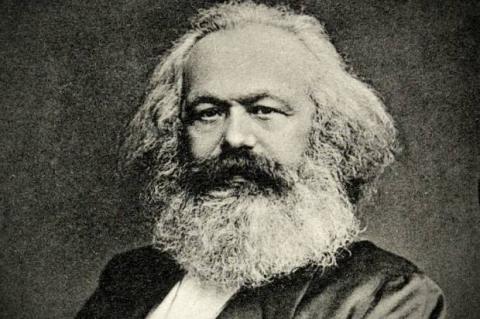
Believe It or Not: Karl Marx Is Making a Comeback

It’s true. The “Communist Manifesto” co-author has gotten a second life — and he has some advice for progressives

karl_marx-620x412

Source: Salon via Portside

Author: Sean McElwee

Karl Marx is on fire right now. More than a century after his death, the co-author of “The Communist Manifesto” still has the honor of being the first smear against ideas slightly to the left of Hillary Clinton. (See: Thomas Piketty.) Marx also graced the cover of the National Review as recently ast last month. Few other thinkers, and certainly few non-religious figures, can claim the honor of being so widely misappropriated by the political rearguard. But, while most people consider Marx only as a sort of intellectual boogeyman, the manifestation of everything evil on the left, he has much to offer a left increasingly divorced from the working class.

To that end, Marx actually is enjoying something of a renaissance on the left these days. Jacobin, a socialist publication that publishes many Marxist thinkers, was profiled by the the New York Times and boasts Bob Herbert as a contributor. Benjamin Kunkel’s recent compilation of essays, “Utopia or Bust,” earned that author a profile in New York magazine, and the title “The Lena Dunham of Literature.” And that’s not even to mention Thomas Piketty’s blockbuster work, “Capital in the 21st Century,” which harkens back to Marx’s multi-volume magnum opus, Das Kapital. The wave has even extended so far as Capitol Hill, where Sen. Bernie Sanders, D- Vermont, openly calls himself a “democratic socialist.”

Marx most certainly wasn’t right about everything, but he wasn’t wrong about as much as people think. A revival of his thought is good news for progressive America. It can give the left fresh arguments that were previously forgotten to history, and new organizing strategies that they’ve long since abandoned.

* * *

The first problem with the left that Marx might have noted is the wholesale abandonment of the working class. As Perry Anderson points out in his essay, “Considerations on Western Marxism,”

The extreme difficulty of language of much of Western Marxism in the twentieth century was never controlled by the tension of a direct or active relationship to a proletarian audience.

Increasingly, the left is dominated by what the German Marxist Rosa Luxemburg might call Kathedersozialisten – or “professorial socialists.” These thinkers, frequently drenched in academese, talk and debate in a way almost entirely designed to alienate anyone who does not already accept their conclusions. The professorial left seems to have innumerable answers for those wondering what Lacanian psychoanalysis has to offer us, but can give us little guidance as to whether the Working Families Party should support Cuomo or run its own candidate.

Manifesto co-author Friedrich Engels’s The Condition of the Working Class in England was a pioneering study of the working class. He and Marx both clearly saw the working class as the means to political power — and viewed persuading them as the most important task the left faced. When Maurice Lachatre asked Marx if he would be willing to serialize Das Kapital, Marx replied, “In this form the book will be more accessible to the working-class, a consideration which to me outweighs everything else.” One struggles, however, to imagine a latter-day Marxist champion like Theodor W. Adorno writing those words. The left abandoned the working class and the working class then abandoned the left. That needs to change.

Marx and Engels also offer the left a new way to discuss ideology. In his brilliant collection, The Agony of the American Left, Marx(ish) historian Christopher Lasch writes,

The Marxian tradition of social thought has always attached great importance to the way in which class interest takes on the quality of objective reality… Lacking an awareness of the human capacity for collective self-deception, the populists tended to postulate conspiratorial explanations of history.

Lasch is arguing that, to a large extent, humans are biased toward the state of affairs that currently exists and then work backwards to justify it to themselves. That is, we’re more likely to embrace a deeply unjust economic system, simply because it’s the one we’ve always known. A recent study bears this out, finding that market competition serves to psychologically legitimize inequalities that would otherwise be considered unjust. Because many on the left, especially populists, do not understand ideology, they often write and argue as though the entire American political system is controlled by a small cabal of business or political leaders conspiring to fool the masses.

The implications of ideology are important and numerous. The left must not fall into the trap of believing that all Americans actually do share our views, but that a conspiracy of the wealthy, or the power of GOP framing, or the influence of money are preventing us from succeeding. To some extent, these things may indeed harm the left, but widespread ideology — the automatic assumption of capitalism’s unmitigated merit, for example — is just as big a problem. We must win the war of ideas before we can win the war of democracy.

The great Italian politician Antonio Gramsci was well aware of the lure of such cabalistic conspiracies, but also of their limitations, and his idea about cultural hegemony led him to advocate for educating the working class. This task is difficult, but it will lead to more substantial progress than simply explaining away failures by complaining about the influence of the wealthy. The rich certainly have different interests than the rest of us, but Gilens and Page note in an often overlooked passage of their oft-cited paper on “American oligarchy,”

The preferences of average citizens are positively and fairly highly correlated, across issues, with the preferences of economic elites.

Groups like the Chamber of Commerce and other business-oriented organizations, on the other hand, have preferences that do not correlate with the interests of the middle class. But even with that caveat, the left should not overstate the extent to which Americans agree with the leftist economic critique. In an apt description of the American ideology, John Steinbeck noted, “Socialism never took root in America because the poor see themselves not as an exploited proletariat but as temporarily embarrassed millionaires.”

Finally, Marx’s moral critique of capitalism and markets has never been fully comprehended or considered by anyone (other than the socialists, of course) but the most ardent libertarians and a strain of thinkers broadly called communitarians. Broadly speaking, Marx’s critique of capitalism resembles the Catholic church’s critique: That by relying on greed and self-interest, markets degrade humans and encourage our worst impulses. Marx quotes Shakespeare’s Timon of Athens:

This yellow slave
Will knit and break religions, bless the accursed;
Make the hoar leprosy adored, place thieves
And give them title, knee and approbation
With senators on the bench

Marx writes, riffing off of Shakespeare, “I  am bad, dishonest, unscrupulous, stupid; but money is honoured and therefore so is its possessors. Money is the supreme good, therefore its possessor is good.” Jesus warned that the love of money is the root of all evil. This fact seems self-evident. Religious critics of capitalism have noted this core delusion for decades. Economist and Catholic E. F. Schumacher writes,

Call a thing immoral or ugly, soul-destroying or a degradation to man, a peril to the peace of the world or to the well-being of future generations: as long as you have not shown it to be ‘uneconomic’ you have not really questioned its right to exist, grow, and prosper.

With the exception of libertarians, who have tried to turn the immorality of capitalism into a sort of perverse morality (“greed is good”), most politicians and economists are entirely unconcerned with the fact that capitalism is based on a collective drawing upon our deepest desire: to exploit.

The underlying logic of capitalism is that if we all take our most primordial impulses and mix them up in the magical mechanism called “markets,” we are left with progress. Recent history suggests we may be left with only more ugliness. As G. A. Cohen writes, “the immediate motive to productive activity in a market society is (not always but) typically some mixture of greed and fear.” The participants in market transactions are not interested in fulfilling human needs — they are interested in making a profit. Fulfilling human needs is one way to make a profit — exploitation, the creation of desire through advertising or downright fraud are others. Human progress is an ancillary consideration, individual profit is the goal. Today, speaking in moral terms is not incredibly popular — inequality is seen not as a moral issue in which a small class has a dangerous amount of power, but instead as an inefficiency to be corrected with a technocratic policy.

We don’t know for certain what Marx would say about the modern left. Its radicals often foster a poisonous aversion to pragmatism in favor of pious purity, its politicians are guilty of  wholesale abandonment of the working class, and many of its leading thinkers have succumbed to a dreadful technocratism. Marx failed to account for the adaptability of capitalism and left little in the way of alternatives. In the end, this void was filled by murderers and fools. Marx, a deeply humanistic thinker, would certainly have abhorred the violence in his name some half a century after his death. But rational people do not blame Christ for the Crusades, nor Muhammad for 9/11 nor Nietzsche for the Holocaust. The taboo of Marx has prevented the left from learning his most important lesson; in the words of Gil Scott-Heron, “the revolution will not be televised.”

Sean McElwee is a writer and researcher of public policy. His writing may be viewed at seanamcelwee.com. Follow him on Twitter at @seanmcelwee.

Posted by Portside on June 27, 2014
19


4


167


1


Emphasis Mine

See: https://portside.org/2014-06-28/believe-it-or-not-karl-marx-making-comeback

Why Do Right-Wing Christians Think ‘Religious Freedom’ Means Forcing Their Faith on You?

Religious freedom has turned into conservative code for imposing Christianity.

Source: Alternet

Author: Amanda Marcotte

“Religious freedom is one of the most fundamental American values, written directly into the First Amendment of the Constitution. Of course, true religious freedom requires a secular society, where government stays out of the religion game and leaves it strictly to individual conscience, a standard that runs directly against the modern conservative insistence that America is and should be a “Christian nation”. So what are people who claim to be patriots standing up for American values to do? Increasingly, the solution on the right is to redefine “religious freedom” so that it means, well, its exact opposite. “Religious freedom” has turned into conservative code for imposing the Christian faith on the non-believers.

While it seems like a leap even for the most delusional conservatives to believe that their religious freedom can only be protected by giving Christians broad power to force their faith on others, a new report from the People For the American Way shows how the narrative is constructed. The report shows that Christian conservative circles have become awash in legends of being persecuted for their faith, stories that invariably turn out to be nonsense but that “serve to bolster a larger story, that of a majority religious group in American society becoming a persecuted minority, driven underground in its own country.” This sense of persecution, in turn, gives them justification to push their actual agenda of religious repression under the guise that they’re just protecting themselves.

The most obvious and persistent example of this is the issue of creationism in the classroom. Clearly, teaching creationism in a biology classroom is a straightforward violation of the First Amendment, a direct attempt to use taxpayer money to foist a very specific religious teaching on captive students. So what the right does is reframe the issue, arguing that teaching evolutionary theory is a form of religious oppression, a direct attack on the beliefs of fundamentalists in the classroom. This is pure hooey, of course, since evolutionary theory is not a religion but a scientific reality, and teaching science as science is no more a violation of religious freedom than teaching kids to that “cat” rhymes with “hat” is an imposition of religion. But once they’ve convinced themselves that learning science in the science classroom is religious persecution, it becomes easier to convince yourself that it’s okay to “fight back” by forcing your actual religion on everyone else.

You can see this play out in the legends that PFAW details out. Do Christian conservatives want to force their religious hostility to gays onto the military? Tell a lie about how a sergeant was persecuted for simply holding that religious belief to paint yourself as the “real” victim. Want to justify forcing non-believing kids to pray to your god in school? Tell lies about how kids are being punished for having private prayers all to themselves. Want to force people in the VA hospital to sing your religious songs and worship your god? Spread a false tale claiming that people aren’t allowed private ownership of religious cards. Tell enough of these stories and people on the right can convince themselves the only way they can protect their own right to worship is to force their religious practice on everyone else.

You can see how this kind of logic swept over the Becket Fund, a legal institution that was initially set up to protect the individual right to religious freedom. As chronicled by Amelia Thomson-DeVeaux at The American Prospect, the Becket Fund started off doing easily defensible work protecting people who wanted to express their religious beliefs in personal ways that are not coercive to others, such as protecting prisoners who wanted to have religious tchotchkes or workers who wanted to maintain religious hairstyles at work.

But the Becket Fund’s latest high profile case is an outright attack on religious freedom, in a case that will soon be decided by the Supreme Court. The Becket Fund is defending the Green family that owns Hobby Lobby in their desire to impose their religious beliefs about contraception on employees, by denying employees the right to use their own insurance benefits on contraception. The idea that it could ever be “religious freedom” to tell an employee that her private use of her own compensation package should be constrained by her boss’s religious beliefs should be laughable. But that’s the logic of the modern Christian right that holds that the only way to “protect” their own religious belief is to start forcing it on others.

Of course, this kind of logic inevitably starts to crumble when people who don’t share the conservative Christian religion start pushing back and arguing that their right to their own private beliefs should not be infringed by being made to pray to someone else’s god in school, being taught Bible stories in biology class, or being forced to check with the boss first before you pick up your prescription medications after hours. The solution, increasingly, is to outright argue that non-believers or people of different faiths have beliefs that are simply less worthy of basic protections for religious freedom, much less the hyper-charged “religious freedom” of imposing your faith on others, the kind of “religious freedom” conservative Christians believe they’re entitled to.

Take, for instance, Jody Hice, a Republican candidate for a U.S. House seat from Georgia. Hice has a novel solution to the problem of the religious rights of Muslims being infringed upon when they are subject to having religion imposed on them by Christians: Simply deny that Islam is a religion and therefore deny that its followers enjoy freedom of religion. “Although Islam has a religious component, it is much more than a simple religious ideology,” he wrote in his 2012 book It’s Now Or Never. “It is a complete geo-political structure and, as such, does not deserve First Amendment protection.”

It’s a dumb statement on two levels. One, it’s plainly obvious that Islam is a religion and therefore people who believe in it are absolutely guaranteed their actual freedom to worship how they please. (Though perhaps Hice is worried that Muslims will decide to adopt the Christian conservative definition of “religious freedom” and start demanding that you can’t eat pork and you have to pray five times a day.) But even if someone doesn’t have a religion doesn’t mean that they lose their basic right to decide for themselves what to believe. Atheists do not have a religion, but it’s just as wrong to force atheists to pray to your god as it would be to do so to a Muslim.

Sadly, this argument that the Christian right to religious freedom includes the right to foist their faith on others has made the leap to the Supreme Court, with Justice Scalia arguing incoherently that the “First Amendment explicitly favors religion” in order to justify the hijacking of a school event to force religion on the non-believers in attendance. As Scott Lemieux at Lawyers Guns and Money pointed out, it’s actually the exact opposite: “it disfavors religious endorsements by the state.” But in this new topsy-turvy right-wing world, up is down, left is right, and the only way to protect religious freedom is to use government and corporate force to make everyone follow a conservative version of Christianity, whether they believe it or not.

Amanda Marcotte co-writes the blog Pandagon. She is the author of “It’s a Jungle Out There: The Feminist Survival Guide to Politically Inhospitable Environments.”

Emphasis Mine

See: http://www.alternet.org/belief/why-do-right-wing-christians-think-religious-freedom-means-forcing-their-faith-you?utm_source=Amanda+Marcotte%27s+Subscribers&utm_campaign=effed0801b-RSS_AUTHOR_EMAIL&utm_medium=email&utm_term=0_f2b9a8ae81-effed0801b-79824733

Bad News For Republicans: Obamacare Still NOT A Job Killer As 217,000 Jobs Added In May, Healthcare Adds The Most


Source: Addicting Info

Author: Stephan D. Foster, Jr.

On March 31, 2014, the Obamacare open enrollment deadline passed. Over 8 million Americans successfully enrolled and gained health insurance coverage. Over six million more gained coverage through Medicaid expansion. Despite Republican claims that the sky would fall and send the US job market into a death spiral, it did not fall and it still hasn’t.

For the fourth consecutive month, the economy added more than 200,000 jobs, and healthcare led the way in creating those jobs. According to a report from the Bureau of Labor Statistics, 217,000 jobs were added in May. Healthcare was responsible for approximately 55,000 of those jobs. And that’s not the only good news.

The jobs report is even sweeter because it means the United States has finally recovered all of the jobs lost when the economy crashed during the Bush Administration in 2008. It also marks the first time that the economy has added 200,000 jobs for four straight months since 1999-2000, when another Democrat, Bill Clinton, occupied the White House. Additionally, the unemployment rate still stands at 6.3 percent, which is a six year low since the rate peaked at 10 percent in 2009 just after Obama took office.

Even though Republicans have crusaded against President Obama’s signature healthcare law all these years by claiming it to be a job killer, the evidence clearly shows that they’re totally wrong. In fact, Obamacare actually creates jobs. The job creation power of Obamacare even goes beyond the healthcare sector. Implementing a healthcare system that will handle an influx of millions of people demands the growth of many fields, including many outside of healthcare. Not just doctors, nurses, and physician assistants, but also jobs in payroll services, computer programming, attorneys, medical bill coders, consultants, customer service, human resources, occupational therapy, and educators. A system that is expected to help way more than 14 million Americans simply cannot do its job unless more workers are hired to fill the increased need.

This isn’t the only bad news the GOP has received about Obamacare in recent months. A recent poll indicates that uninsured rates have fallen across the board throughout the nation, especially among African-Americans and Hispanics. Furthermore, a separate poll reveals that Americans now support Obamacare and a report from the Congressional Budget Office predicts that the law will save an additional $104 billion in costs. It looks like conservatives are all out of doomsday claims about Obamacare.

Obamacare has not only strengthened America’s healthcare system, it has strengthened the economy as well. Hundreds of thousands of jobs are being added every month now and millions of people are gaining access to health insurance. That’s a victory for President Obama on two fronts of domestic policy: the economy and healthcare. It’s fantastic news for Democrats and terrible news for Republicans as the country heads toward the 2014 midterm election in November. Just make sure to remember which party brought you a better healthcare system and an improved economy and which one openly attempted to sabotage both.


Emphasis Mine


See: http://www.addictinginfo.org/2014/06/06/bad-news-for-republicans-obamacare-still-not-a-job-killer-as-217000-jobs-added-in-may-healthcare-adds-the-most/